

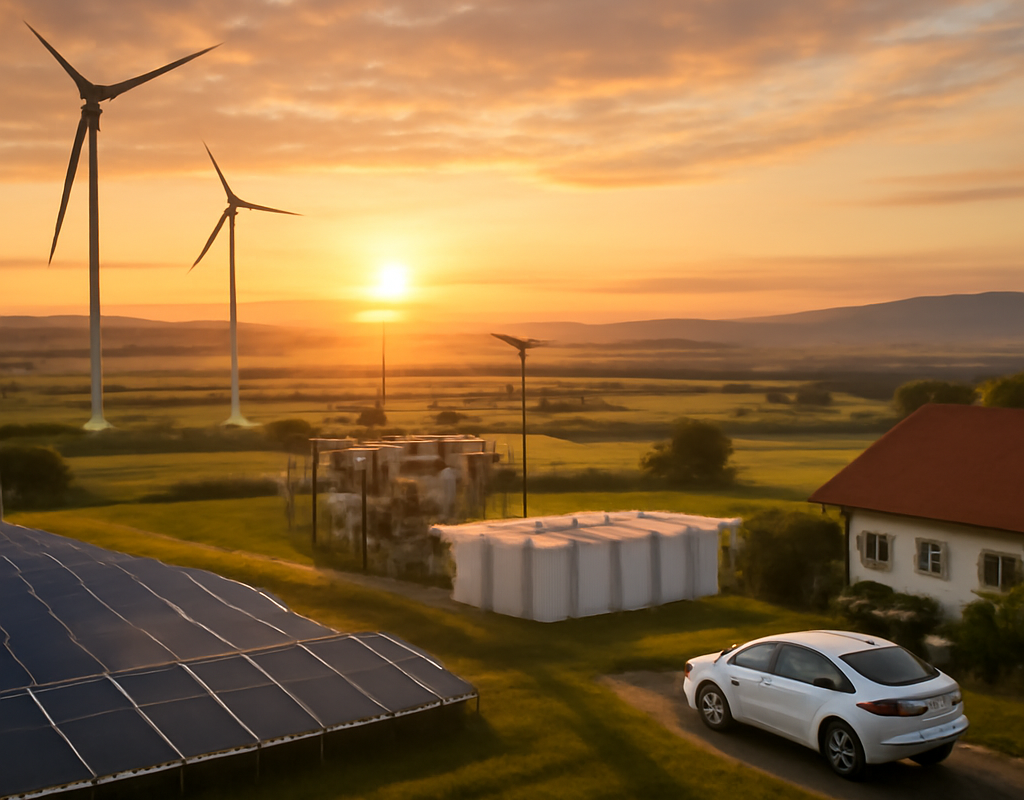
Europe’s clean energy transition is accelerating, but the expansion of solar and wind power is exposing a central problem: generating renewable electricity is only part of the task. Across the continent, ageing grids, limited storage and slow connections are making it harder to use every clean kilowatt-hour produced.
This development is becoming an important part of EU news because it affects energy security, household bills, industry and the European Union’s climate objectives. The challenge is not simply building more renewable capacity. Europe must also modernise networks, improve flexibility and ensure that power reaches consumers when it is needed.
Renewable growth is putting pressure on Europe’s electricity grids
Solar panels and wind farms can produce large volumes of low-carbon electricity, but their output changes with weather and daylight. When production is high and demand is low, parts of the system may be unable to absorb the available power. This can lead to renewable energy being curtailed, meaning operators reduce or switch off generation.
The issue is particularly visible in countries where renewable deployment has moved faster than grid investment. New projects may face long connection queues, while existing networks require upgrades to carry electricity between regions. These are not isolated national concerns; they are part of a wider European energy policy debate about infrastructure, market design and investment.
Why clean electricity can still be wasted
Several factors can contribute to renewable energy being lost or underused:
- Limited transmission capacity: electricity cannot always travel from areas with strong wind or sunshine to places with higher demand.
- Insufficient storage: batteries and other technologies are not yet available at the scale needed to shift all surplus power to later in the day.
- Slow grid connections: renewable projects can wait years for permission and network access.
- Inflexible demand: households, factories and public services do not always consume electricity when renewable output is highest.
These constraints help explain why debates about EU climate policy increasingly include smart meters, electric vehicles, heat pumps and flexible pricing. Consumers can become part of the solution if they are able to use more electricity when renewable generation is abundant.
Technology could make households more active energy users
Smart meters can provide more detailed information about consumption and help suppliers manage demand. In principle, appliances, heating systems and vehicle chargers could operate at times when electricity is cheaper or cleaner. However, the benefits depend on consumer protections, clear billing and access to suitable tariffs.
Electric vehicles may also serve as temporary storage. With vehicle-to-home or vehicle-to-grid systems, a parked car could supply electricity during a short outage or return power to the network during periods of high demand. The technology is developing, but widespread use would require compatible vehicles, chargers, regulations and agreements over how drivers are compensated.
Retired electric vehicle batteries are another potential resource. Even when they no longer meet the demanding requirements of a car, batteries may retain enough capacity for stationary storage. Reusing them could help absorb surplus solar and wind power while reducing pressure on raw materials and recycling systems.
Solar is spreading beyond rooftops
Europe’s solar expansion is also changing the places where panels are installed. Solar car parks, driveways, patios, public buildings and agricultural land can all contribute to electricity generation. Agrivoltaic systems, which combine farming with solar production, are being examined as a way to protect crops from heat or heavy rainfall while creating an additional income stream.
Yet each approach involves trade-offs. Large solar projects can face disputes over land use, landscape and biodiversity. Rooftop and car-park installations may avoid some of those conflicts but can be more expensive or technically difficult. Planning decisions therefore need to consider local conditions rather than treating every available surface as equally suitable.
What the grid challenge means for consumers
Grid investment can place upward pressure on energy bills in the short term, particularly when networks require major construction and maintenance. Over time, better-connected systems could improve reliability, reduce dependence on imported fuels and make it easier to use lower-cost renewable electricity.
Households may benefit from:
- more accurate information about when electricity is cheapest;
- lower consumption through efficient heating and appliances;
- payments for allowing batteries or vehicles to support the grid;
- greater protection from volatile fossil-fuel prices.
However, these benefits will not be automatic. Consumers without the money to install solar panels, batteries or heat pumps could be left behind unless governments and regulators provide fair access and targeted support.
The European policy response
The European Commission and national governments face a shared infrastructure task. Renewable targets alone do not guarantee a reliable electricity system. Planning, permitting, cross-border interconnection, storage and demand management must advance alongside new generation.
For the EU, this links climate policy with competitiveness and energy security. A stronger internal electricity market could help countries share power during periods of surplus or shortage, while coordinated investment may reduce duplication and improve resilience. The details, however, depend heavily on national regulators, network operators and the way EU rules are implemented.
What it means for Ireland
Ireland has a particularly relevant connection to this debate because its electricity system is an island network, while wind power forms an important part of its energy strategy. Greater interconnection, storage and demand flexibility can help integrate renewable generation, but projects still require planning approval, investment and public confidence.
Irish households and businesses may increasingly encounter smart-meter services, time-based electricity tariffs, home batteries and electric-vehicle charging options. The practical impact will depend on national policy and market offerings rather than on a single EU decision.
What happens next?
The next phase of Europe’s energy transition will be measured not only by how many solar panels and wind turbines are built, but by how effectively the electricity system uses them. Network upgrades, faster permitting, storage deployment and consumer participation will all be important.
The central lesson from Europe’s renewable expansion is clear: clean generation without a flexible grid can leave valuable power unused. For the transition to deliver lower emissions and stronger energy security, investment in wires, software, storage and fair consumer access must keep pace with investment in renewable energy.
Europe’s clean energy transition will succeed when renewable electricity is not merely produced, but delivered reliably, affordably and fairly.