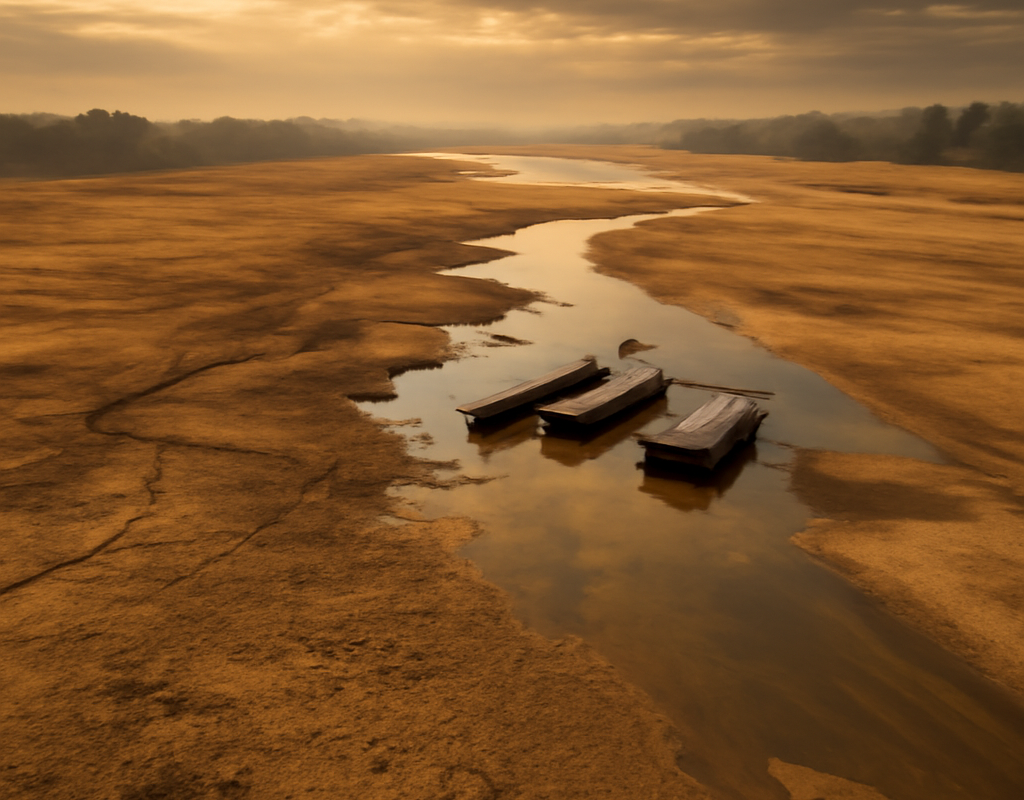
A severe drought affecting the Amazon rainforest has pushed the Paraguay River to its lowest recorded water level in more than a century, disrupting one of the most important transport routes in the landlocked South American country.
The dramatic fall in water levels is the latest sign of the wider environmental and economic pressures facing Paraguay, where rivers are essential for moving agricultural goods, fuel and other commodities to international markets. Although the development is not an EU decision, it is significant international news because it highlights the cross-border effects of climate-related water shortages.
What is happening to the Paraguay River?
Paraguay has experienced a powerful and prolonged drought, linked in the source report to conditions in the Amazon rainforest. The resulting lack of rainfall has reduced water levels across waterways that are central to the country’s economy and daily life.
The Paraguay River runs through the country and connects with the wider Paraná–Paraguay waterway system. This network provides a vital route for trade despite Paraguay having no coastline. When river levels fall sharply, vessels can carry less cargo, journeys become more difficult and transport costs may increase.
Why low water levels matter
The river is more than a natural feature. It is a major economic artery for Paraguay and neighbouring countries. Commercial traffic depends on sufficient depth to move goods efficiently, making drought conditions a serious concern for exporters, importers and communities along the river.
The effects of unusually low levels can include:
- Restrictions on the size or weight of vessels using the waterway
- Delays to agricultural and industrial shipments
- Higher transport costs for businesses
- Pressure on fuel and food supply chains
- Greater risks for communities that depend on rivers for water and livelihoods
Paraguay’s economy is closely connected to agriculture and regional trade. A prolonged disruption to river transport can therefore affect more than shipping companies. It may also influence producers, warehouse operators, port workers and consumers.
A wider environmental warning
The Paraguay River crisis forms part of a broader pattern of extreme weather and changing water availability across South America. Drought in the Amazon region can have consequences well beyond the forest itself, affecting river systems, biodiversity, farming and transport.
Low water levels also create environmental risks. Rivers provide habitats for fish and other wildlife, while riverbank communities rely on healthy waterways for food, work and household needs. Extended drought can reduce aquatic habitats and intensify competition for available water.
Scientists and public authorities monitor rainfall, river depth and reservoir conditions closely during severe dry periods. However, the source material does not provide a specific forecast for when the Paraguay River will return to normal levels.
Regional consequences for South America
The Paraguay River forms part of a waterway system that crosses national borders, meaning its condition has implications beyond Paraguay. River transport links the country with regional markets and ports, so disruption can affect trade flows involving neighbouring states.
This cross-border dimension makes drought management a regional issue. Governments, shipping operators and producers may need to coordinate around navigation conditions, water use and emergency planning. The event also demonstrates why climate adaptation policies must consider shared rivers rather than national borders alone.
What happens next?
Authorities and businesses will need to continue monitoring the river as drought conditions evolve. The immediate priorities are likely to include maintaining safe navigation where possible, managing supplies and assessing the impact on communities and trade.
Longer-term planning may involve investment in more resilient transport systems, improved water monitoring and stronger regional cooperation. Such measures cannot prevent every drought, but they can reduce the economic and social damage caused when waterways become difficult to use.
Conclusion
The Paraguay River reaching its lowest level in more than a century is both an immediate transport problem and a warning about the broader consequences of severe drought. For Paraguay, the river supports trade, employment and essential connections with regional markets. The crisis shows how environmental changes in one part of South America can create economic and social effects across borders.