

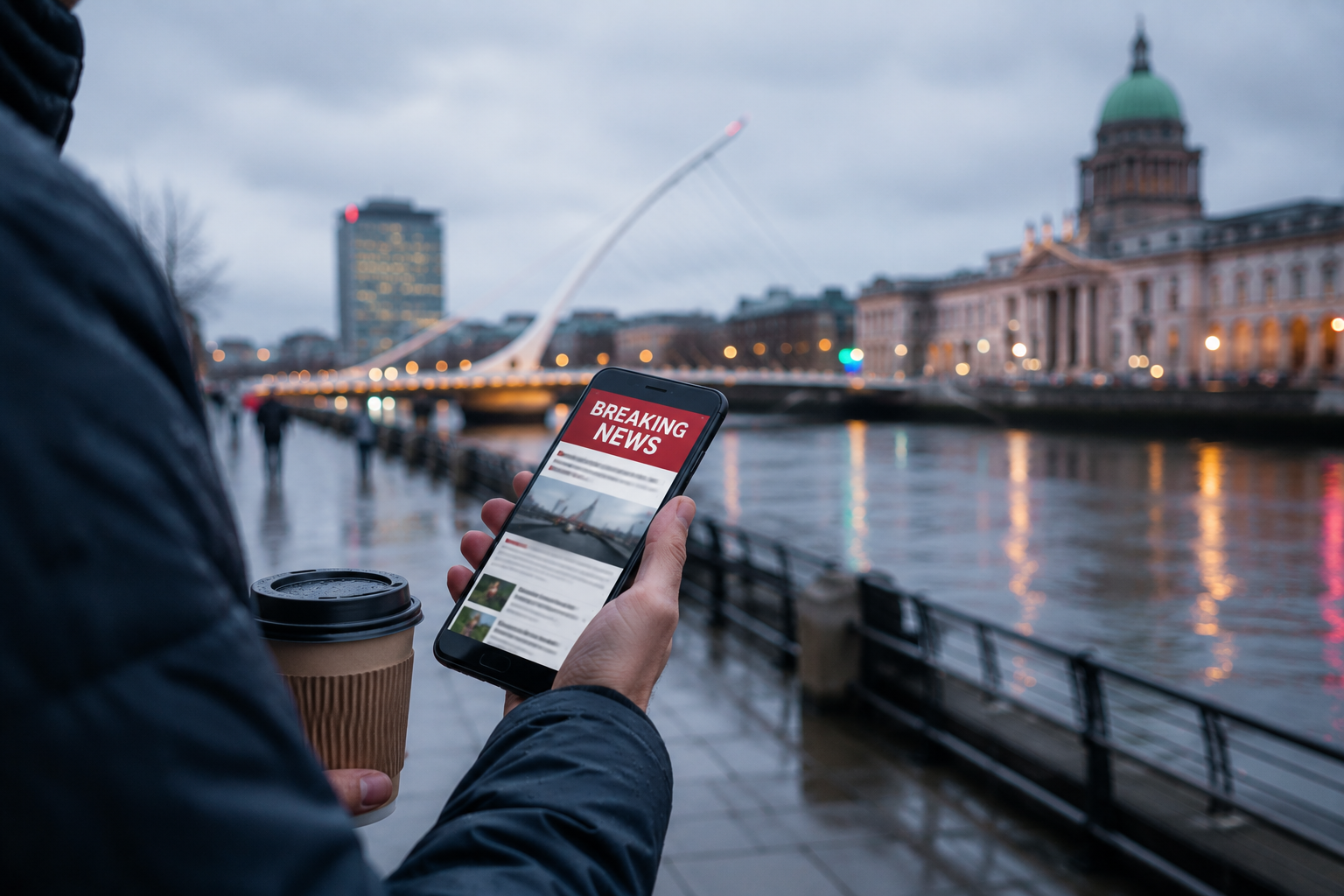
People across Ireland will gain an extra hour this weekend as the clocks go back on Sunday, 25 October 2026. At 2am, clocks will move back to 1am, marking the annual change from summer time to winter time.
The change affects household clocks, watches, car displays and any devices that do not update automatically. It is also a useful reminder to check alarms, timers and other equipment before going to bed on Saturday night.
When do the clocks go back in Ireland?
In Ireland, the clocks go back at 2am on Sunday, 25 October 2026. When the change takes place, the time will become 1am.
This means Sunday will have 25 hours rather than the usual 24, giving people an additional hour overnight. For most residents, the practical effect will be simple: they can sleep for an extra hour, provided alarms and other devices reflect the new time.
The key details
- Date: Sunday, 25 October 2026
- Time of change: 2am
- New time: 1am
- Result: One extra hour in the day
- Next clock change: Clocks are expected to go forward again in March 2027
Why do the clocks change?
The clocks change twice each year. They move forward by one hour in March and move back by one hour in October.
The October change ends the period commonly known as summer time and returns the clock to standard winter time. The arrangement is coordinated across the European Union, so the change happens at the same time throughout EU member states.
For people living in Ireland, the autumn change usually means darker evenings and earlier sunsets in the weeks that follow. In return, daylight begins earlier in the morning than it did during the summer months.
What should you do before the time change?
Many modern phones, computers and smart watches adjust automatically when they are connected to the correct network or software settings. However, not every clock changes on its own.
Before going to sleep on Saturday night, check the following:
- Wall clocks and bedside alarms
- Analogue watches
- Car clocks and dashboard displays
- Kitchen appliances, including ovens and microwaves
- Heating controls and timers
- Security systems and manually programmed devices
- Work, travel or medication reminders
If a phone or computer does not update automatically, check that its date, time and time-zone settings are configured correctly. Changing the time manually on some devices can cause the clock to become incorrect again later, so automatic time settings are generally preferable where available.
How the clock change may affect daily routines
The extra hour can be welcome, particularly for people who have early starts or demanding schedules. However, the change can also affect routines for children, older people, shift workers and anyone who relies on regular medication or timed equipment.
Most people adjust quickly, but it may help to keep normal meal, bedtime and waking routines over the weekend. Anyone working overnight should check their employer’s instructions, as the clock change can affect shift patterns and recorded working hours.
Travel and appointments
Anyone travelling early on Sunday should confirm departure times with the relevant transport provider and allow enough time for the change. Digital timetables generally use the correct local time, but manually recorded appointments, alarms and reminders may need attention.
If you have an appointment, flight, train or bus journey close to the time change, check the booking details and arrive with sufficient time. The official time change takes place at 2am, when the clock returns to 1am.
Health and safety reminders
The switch to shorter daylight hours is also a prompt to review seasonal safety arrangements. Households may wish to check outdoor lighting, smoke alarms, carbon monoxide alarms and heating controls as autumn progresses.
People taking medicines at set times should follow their normal medical instructions. If the change creates uncertainty about a medication schedule, contact a pharmacist, GP or other appropriate healthcare professional rather than guessing.
Are there new government rules in Ireland about the clocks?
The October clock change is part of the established twice-yearly time-change system. The Citizens Information update confirms that the clocks go back by one hour on Sunday, 25 October 2026, and that the change occurs at the same time across the EU.
This is not a new social welfare rule or an Ireland public service changes announcement. It does not alter eligibility for payments, access to public services, taxation or government support. The main action for households is to ensure that clocks and timers show the correct time.
People looking for the latest Citizens Information updates should use the Citizens Information website and other official government guidance Ireland sources for confirmed information about public services and policy matters. Different issues, including benefits, pensions and public appointments, may have their own dates and procedures.
What happens after the October change?
Following the autumn change, Ireland will remain on standard time through the winter. The clocks will move forward by one hour again in March 2027 under the current system.
The twice-yearly change continues to be applied across the EU. Any future alteration to the system would require official confirmation, so residents should rely on updated information from Citizens Information or the relevant public authority rather than social media posts or informal reminders.
Frequently asked questions
Do the clocks go back on Saturday night or Sunday morning?
The official change takes place in the early hours of Sunday, 25 October 2026. At 2am, the time becomes 1am. Many people choose to adjust manual clocks before going to bed on Saturday night.
Do I get an extra hour of sleep?
There is an extra hour in the night because 2am becomes 1am. Whether you benefit from that extra hour depends on your routine, work schedule and any appointments or caring responsibilities.
Will my phone change automatically?
Many phones and connected devices update automatically, but this depends on the device’s settings, software and network information. Check manually if the displayed time does not change.
Do I need to change every clock in my home?
You should check any clock or timer that does not update automatically. This may include wall clocks, ovens, microwaves, car displays, heating controls and older alarm clocks.
Does the clock change affect government payments or support?
No. The October time change does not itself change government payment rates, Ireland benefit eligibility or the way people apply for Irish government schemes. Any separate policy change should be confirmed through the relevant department or official service.
Where can I find reliable information?
Citizens Information provides information about the clock change and a wide range of public services. For specific matters involving social welfare, tax, healthcare or other schemes, use the official website of the relevant Government Department or public body.
Read more about official information in Ireland
Readers seeking information about new government rules in Ireland, Irish Government policy changes explained or the latest public policy changes in Ireland should check official sources before acting. Citizens Information is a useful starting point for clear guidance, while individual departments can provide scheme-specific details.
For practical questions about eligibility, applications or public services, look for information that explains who is affected, when a change begins and whether any action is required. This is especially important when checking new social welfare rules Ireland or asking who is eligible for government support in Ireland.
Conclusion
The clocks go back in Ireland at 2am on Sunday, 25 October 2026, when the time changes to 1am. The result is an extra hour, but residents should remember to check manual clocks, alarms, timers and travel arrangements.
The safest approach is straightforward: update devices that do not change automatically and use Citizens Information or the relevant official source for any separate questions about public services. For this weekend’s time change, no application is needed and no government payment or entitlement is affected.