A dispute over the order of negotiations has exposed a growing divide between the European Union and the United States in talks aimed at ending Russia’s war in Ukraine. The disagreement centres on whether Europe’s future security arrangements should be discussed immediately or only after a ceasefire.
The issue is now a central part of the latest EU news from Brussels, as European leaders push for Ukraine’s security and territorial future to remain at the heart of any settlement.
EU news: Europe insists on a ceasefire first
European Commission President Ursula von der Leyen and several European leaders argue that the sequence of the negotiations matters. Their position is that Russia must first agree to a ceasefire and demonstrate a genuine commitment to peace before wider discussions begin on the European security architecture.
Paula Pinho, the Commission’s chief spokesperson, said the EU position had not changed. Discussions on security architecture should follow a ceasefire and take place in the appropriate forum, with NATO allies and EU member states fully involved.
That approach reflects European concerns that Moscow could use broader discussions about security arrangements to distract from the immediate question of ending its invasion of Ukraine.
Why European leaders are wary of a wider deal
European governments have rejected the idea that Russia should be allowed to determine the military posture or alliance choices of other countries. They also oppose any settlement that would divide Europe into spheres of influence.
German Chancellor Friedrich Merz made the sequencing argument clearly at a Berlin meeting of the Coalition of the Willing, attended by allies including Jared Kushner. He said the priority should be peace in Ukraine, followed by agreements on Euro-Atlantic security.
European leaders have also dismissed Russian demands reportedly linked to the country’s December 2021 proposals. Those demands included stopping further NATO enlargement, withdrawing NATO forces to their 1997 positions and ending military support for Ukraine.
US envoy says security guarantees must be discussed now
Jared Kushner, the US special envoy involved in brokering the negotiations, has taken a different view. In a social media post, he argued that guarantees for Ukraine cannot be finalised separately from the wider European security architecture.
His position is that both subjects must be considered together from the beginning of the process. Among the possible guarantees, he referred to a provision modelled on NATO’s Article 5, under which Ukraine could receive assistance if Russia launched another attack.
Kushner said US President Donald Trump would approve an Article 5-style commitment only if the broader arrangements made it unlikely that the guarantee would ever need to be used. That condition, he argued, makes it essential to discuss Europe’s security framework at the outset.
He also stressed that nothing would be final until every part of a future agreement had been accepted.
The dispute over Russia’s role
The disagreement is not simply about timing. It also concerns who should shape the rules governing European security after the war.
European officials maintain that Russia damaged the post-war security system through its invasion of Ukraine. They argue that Moscow should not be given the power to impose limits on NATO or veto the choices of sovereign European states.
NATO Secretary General Mark Rutte similarly rejected any return to the alliance’s 1997 borders or any arrangement in which countries outside NATO would determine the alliance’s posture.
What happens next in the peace talks?
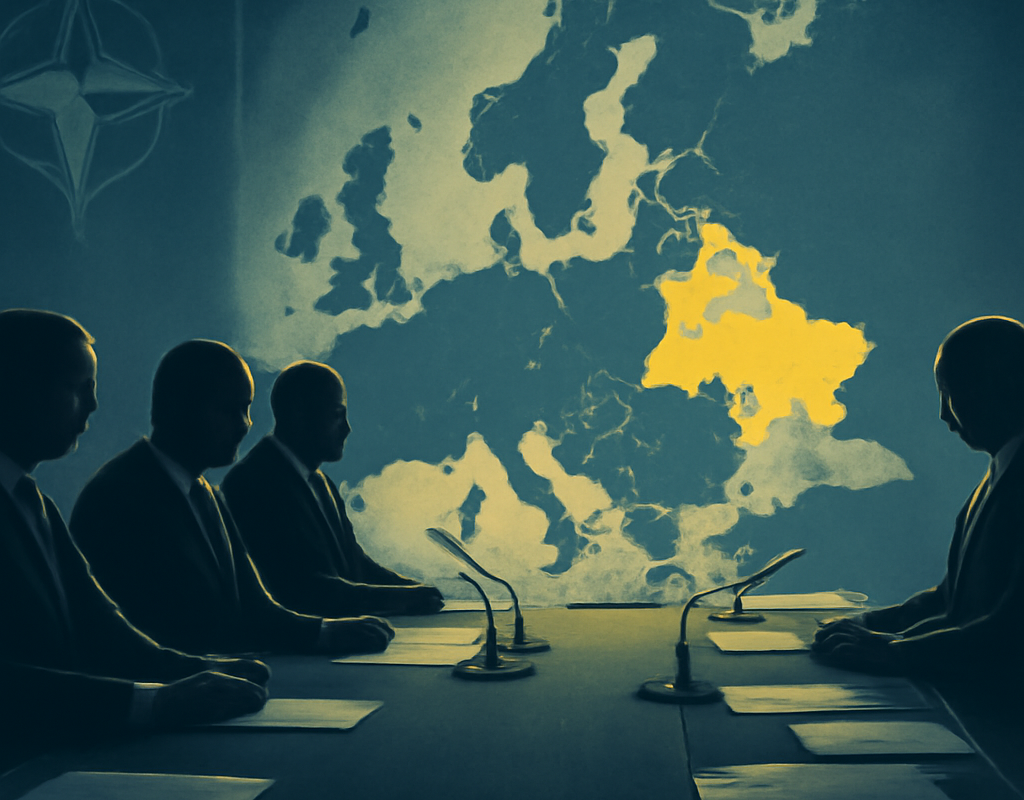
The issue may become unavoidable if Russia agrees to participate in multilateral negotiations involving the United States, Ukraine and European governments at the same time. Moscow has so far refused that format.
Kushner said the United States intended to develop a common understanding on European security architecture over the coming weeks. However, the European Commission continues to insist that the discussion should follow a ceasefire and involve NATO allies and EU member states directly.
That leaves the talks facing a difficult diplomatic test. Washington sees long-term security arrangements as a condition for a credible guarantee to Ukraine, while European leaders fear that moving too quickly could legitimise Russian demands or weaken Ukraine’s position.
Why this matters for European security
The disagreement highlights the complexity of any future peace settlement. A ceasefire alone would not resolve the questions surrounding Ukraine’s protection, NATO’s role or the balance of power across Europe.
- Ukraine’s security: Any guarantee would need to deter a further Russian attack.
- NATO’s independence: European governments oppose external control over the alliance’s decisions.
- EU involvement: Member states want a direct role in discussions affecting the continent’s security.
- Negotiating order: Leaders remain divided over whether a ceasefire must precede broader security talks.
The immediate takeaway from this European security dispute is that the United States and Europe broadly share the goal of preventing another attack on Ukraine, but they disagree over how to reach it. The sequencing of the negotiations could prove as consequential as the final terms themselves, making this a closely watched development in EU news and European diplomacy.