Today’s EU news is being shaped by growing security concerns, a failed climate summit and a possible shift in Spain’s political direction. NATO Secretary General Mark Rutte has warned that hybrid threats are intensifying, while Ukraine is again pressing for membership of the alliance.
At the same time, COP31 in Antalya ended without a major agreement, Germany saw fresh industrial unrest and Spain’s parliamentary contest raised wider questions about the strength of Europe’s political centre.
Mark Rutte warns of rising hybrid threats
Speaking in Berlin, NATO Secretary General Mark Rutte said hostile activities directed at Alliance members are expected to increase. The warning covered a broad range of actions, including sabotage, cyberattacks and violations of national airspace.
Rutte said that all NATO members are affected by the threat environment and called on governments to strengthen defence spending and expand industrial production. His remarks underline the growing importance of European security, resilience and the ability to respond to activity below the threshold of open conflict.
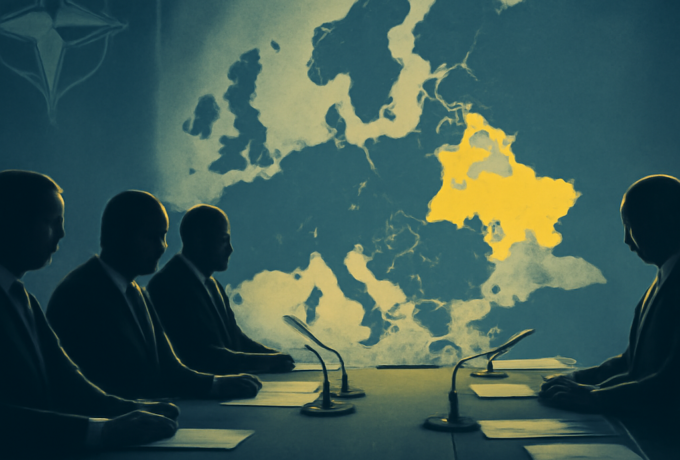
The warning comes as Ukrainian President Volodymyr Zelensky renews his call for Ukraine to join NATO. The debate has also been linked to a proposal from US negotiator Jared Kushner for security guarantees based on the alliance’s Article 5 model. Article 5 commits NATO members to regard an attack on one as an attack on all, although the precise form of assistance is determined by each ally.
COP31 ends without a major climate agreement
The UN climate conference in Antalya, Turkey, concluded after difficult negotiations over fossil fuels and climate finance. Delegates failed to reach a major new agreement, with deep divisions remaining over the pace of fossil-fuel phase-outs and the financial support available to developing countries.
The result represents a setback for international climate diplomacy and leaves Europe facing questions about how it should respond. The European Union has positioned itself as a major force in climate policy, but its influence depends partly on whether it can build wider support for emissions reductions, clean energy investment and a fair approach to climate finance.
The failure of COP31 also highlights the gap between long-term climate targets and the political difficulty of agreeing on immediate action. European governments will now need to consider how the summit’s outcome affects their domestic climate plans and international negotiations.
Spain’s election could reshape European politics
Spain’s Prime Minister Pedro Sánchez faces a serious electoral challenge, with centre-right conservatives leading most opinion polls cited in the programme. A possible alliance with the far-right Vox party could give the right enough support to form a government.
The contest is being watched beyond Spain because it may test the durability of Europe’s political barriers against the far right. Coalition-building, campaign strategy and the final distribution of parliamentary seats will determine whether a change of government is possible.
For European politics, the result could carry significance beyond Madrid. Spain is one of the EU’s largest member states, and its government plays a role in debates on economic policy, migration, climate action and support for Ukraine. A new governing alliance could therefore influence discussions across the European institutions.
IG Metall strike hits German industrial sites
Industrial tensions have escalated in Germany’s metal and electrical sectors. IG Metall, the country’s largest trade union, called a 24-hour warning strike involving more than 23,000 workers at 19 sites in northern Germany.
The affected locations include facilities connected with Mercedes-Benz, BMW, Siemens Gamesa and shipbuilder Meyer Werft. The action follows nationwide strikes on Friday involving 151,000 workers, including employees at Audi’s main plant in Ingolstadt and three BMW sites in Bavaria.
The walkouts add pressure to negotiations in sectors central to Germany’s manufacturing base. They also highlight the challenges facing European industry as companies manage costs, technological change and competition while workers seek improved terms.
Paris begins its festive season
Paris has marked the start of the holiday season with the illumination of the Champs-Élysées. Paris Mayor Emmanuel Grégoire and 2026 event patron Cate Blanchett switched on the display, which covers 52 kilometres and uses two million LEDs across 400 trees.
The display will run until 4 January 2027. A five-minute light show is scheduled every 15 minutes from 5pm until 1am, with three themes: Nature’s Awakening, Winter’s Arrival and Starry Night.
What these Europe news developments show
The day’s stories reflect the range of issues shaping European affairs: security threats linked to NATO, stalled international climate negotiations, political uncertainty in a major EU country and industrial pressure in Germany. Together, they show why Europe news today cannot be understood through a single policy lens.
For readers following the latest EU news, the key takeaway is that security, climate policy, elections and economic competitiveness are increasingly connected. Decisions taken in national capitals and international forums will continue to influence the direction of European politics and the wider European Union.
Takeaway: Europe is facing simultaneous pressure on security, climate cooperation, political stability and industry, making the next phase of European decision-making particularly consequential.