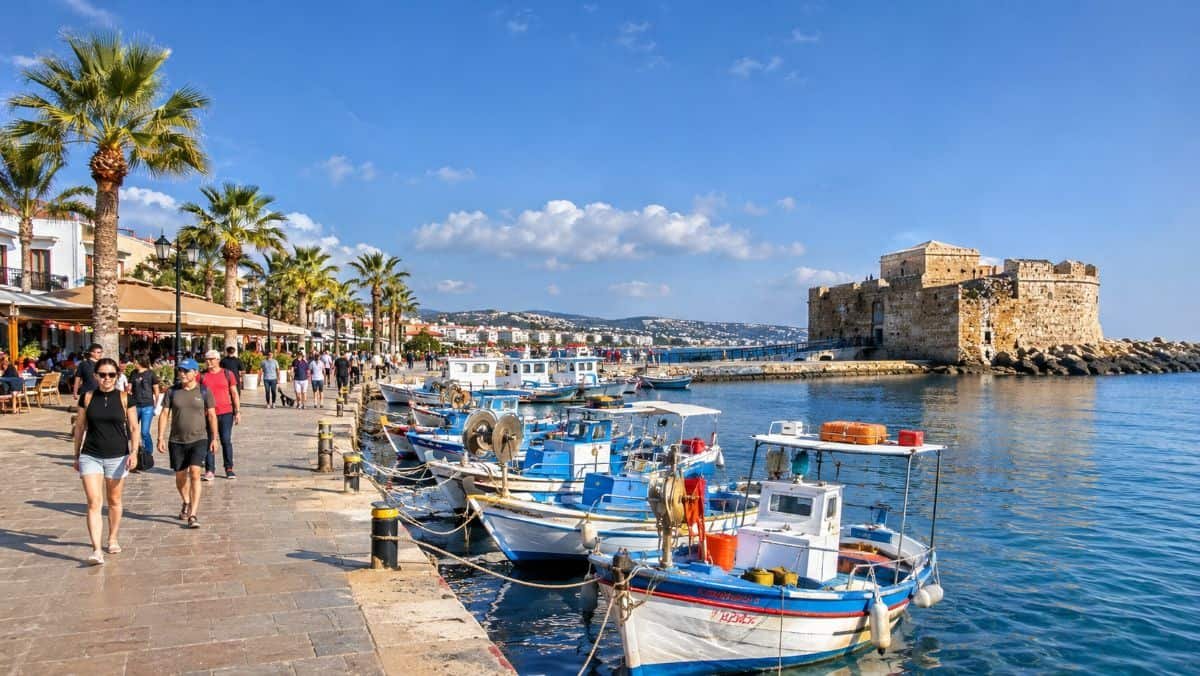
For travellers seeking a break from Europe’s colder winter weather, Paphos offers a mild December escape with daytime temperatures of approximately 18°C, coastal scenery and internationally recognised archaeological sites. The Cypriot destination combines waterfront walks with ancient history, making it a practical option for sightseeing rather than a guaranteed beach holiday.
Located on Cyprus’s southwestern coast, Paphos is particularly suited to visitors who want winter sunshine, outdoor exploration and cultural attractions in one trip. December can still bring rain, cooler evenings and changeable coastal conditions, so travellers should plan for mixed weather.
Paphos offers mild winter conditions in Cyprus
Cyprus’s Deputy Ministry of Tourism identifies December to February as the island’s mild winter season. In Paphos, daytime temperatures can reach around 18°C, while coastal areas are generally milder than the mountainous interior.
Official tourism information indicates that December brings about six hours of bright sunshine daily. That does not mean every day will be warm or dry, but it does support outdoor activities such as:
- Walking along the harbour and seafront promenade
- Exploring archaeological sites and historic streets
- Visiting coastal viewpoints and landmarks
- Taking scenic excursions around the Paphos region
Evenings are cooler, and rainfall becomes more likely during winter. The Mediterranean Sea is also less suitable for extended swimming than in summer. Light layers, comfortable shoes and a waterproof jacket are sensible additions to a December packing list.
Cyprus tourism growth strengthens Paphos’s appeal
National tourism figures underline Cyprus’s importance as an established Mediterranean destination. The island recorded 4,534,073 international tourist arrivals in 2025, up from 4,040,200 in 2024. Tourism revenue increased from approximately €3.21 billion to €3.70 billion over the same period.
Average tourist spending reached €815.16 in 2025. Holidays accounted for 79.8% of international visits, confirming the central role of leisure travel in Cyprus’s tourism economy.
These figures cover the whole island rather than Paphos alone, and they do not prove a specific December surge. They do, however, show the scale of the tourism network supporting destinations such as Paphos throughout the year.
British visitors remain Cyprus’s largest source market
The United Kingdom accounted for approximately 31.8% of Cyprus’s international tourist arrivals in 2025. Israel contributed around 13%, followed by Poland at 8.2% and Germany at 6.1%.
The strong British market reflects long-established travel links and helps explain why Paphos remains relevant to holidaymakers looking for a warmer European break. Annual figures apply across all seasons and destinations, so they should not be treated as a specific measure of winter demand.
UNESCO heritage gives Paphos a year-round attraction
Paphos’s archaeological heritage is one of its strongest advantages outside the summer season. The Archaeological Site of Paphos was added to the UNESCO World Heritage List in 1980.
At Kato Paphos Archaeological Park, visitors can see Roman villas, detailed mosaic floors and remains connected with the ancient city. The Tombs of the Kings provide another major cultural attraction. Despite their name, the underground burial complex was associated with senior officials and aristocratic families rather than confirmed monarchs, with some tombs dating from the fourth century BC.
Winter can be a comfortable time to explore these large outdoor sites because visitors are less exposed to intense summer heat. Rain can interrupt visits, however, making flexible planning important.
Coastal landmarks to see during a December visit
Paphos Harbour is a natural starting point for a winter itinerary, offering seafront views, walking routes and access to Paphos Castle near the harbour entrance. The promenade is well suited to sightseeing and photography when conditions are dry.
Further along the coast, Petra tou Romiou is linked with the legend of Aphrodite’s birthplace. The dramatic rock formation near Kouklia attracts visitors interested in mythology, landscapes and photography. December weather may bring wind or rougher seas, so visitors should treat the area as a scenic stop rather than assume summer swimming conditions.
Admission prices and winter opening hours
Published admission prices provide a useful starting point for planning:
- Kato Paphos Archaeological Park: €4.50
- Tombs of the Kings: €2.50
- One-day archaeological pass: €8.50
- Three-day pass: €17
- Seven-day pass: €25
Prices and operating arrangements can change, so visitors should check current information before travelling. Kato Paphos Archaeological Park’s listed winter schedule runs from 16 September to 15 April, generally from 8.30am to 5pm. The park is listed as closed on Christmas Day and New Year’s Day.
Is Paphos suitable for a winter holiday?
Paphos is best suited to travellers who value mild afternoons, historical sightseeing and coastal walks over dependable beach weather. It offers a different type of Mediterranean break, with ancient monuments and waterfront landmarks providing reasons to visit beyond the summer swimming season.
Visitors should keep expectations realistic: approximately 18°C is an indicative daytime figure, not a daily promise. Rain, cool nights and shorter opening hours can affect plans. Even so, Paphos remains an appealing winter destination for travellers who want a quieter Cyprus experience and a combination of culture, scenery and relatively mild weather.
The key takeaway is simple: Paphos offers a credible alternative to colder European winter breaks, provided visitors plan for changeable conditions and focus their itinerary on heritage, landscapes and outdoor exploration rather than guaranteed sunshine.