

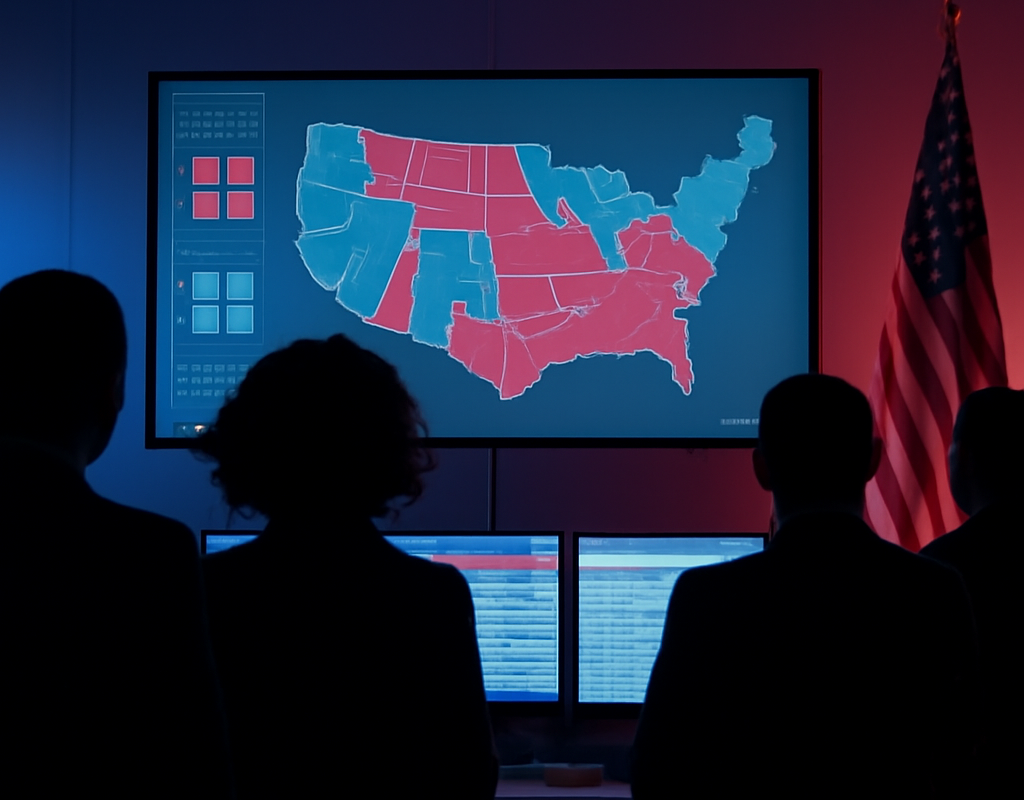
The 2026 US midterm elections produced a series of landmark victories for underrepresented candidates, including the first Black woman elected governor of a US state, the first openly gay man elected to the Senate and the first Native American woman elected governor.
The results came during a night of significant Democratic gains and were widely interpreted as a strong rejection of President Donald Trump’s second-term agenda. The elections also carried wider significance for representation in American politics, with voters choosing candidates who could break long-standing barriers at state and federal level.
Historic firsts reshape US political leadership
Several victories stood out because they changed who could occupy some of the most influential elected offices in the United States.
- Keisha Lance Bottoms became the first Black woman elected governor of a US state after winning in Georgia.
- Chris Pappas became the first openly gay man elected to the US Senate after winning in New Hampshire.
- Deb Haaland became the first Native American woman elected governor after securing victory in New Mexico.
- Gina Hinojosa became the first Latina elected governor of Texas.
The results underline how the midterm elections were about more than control of Congress. They also reflected a broader shift in the composition of political leadership across the country.
Georgia elects its first Black woman governor
Democrat Keisha Lance Bottoms won the Georgia governor’s race, defeating health care executive Rick Jackson. Her victory returns the governor’s office to Democrats after more than two decades of Republican control.
Bottoms previously served as mayor of Atlanta. Her election makes Georgia the first US state to elect a Black woman as governor, marking a major milestone in a state that has become increasingly important in national elections.
New Hampshire sends first openly gay male senator to Washington
Democratic Representative Chris Pappas won in New Hampshire and is set to become the first openly gay man to serve in the US Senate. Pappas has represented the state in the House of Representatives since 2019.
His campaign and public statements placed emphasis on equality and opposition to discrimination. His election adds to the growing representation of LGBTQ+ politicians in senior elected office in the United States.
New Mexico elects first Native American woman governor
In New Mexico, Democrat Deb Haaland defeated Republican Gregg Hull to become the first Native American woman elected governor of a US state.
Haaland, a member of the Laguna Pueblo tribe, previously served as Secretary of the Interior under former President Joe Biden. She was the first Native American to serve in a US Cabinet position, making her latest victory another significant step in her political career.
Other breakthroughs emerge from the midterm vote
The results included further potential milestones beyond the confirmed gubernatorial and Senate victories. In Michigan, Abdul El-Sayed was involved in a closely watched race that could make him the first Muslim elected to the US Senate.
El-Sayed, a former medical administrator, attracted large crowds during a campaign centred on expanding access to health care. The outcome of that race was being closely followed because of its potential national significance.
Texas also recorded a major milestone, with Gina Hinojosa becoming the first Latina elected governor of the state. Her victory adds a new dimension to the political history of one of the largest and most influential states in the country.
What the results mean for Congress
The midterm vote delivered strong gains for Democrats and changed the balance of power in Congress. It was also viewed as a direct electoral setback for President Trump and his political allies.
Another possible breakthrough concerns the speakership of the House of Representatives. If House Minority Leader Hakeem Jeffries wins the speakership as expected when the new Congress is formed, he would become the first Black speaker in US history.
That decision will depend on the organisation of the new House and the formal selection of its leadership. It therefore remains a prospective milestone rather than a completed result.
Why representation matters beyond the United States
The elections have significance beyond domestic American politics. The United States remains a major partner for European governments on trade, security, defence, climate policy and diplomacy. Changes in Congress and state leadership can influence how Washington approaches those issues.
For European observers, the results may offer an early indication of the political pressures facing the Trump administration during the second half of its term. Congressional control can affect legislation, oversight, public spending and the administration’s ability to advance its priorities.
The victories also demonstrate how questions of political representation continue to shape democratic debate in the United States. Supporters described the results as evidence that voters increasingly see themselves reflected in the people who govern them, while the outcome also signals a broader challenge to established political patterns.
What happens next
The newly elected officials will take office through the normal transition process for their respective positions. Congressional leaders will then be selected when the new legislature convenes, including the vote for House speaker.
Attention will also turn to how the Democratic gains translate into policy. Electoral victories can change the political balance, but governing will depend on legislative negotiations, committee control and cooperation between federal and state institutions.
Conclusion
The 2026 US midterm elections created a series of historic leadership firsts while delivering a major setback for President Trump and Republican control. From Georgia and New Mexico to New Hampshire and Texas, the results expanded representation at the highest levels of state and federal politics. The next test will be whether these electoral breakthroughs lead to lasting changes in policy and political participation.