

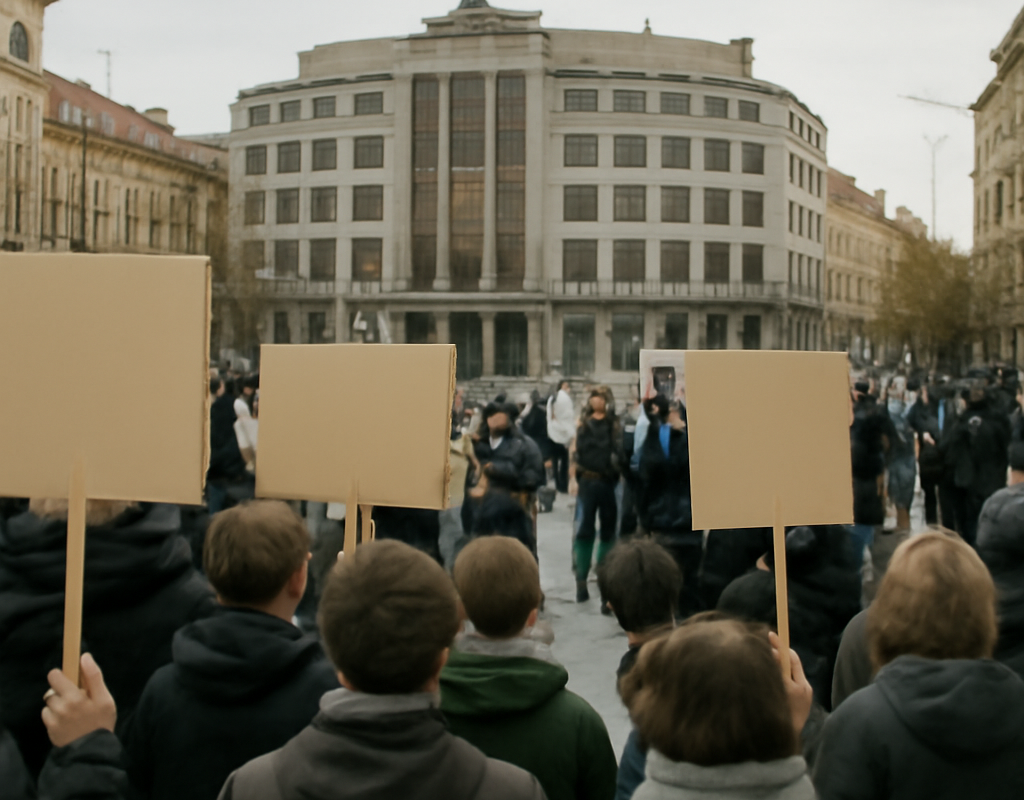
Thousands of people joined demonstrations across Czechia on Tuesday as public media workers went on strike against a government plan to replace licence fees with direct state funding. Critics fear the proposed model could increase political pressure on Czech Television and Czech Radio, while the government says the reform is intended to reduce costs and will not affect editorial independence.
The protests place media freedom at the centre of a wider political dispute in Czechia. The funding bill has passed its first of three readings in parliament, but it has not yet become law. Further parliamentary consideration is required before any new financing system can take effect.
What is behind the Czech public media protest?
The government proposal would end the existing system in which public television and radio receive regular licence-fee payments from individuals, households and businesses. Under the planned replacement, both broadcasters would be financed directly from the state budget.
Government supporters argue that public broadcasters need to reduce spending and that the proposed arrangement would provide a straightforward way to manage public finances. They have rejected claims that the change is designed to influence news coverage or programme decisions.
Prime Minister Andrej Babiš said on Monday that the government did not want to control or nationalise public media, and dismissed the concerns raised by protesters.
Opponents argue that direct dependence on annual state-budget decisions could make broadcasters more vulnerable to political pressure. They also warn that a reduction in funding of about 15% could result in staff cuts, fewer programmes and the cancellation of some productions.
Public broadcasters reduce programming during strike
Employees at Czech Television and Czech Radio took part in the industrial action, reducing normal programming. Viewers saw a message explaining that staff were working to preserve the public service in its full scope and quality in the future.
According to Michal Kubal, chief news editor at Czech Television, the action was unprecedented in the history of Czech public service media. The broadcasters continued with limited output, including archived material and shorter news bulletins.
Workers marched from the broadcasters’ headquarters to a central Prague square, where they were joined by students and other members of the public. Many demonstrators wore triangular paper hats associated with a popular Czech television animated character, which had become a symbol of the campaign.
The protest received support from trade unions, university leaders, churches, artists, athletes and international media organisations. A joint statement from the European Federation of Journalists, Reporters Without Borders and other groups said that the proposed funding model could open the door to political pressure and threaten editorial independence.
Why the funding mechanism matters
Public-service broadcasters are expected to provide news, cultural programming and other content independently of commercial and government interests. The way they are financed is therefore closely linked to their institutional independence.
A licence-fee system can provide a dedicated income stream outside the annual budget process, although it can also face criticism over affordability and collection. State financing may simplify administration, but critics say it could leave broadcasters more exposed to decisions made by the government and parliament.
The Czech proposal also raises practical questions about how the broadcasters would absorb the expected reduction in income. The likely consequences discussed by opponents include:
- Lower staffing levels and possible layoffs;
- Fewer original productions and shorter schedules;
- Programme cancellations or reduced regional coverage;
- Greater political debate over annual funding allocations.
How far has the bill progressed?
The Czech parliament, where Prime Minister Babiš’s three-party coalition holds the dominant position, advanced the bill through its first reading during an overnight session last month. That is an initial legislative stage rather than final approval.
The proposal must still pass the remaining parliamentary stages and complete the country’s constitutional law-making process before it can be implemented. The source information does not establish a final adoption date or an effective date for the new funding model.
Until then, Czech Television and Czech Radio continue to operate under the existing arrangements. The dispute is likely to remain politically significant as lawmakers consider the bill and the government responds to criticism from journalists, civil society groups and other public institutions.
A wider European media-freedom issue
The Czech debate comes amid broader European concern about the relationship between governments and public broadcasters. Protesters have compared the risks they see in the Czech proposal with developments in Slovakia and Hungary, where critics have accused populist governments of weakening media independence. Those comparisons are political arguments made by opponents of the bill, not a finding that the Czech reform has already produced the same result.
The European Federation of Journalists and Reporters Without Borders have warned that financing arrangements can affect editorial autonomy when governments control the flow of public money. The Czech government maintains that editorial independence and programme content would remain protected.
For audiences, the immediate issue is whether public broadcasters can maintain their current range of news, regional reporting and cultural output. For journalists, the central concern is whether a future government could use budget decisions to reward or punish critical coverage.
What happens next?
The next step is further parliamentary debate on the bill. Lawmakers will need to examine both the proposed financing mechanism and the consequences of a projected 15% reduction in funding. The final shape of the legislation, including any amendments, is not yet known.
Public media staff and their supporters are expected to continue pressing for safeguards that would protect editorial independence and stable financing. The government, meanwhile, will need to defend the proposal against claims that direct state funding could undermine the autonomy of the broadcasters.
The Czech public media dispute is therefore not yet a completed policy change. It is an ongoing legislative and political conflict over how public broadcasting should be financed and how its independence can be protected.
Conclusion
The Czech public media protest has highlighted a fundamental question: who should control the financial foundations of public broadcasting? The government’s proposal remains at an early stage, but the planned move to state-budget funding and the projected reduction in income have prompted a major response from journalists and civil society. The decisive test will come as parliament considers the bill and determines whether it includes effective protections for editorial independence.