

Standfirst: Tunisia is expanding tourism promotion in Japan, China and South Korea as visitor numbers, spending, cruise arrivals and winter air capacity rise. New UNESCO recognition and investment in connectivity are supporting the country’s effort to broaden its appeal beyond traditional beach holidays.
Tunisia is strengthening its tourism links with Asian markets while recording robust growth across visitor arrivals, tourism receipts and cruise travel. Figures presented on 3 November 2026 show that the country welcomed 8.69 million non-resident visitors between January and 20 October, generating 6.89 billion Tunisian dinars in tourism revenue.
The strategy is aimed at attracting travellers interested in culture, heritage, wellness, nature and desert experiences, as well as Mediterranean beaches. For international visitors, including those considering European travel connections to North Africa, the changes point to a destination investing in wider air access, accommodation, cruise infrastructure and tourism services.
Tunisia expands tourism campaign across Asia
Japan, China and South Korea are becoming increasingly important target markets for Tunisia. Tourism officials and businesses have taken part in major travel exhibitions and trade events to promote the country’s historic sites, traditional culture, coastal resorts and inland landscapes.
Tunisia appeared at Tourism EXPO Japan in Tokyo in September 2026, where it highlighted attractions including heritage towns, wellness breaks, golf and Mediterranean experiences. It also attended travel events in China and South Korea, creating opportunities for meetings between Tunisian operators and overseas travel companies.
China is showing particularly strong potential. Around 28,000 Chinese visitors travelled to Tunisia in 2025, a 19.3% increase on the previous year. Arrivals from China rose by a further 12% year on year during the first quarter of 2026.
Tunisia has supported that growth through promotional events, trade meetings and familiarisation visits. In April 2026, Chinese journalists, influencers and tour operators travelled through the country to experience museums, traditional cuisine, historical attractions and local activities.
UNESCO recognition strengthens Tunisia’s cultural appeal
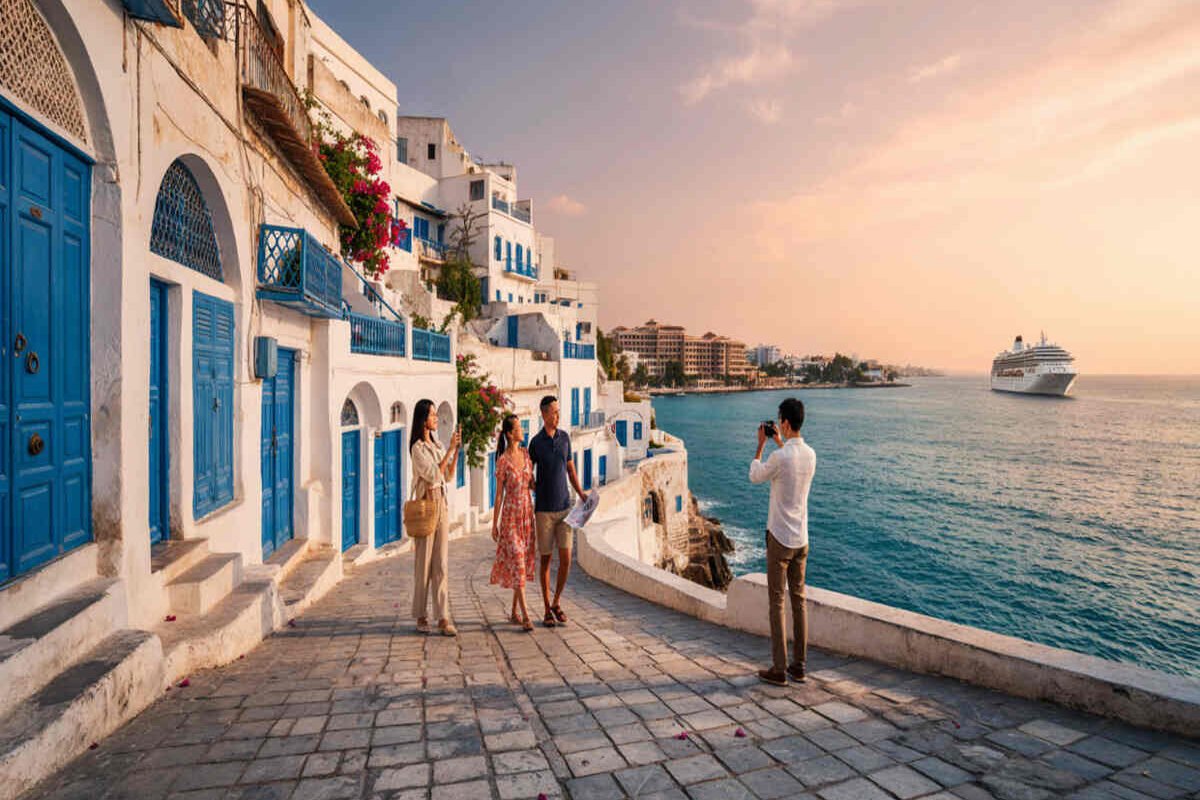
Heritage is central to Tunisia’s effort to attract visitors beyond conventional package holidays. Sidi Bou Saïd, the blue-and-white Mediterranean village near Tunis, was added to the UNESCO World Heritage List in July 2026. Its architecture, coastal setting and narrow streets make it one of the country’s best-known cultural destinations.
The Dahar region was also recognised as a UNESCO Global Geopark in April. Its rocky scenery, traditional settlements and geological features offer opportunities for guided touring, outdoor activities and community-based tourism.
These designations can help smaller destinations gain international attention, but increased visitor numbers also create responsibilities. Historic buildings, fragile landscapes and local traditions will require careful management as Tunisia develops new tourism products.
Visitor spending and cruise tourism continue to rise
The latest figures suggest that Tunisia is not only attracting more visitors but also generating greater income per traveller.
- Non-resident visitors: 8.69 million between January and 20 October 2026.
- Tourism receipts: 6.89 billion Tunisian dinars, up 3.7% year on year.
- Average receipts per visitor: approximately 793 dinars, compared with 734 dinars previously.
- Hotel guest nights: around 23.96 million during the reporting period.
- Cruise visitors at La Goulette: approximately 243,000 in the first nine months, up 21.5%.
La Goulette provides access to Tunis, Carthage and other nearby attractions, allowing cruise passengers to spend time with local guides, restaurants, transport providers and craft businesses. Port authorities forecast approximately 355,000 cruise visitors for the full year, although that figure remains an estimate.
Planned improvements to marina facilities at Sidi Bou Saïd and Monastir could further support cruise and sailing tourism.
Air connectivity is critical to future growth
Improved flights are a central part of Tunisia’s tourism plans. Transavia France has announced more than 410,000 seats between France and Tunisia for winter 2026–27, representing a 9% increase on the previous winter season.
The planned programme includes up to 117 weekly flights across 16 routes, linking France with Tunis, Djerba, Monastir, Sfax and Tozeur. British travel companies Jet2 and TUI have also announced additional services for 2027.
These European connections may make Tunisia more accessible to travellers from major markets, but direct links with Japan, China and South Korea remain limited. Building reliable long-haul access will be important if the country’s Asian marketing campaign is to translate into sustained visitor growth.
Hotels, training and local businesses prepare for demand
Tunisia is also seeking investment in accommodation, including efforts to reopen hotels that are currently closed. Hospitality training capacity increased in September 2026 from 1,776 to 2,070 places. The programme covers 23 tourism and hospitality specialisations.
The aim is to ensure that hotels, restaurants, guides and other tourism businesses have the skilled workforce needed to support additional demand. A proposed 2027 tourism and handicrafts budget of 176.8 billion? No, 176.8 million Tunisian dinars would represent a 9.3% increase on the 2026 budget and includes planned infrastructure investment.
For communities outside the main resorts, the broader strategy could create opportunities in desert excursions, cultural tours, handicrafts, food experiences and nature-based travel. The challenge will be to distribute those benefits while maintaining service quality and protecting the attractions that draw visitors.
What Tunisia’s tourism strategy means for travellers
Tunisia is positioning itself as a destination with more to offer than a beach break. Visitors may increasingly encounter itineraries combining coastal resorts with archaeological sites, historic towns, desert scenery, wellness services and UNESCO-recognised landscapes.
Travellers should check route availability carefully because air services vary by season, departure country and destination airport. Cruise passengers should also confirm the timing of shore excursions and local transport before arrival.
The latest tourism figures show a country attempting to diversify its source markets while upgrading the infrastructure needed to support growth. Tunisia’s success will depend on whether new air links, trained staff, hotel investment and heritage protection develop at the same pace as demand.
Conclusion: Tunisia’s 2026 tourism expansion is being driven by stronger promotion in Japan, China and South Korea, rising visitor spending, UNESCO recognition and increased European air capacity. The immediate takeaway for travellers is that Tunisia is broadening its offer beyond traditional seaside holidays, while future growth will depend on dependable connectivity and careful protection of its cultural and natural assets.