Families returning to Syria after years of war are facing a hidden danger beneath fields, roads and abandoned settlements. Landmines and other explosive remnants of war have killed or injured nearly 1,000 children since Bashar al-Assad was overthrown in December 2024, according to the UN Mine Action Service.
The latest deaths highlight the continuing humanitarian crisis across Syria, where displaced people are returning to homes and farmland without a complete map of contaminated areas.
Syria landmines threaten returning families
Eleven-year-old Alaa was tending her family’s goats with her siblings in Umm Khuzaym, north-west Syria, when an explosion occurred in a field behind their home. Her father found her dead and her 10-year-old brother, Mahmoud, seriously injured.
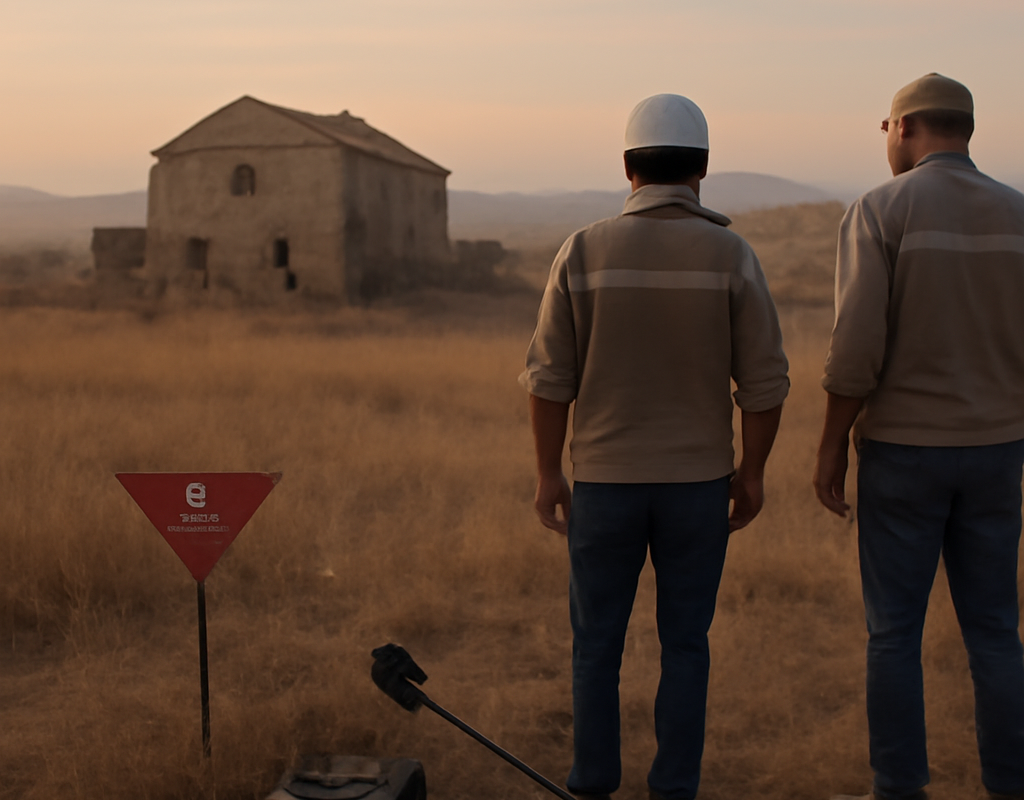
The children had unknowingly triggered a landmine. Their family believed the area was safe after demining teams had visited the fields several times, but experts warn that explosive devices can remain far beyond former front lines.
Landmines were placed by both government forces and rebel groups during Syria’s 13-year civil war. Unexploded bombs, cluster munitions and other remnants may now be scattered across farmland, roads and residential areas.
Why the danger is difficult to map
Katrin Atkins, research lead at Landmine Monitor, said modern conflicts often leave explosive remnants spread widely and without clear patterns. That makes it difficult for clearance teams to identify every dangerous location.
The absence of a nationwide survey means authorities cannot yet establish how much land remains contaminated. Syria’s Ministry of Defence says its teams have found and dealt with more than 315,000 mines and unexploded munitions since the end of 2024, but the full scale of the threat remains unknown.
More than 2,700 casualties recorded since December 2024
Unmas has recorded at least 1,556 incidents involving explosive ordnance since Assad’s fall on 8 December 2024. These incidents caused 2,701 casualties, including:
- 935 people killed
- 1,766 people injured
- 995 children killed or injured
Children account for about 37% of the recorded victims. Aid agencies believe the true figure may be between 25% and 50% higher because incidents in remote areas are likely to go unreported.
The danger has intensified as refugees and internally displaced people return and begin using land that had been inaccessible during the conflict. According to the Landmine Monitor report, 1,602 people were killed or injured by landmines and explosive remnants in Syria during 2025, more than 50% higher than the previous year.
Farmers and shepherds face daily risks
Returning families often cannot wait for clearance operations before earning a living. More than 60% of casualties recorded by the Halo Trust’s Syria programme involve farming, agriculture or shepherding.
Contaminated farmland prevents communities from growing crops and grazing animals. People searching for scrap metal or materials in abandoned buildings also face the risk of disturbing hidden devices.
Simon Jackson, Syria programme manager for the Halo Trust, said people are taking risks out of desperation. For many families, avoiding dangerous land may mean losing their primary source of food or income.
Survivors face long-term hardship
Those who survive often face permanent injuries and financial insecurity. Majid Abdul Rahman was travelling near Damascus in March 2025 when his car hit an explosive device. More than a year later, he has difficulty walking and has been unable to return to work, making it harder to support his family.
The consequences extend beyond immediate medical treatment. Survivors may need rehabilitation, prosthetic support and long-term assistance, while relatives can lose income when they become carers.
Explosions continue across Syria
At least 20 people were killed and more than 40 injured by explosive ordnance during November, according to the supplied report. In one incident, an explosion in a school courtyard in Hasakah on 4 November killed a 12-year-old child and injured 19 others.
On Monday, a 13-year-old boy was killed after an unexploded cluster munition detonated in southern Daraa province. The incidents show that the threat affects not only agricultural workers but also children returning to school and communities rebuilding everyday life.
Landmines threaten Syria’s recovery
Explosive contamination is also obstructing Syria’s economic recovery. Fields cannot be cultivated safely, damaged communities remain difficult to access and reconstruction workers may be exposed to unexploded devices.
With no complete national assessment, humanitarian organisations face difficulty setting priorities and estimating the resources needed for clearance. Until contaminated land is identified and removed, the end of active fighting will not mean the end of the war’s consequences.
Conclusion
Syria landmines remain a deadly obstacle for families returning home, particularly children, farmers and shepherds. The immediate priority is accurate mapping, sustained clearance and support for survivors, but the scale of contamination means the work could continue for years. For communities trying to rebuild after conflict, safety must come before farmland, schools and abandoned settlements can be treated as truly reclaimed.