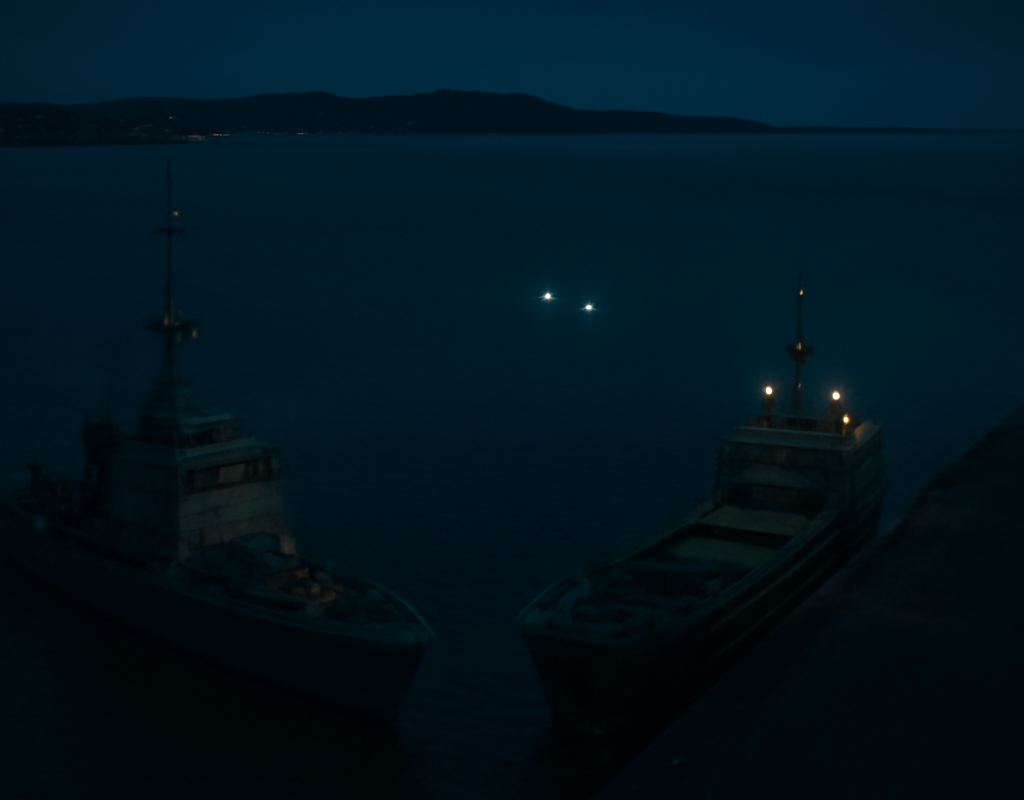
An audacious Ukrainian attack on Russian vessels in Benghazi has intensified fears that the war in Ukraine is spreading further beyond the battlefield. The overnight operation, coordinated by Ukraine’s SBU intelligence agency and armed forces, targeted the Russian corvette Merkury and an accompanying cargo ship in a harbour controlled by Libya’s pro-Moscow faction.
Ukraine’s President Volodymyr Zelensky described the action as an “exemplary operation”, while Moscow called it a dangerous escalation. The incident has also prompted concern from the United Nations mission in Libya, which warned about the wider implications of military action in a country that is not a party to the Russia-Ukraine war.
Why the Benghazi attack matters
The attack is significant because it took place nearly 2,000 miles from Moscow and far from Ukraine’s immediate front line. The vessels were berthed in eastern Libya, an area controlled by Khalifa Haftar, the self-styled field marshal whose forces maintain close links with Russia.
Ukraine has increasingly used long-range drones and covert operations to strike Russian military and strategic assets well beyond its borders. Kyiv has referred to some of these attacks as “long-range sanctions”, arguing that they impose costs on Russia’s war effort.
Previous operations have included:
- A suspected Ukrainian drone strike on a Russian dry-cargo ship in the Gulf of Finland.
- Attacks on Russia’s Baltic oil terminal at Ust-Luga.
- Long-range strikes against targets deep inside Siberia.
- Operation Spider’s Web, in which explosive drones damaged or destroyed Russian strategic bombers.
- Operations against Russian Africa Corps personnel in Africa, the successor to the Wagner Group.
Ukraine war spreads across Europe
The Benghazi operation is not an isolated example of the conflict reaching beyond Ukraine. Russian projectiles have landed inside Poland, close to an Anglo-French military exercise linked to possible future deployments after a ceasefire. Poland’s Prime Minister Donald Tusk described the incident as a deliberate provocation.
Romania and Moldova have also repeatedly dealt with Russian drones flying over or near their territory while targeting Ukrainian ports on the Black Sea. Romania, a Nato member, has scrambled fighter aircraft to respond to incoming drones. Bulgaria and Romania have additionally faced drone-related incidents involving commercial shipping close to the Black Sea coast.
The Baltic states remain particularly exposed. Estonia, Latvia and Lithuania share borders with Russia and view themselves as being on the front line of the conflict. Unexplained attacks on military-industrial facilities in the region have been blamed on individuals acting for Moscow, although responsibility is often difficult to establish.
Hybrid warfare increases the risks
Alongside conventional fighting and missile strikes, the conflict has developed into a broader campaign of hybrid warfare. This can involve operations designed to remain anonymous or difficult to attribute, including cyber attacks, sabotage, arson and the use of surveillance or explosive drones.
Germany’s Leipzig-Halle airport, a resupply hub used by Ukrainian cargo aircraft, was targeted by three explosive drones during the autumn. The devices were found before anyone was injured. Other incidents involving explosive packages have been reported in Germany, Poland and the UK, though Moscow has denied involvement.
Hybrid operations create a particular challenge for European governments. A conventional attack is easier to identify and respond to, while covert sabotage can cause disruption without immediately triggering a military confrontation. That uncertainty can make it harder for Nato states to decide whether an incident represents criminal activity, intelligence work or an act of war.
Could the attack trigger a wider escalation?
The immediate concern is whether strikes on Russian assets in neutral or non-belligerent countries will become more frequent. The International Maritime Organisation has already condemned attacks affecting commercial shipping in the Strait of Hormuz, and the Benghazi incident will raise fresh questions about the safety of vessels operating near the wider conflict.
Russia has limited room for conventional retaliation without risking a direct clash with Nato or other states. Western sanctions have already restricted many of Moscow’s economic options, while European countries have reduced, though not entirely ended, their dependence on Russian energy.
That does not remove the danger. Further attacks on shipping, military infrastructure or logistics hubs could lead to miscalculation, particularly where drones cross national borders or strike vessels in ports controlled by actors aligned with one side of the conflict.
The wider picture for Europe
The war’s geographical spread does not necessarily mean that a larger conventional war is inevitable. However, the pattern of incidents shows how the conflict is increasingly affecting countries and infrastructure far from Ukraine’s main battlefields.
For governments, the challenge is to deter further attacks while avoiding steps that could turn indirect confrontation into open conflict. For civilians and commercial operators, the consequences include greater security checks, disruption to transport routes and growing uncertainty around ports, airports and critical infrastructure.
The Benghazi attack therefore matters not only because of the ships involved, but because it demonstrates the expanding reach of the conflict. As Ukraine develops more sophisticated long-range and covert capabilities, and Russia continues its strikes and alleged hybrid operations, the risk of the war producing dangerous incidents elsewhere in Europe is becoming harder to ignore.
The key takeaway: the war in Ukraine is already extending beyond its borders through drone strikes, maritime incidents and hybrid operations. The Benghazi attack raises the stakes by showing that Russian-linked assets may be vulnerable even in distant harbours far from the main front line.