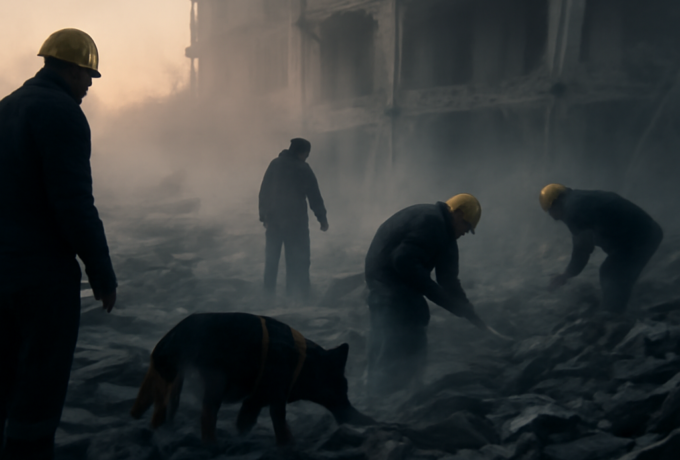
Gaza’s environmental crisis has deepened after nearly two years of intense war, with a new Oxfam report warning that more than 99% of the territory shows indicators of possible contamination linked to military attacks, rubble and failing infrastructure.
The assessment says hazardous materials in soil, water and air could affect Palestinian health for decades. Oxfam and the Conflict and Environment Observatory (CEOBS) based their findings on satellite imagery, remote sensing, spatial analysis and other open-source information.
Oxfam warns of long-term environmental damage in Gaza
The report describes Gaza as a “toxic wasteland” and identifies several potential sources of contamination, including heavy metals, explosive residues, asbestos, dioxins and biological pollutants. These materials have been released or disturbed by bombardment, the destruction of buildings and the collapse of basic services.
Oxfam International executive director Amitabh Behar accused Israel of environmental war crimes and linked the damage to what he described as an ongoing genocide. Israel rejects genocide allegations in a case before the International Court of Justice, calling them baseless and distorted.
Israel says its military campaign is an act of self-defence following Hamas’s attack on 7 October 2023. The Israeli government also says its forces take steps to reduce harm to civilians. Israel has been asked to respond to the latest Oxfam findings.
Millions of tonnes of rubble add to contamination risks
The environmental impact is not limited to explosives. A United Nations Environment Programme estimate last year found that Israeli military operations had generated more than 61 million tonnes of debris across Gaza. Around 15% of that material could carry a high risk of hazardous contamination.
A UN special rapporteur said in February that more than 200,000 tonnes of explosives had been dropped on Gaza in almost two years. The report compared the total energy involved with approximately 13 Hiroshima-type nuclear bombs.
Only a small proportion of Gaza’s debris has been removed. The Oxfam report says that clearing destroyed structures without first identifying hazardous materials could expose residents and workers to additional danger.
Untreated sewage is entering groundwater and the sea
All six wastewater treatment plants in Gaza are out of operation, according to the report. As a result, untreated sewage is entering groundwater and the Mediterranean Sea.
Recent winter storms have worsened the situation by mixing rainwater with wastewater and carrying polluted flows through streets and tent camps where displaced people are living. Damaged sanitation systems and unsafe water supplies have also contributed to gastrointestinal illness.
Environmental testing is difficult because laboratories in Gaza have been destroyed. Oxfam says Israeli restrictions on specialist equipment and scientific personnel have further limited the ability to measure the type and concentration of contaminants. Security concerns have also prevented UN Environment Programme experts from travelling to the territory.
Health concerns could continue for decades
Oxfam report author Lama Abdul Samad warned that persistent contaminants could cause chronic health effects over the long term. The report identifies potential risks including:
- Respiratory illnesses caused by dust, pollution and damaged buildings
- Organ damage and increased cancer risks
- Birth defects and stillbirths
- Skin disease linked to polluted surroundings and poor hygiene
- Gastrointestinal infections associated with unsafe water and sanitation
Doctors in Gaza have reported acute respiratory infections linked to dust and pollution. Displaced people have also been burning plastic, rags and cardboard for warmth and cooking, creating further exposure to harmful smoke.
Palestinian dermatologist Dr Alaa Abu Hajar told the BBC he had observed a five-fold increase in chronic skin diseases since the war began. He attributed the rise to environmental pollution and overcrowded, unhygienic conditions in tents and displacement camps, where rubbish, rodents and sewage are widespread.
Pollution is affecting fishing and food production
The damage is also threatening livelihoods. Farmers and fishermen say contamination of land and seawater is making it harder to produce or catch food safely.
Fisherman Abu al-Abed Sultan said untreated sewage and rubble were being discharged into the sea. He reported finding rubbish and building debris in fishing nets and said the pollution was harming both marine life and fishing communities.
At least 74,746 Palestinians have been killed since the war began, according to Gaza’s Hamas-run health ministry. The United Nations considers the ministry’s casualty figures reliable, while continuing to describe humanitarian conditions in Gaza as dire.
Oxfam calls for an independent environmental assessment
Oxfam and CEOBS are calling for a comprehensive, independent environmental assessment before major clean-up work begins. The report says investigators should identify contamination risks and ensure that workers involved in debris removal receive appropriate protection.
Large-scale reconstruction remains politically contested. Israel has said that rebuilding Gaza depends on the full disarmament of Hamas and other Palestinian armed groups. A US-led proposal accepted by Hamas in July included surrendering weapons in exchange for an Israeli troop withdrawal, but Israel said the plan did not go far enough.
The report’s central warning is that environmental recovery cannot be separated from humanitarian relief. Removing rubble, restoring sanitation, testing water and protecting public health will require access, specialist equipment and sustained international support.
For Gaza’s residents, the consequences of the war may therefore continue long after active fighting ends. The immediate need for shelter, food and medical care is now compounded by contamination that could remain in the environment for generations.