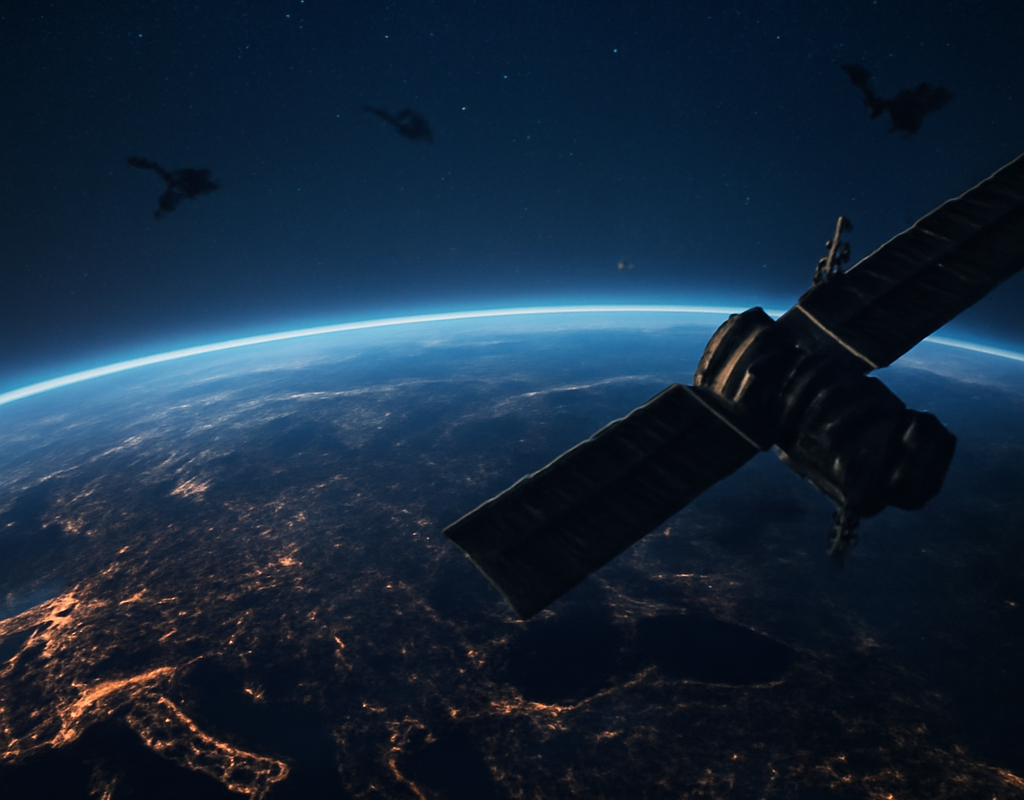
Nato chief Mark Rutte has warned that the alliance would respond to threats in space after reports that Russia may be preparing to launch a satellite carrying a nuclear warhead. The reports, which have not been independently confirmed, have heightened concern among European governments about the potential militarisation of orbit.
Nato says space security is part of collective defence
Speaking at a press conference in Berlin, Rutte said Nato would protect its members from threats wherever they emerged, including beyond the Earth’s atmosphere.
He said the alliance had a range of possible responses and would update its deterrence and defence plans when necessary. Rutte did not confirm the specific intelligence reports or provide details about what action Nato might take.
Reports shared by German broadcasters NDR and WDR, along with Süddeutsche Zeitung, cited anonymous military and intelligence sources. They claimed Russia was preparing a satellite reportedly known as “Sputnik-S”, potentially carrying a nuclear weapon capable of disrupting or destroying other satellites.
German government avoids confirming the reports
German Chancellor Friedrich Merz, who appeared alongside Rutte, also stopped short of confirming or denying the claims. He said the reports appeared to demonstrate the level of escalation Russia was prepared to pursue.
A German government spokesman said the allegations were being taken seriously, while also warning against creating excessive public anxiety over dangers that remained hypothetical.
The reports allegedly suggested a launch could take place within 60 days, although the source of the intelligence was not publicly identified. No evidence supporting that timetable has been released.
Russia rejects what it calls unsubstantiated allegations
Kremlin spokesman Dmitry Peskov said he had not seen the latest reports and dismissed claims based on unidentified sources as unworthy of serious consideration.
The Russian embassy in Berlin described the allegations as unfounded and accused those circulating them of taking part in a propaganda campaign.
Russia is a signatory to the 1967 Outer Space Treaty, which prohibits placing weapons of mass destruction in orbit. Moscow has previously denied US claims that it was developing a nuclear-armed, space-based anti-satellite system.
Why nuclear weapons in orbit would be a major escalation
The possibility of nuclear weapons being placed in space has alarmed officials because satellites support military communications, navigation, surveillance and early-warning systems. A weapon designed to destroy or disable satellites could affect both military and civilian infrastructure.
Josef Aschbacher, director general of the European Space Agency, described nuclear weapons in space as the “ultimate nightmare scenario”, according to German media reports.
Existing international law bans weapons of mass destruction in orbit, but it does not prohibit every form of military activity in space. Countries including the United States, Russia and China have developed or discussed capabilities intended to interfere with or target satellites.
Previous claims about Russian space weapons
In 2024, the United States said Russia was developing a space-based anti-satellite weapon with a nuclear warhead. Russia denied the accusation.
At the time, Russian President Vladimir Putin said Moscow opposed deploying nuclear weapons in space. More recently, US Secretary of the Air Force Troy Meink said the United States had “on-orbit, space-control weapons”, without giving further details. The Kremlin responded that space should remain free of weapons.
What happens next?
The latest claims remain allegations rather than a confirmed launch plan. Nato and national governments are assessing the intelligence while attempting to avoid unnecessary panic. Any verified move to place a nuclear weapon in orbit would represent a serious challenge to international security and existing arms-control agreements.
For now, officials have offered firm warnings but few operational details. The central issue is whether the reports describe an imminent deployment, a developing weapons programme or a broader effort to pressure Western governments.
The claims about a possible Russian nuclear satellite have not been confirmed, but Nato’s response shows that space is now firmly treated as part of the alliance’s security environment. Continued clarification from governments and transparent communication will be essential as officials assess the credibility and significance of the intelligence.