

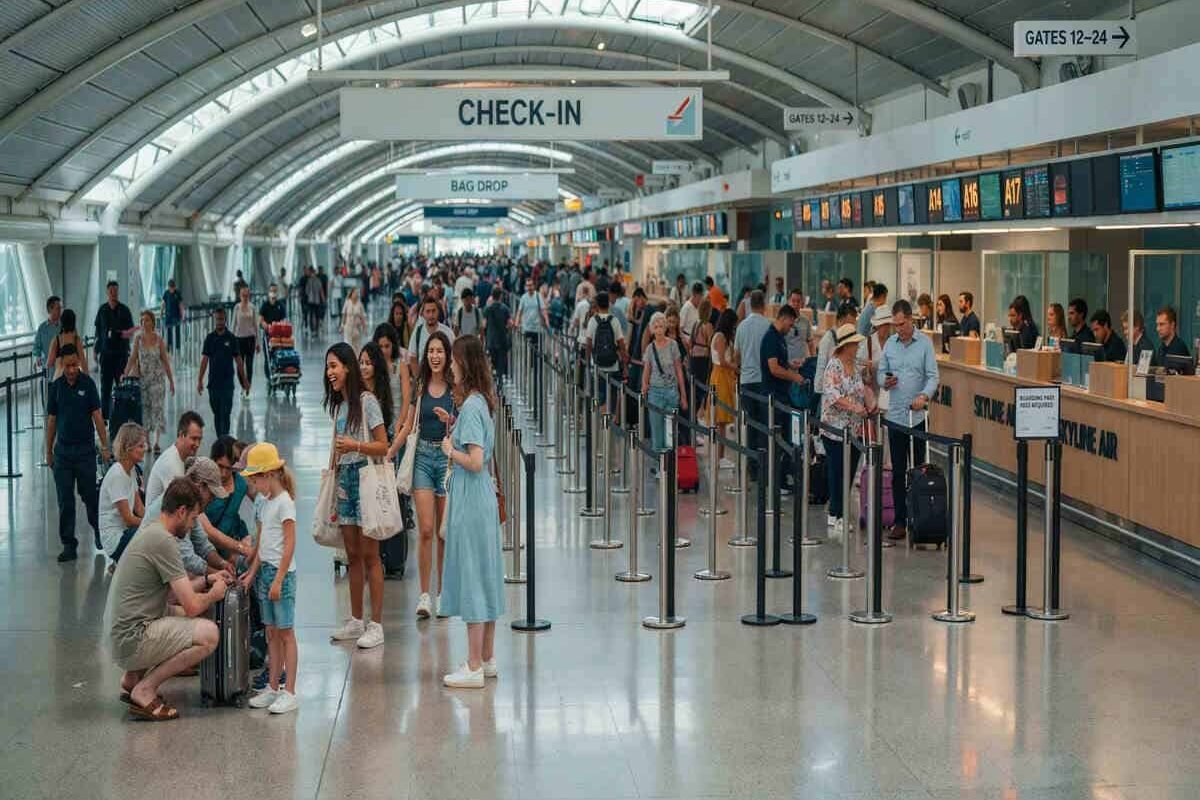
Standfirst: A 24-hour general strike is disrupting air, rail and urban transport across Spain on Wednesday, 11 November 2026. Travellers in Madrid, Barcelona and other major cities should check their operator’s latest status before setting out, allow extra time and prepare for cancellations or reduced services.
Spain is facing widespread Europe travel disruption after unions called a nationwide walkout from midnight to midnight. Airports, high-speed rail, commuter networks, buses, metros and roads are all affected to varying degrees, while demonstrations are adding congestion in city centres.
The action has direct consequences for visitors travelling within Spain and for passengers connecting through Spanish airports. However, the exact effect depends on the airline, route, airport and minimum-service arrangements in force. Travellers from Ireland should check their booking directly with the airline rather than assuming that every flight is cancelled.
What is happening in Spain?
The strike is being led by Spain’s major labour organisations, including UGT, CCOO, CGT and CNT. Their campaign, centred on wages, housing costs and living expenses, has brought together workplace unions and housing groups.
Spanish authorities have ordered minimum essential services, meaning transport has not stopped completely. Instead, operators are running reduced timetables and prioritising selected services. This has created significant pressure at airports and railway stations, where fewer services are carrying large numbers of passengers.
Airports face reduced capacity and long queues
Ground handling, baggage processing, refuelling, security and dispatch operations have all been affected. As a result, a flight may remain scheduled while still facing delays, baggage problems or last-minute changes.
Madrid-Barajas and Barcelona-El Prat are among the airports experiencing the greatest pressure. Reported minimum-service arrangements include reduced domestic, international and island connections, but the practical situation can change during the day.
Passengers should:
- Check the airline app, booking portal and airport departures page before leaving for the airport.
- Allow substantially more time for check-in, security and baggage collection.
- Keep essential medication, documents and valuables in cabin baggage where permitted.
- Follow airline instructions if the flight is cancelled or moved to another departure time.
- Avoid travelling to the airport solely on the basis of an old notification or third-party flight tracker.
This disruption may affect flights connecting through Spain, even when the final destination is outside the country. Travellers departing from Dublin, Cork or another Irish airport should confirm whether the Spanish sector of their itinerary remains operational.
Rail services are operating on reduced schedules
Renfe and private high-speed operators are running fewer services under the minimum-service rules. AVE, Avlo, regional and commuter trains are affected, while operators including Ouigo and Iryo may also have altered schedules.
The impact is particularly important for passengers travelling between Madrid and Andalusia. Existing infrastructure problems and separate driver-related industrial action have added fragility to the network, increasing the risk that a delay on one route will affect later departures.
Stations including Madrid Atocha, Madrid Chamartín, Barcelona’s commuter hubs and major Andalusian terminals may experience crowding and platform changes. Travellers should check the operator’s journey planner and ticket conditions before going to the station.
Key rail advice
- Do not assume that a ticket guarantees the advertised departure during the strike.
- Check whether the operator has confirmed cancellation, rescheduling or replacement transport.
- Ask the rail company about changing the booking or requesting a refund if the service is cancelled.
- Allow extra time for connections, especially where a journey involves commuter rail and high-speed services.
Madrid and Barcelona city transport is also affected
Demonstrations and road congestion are causing additional disruption in central Madrid and Barcelona. Reduced metro, bus and commuter services are operating alongside street closures and march routes.
In Madrid, disruption is concentrated around major transport hubs and central roads, including areas near Atocha, Chamartín, Gran Vía, Puerta del Sol and Paseo del Prado. In Barcelona, reduced Rodalies services and demonstrations around central areas are affecting movement between the city, suburbs and airport connections.
Visitors with hotel, airport or rail connections should consider walking short distances where safe and practical, but should not rely on taxis or airport buses being readily available during peak protest periods.
What this means for travellers from Ireland
The strike does not automatically cancel all flights between Ireland and Spain. Its effect depends on the airport, airline and service involved. Irish passengers flying directly to Spain should monitor the operating carrier and departure airport. Those connecting through Madrid or Barcelona should also check the onward segment.
Airlines and transport operators normally provide instructions when a service is cancelled. Depending on the circumstances and applicable passenger-rights rules, passengers may have options involving rebooking or a refund. Compensation is separate from a refund and is not automatic; eligibility depends on the cause, notice given and the applicable regulations.
What should passengers do now?
- Check the booking directly with the airline, rail operator or local transport authority.
- Confirm the status again before travelling to the airport or station.
- Allow extra time for security, check-in, station access and road congestion.
- Keep screenshots or emails showing cancellations and official instructions.
- Contact the operator before making separate replacement arrangements, unless immediate safety or welfare concerns require otherwise.
How long will the disruption last?
The confirmed industrial action is a 24-hour walkout on Wednesday, 11 November 2026. Even after the formal strike period ends, services may take time to return to normal because aircraft, trains, crews and passengers can be out of position. Delays or cancellations may therefore continue beyond the stated end of the action.
Latest position
Spain’s general strike is causing significant but uneven travel disruption rather than a complete shutdown. The most reliable information remains the live status issued by the relevant airline, airport, rail operator or local transport authority. Passengers should make decisions based on their specific booking and the latest official update.