

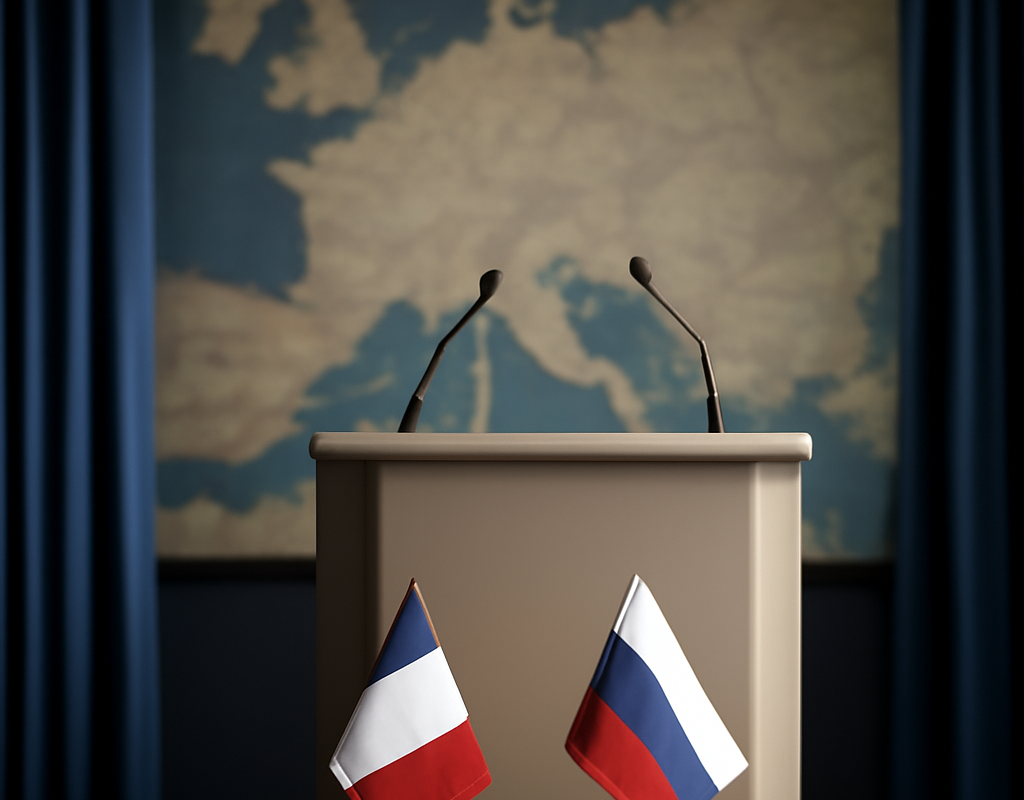
Russia has imposed entry bans on four French public figures after France ordered the expulsion of former RT France chief Xenia Fedorova, escalating an already tense dispute over foreign influence, media activity and support for Ukraine.
The measure targets MPs Sacha Houlié and Arthur Delaporte, along with journalists Ariane Chemin and Paul Gogo. Russia’s Foreign Ministry said the restrictions were retaliation for what it described as their involvement in pressure against Fedorova and calls for her removal from France.
What Russia announced
Russia’s Foreign Ministry announced the bans on 11 November 2026. Ministry spokesperson Maria Zakharova said the four people had been targeted because of their alleged involvement in the “harassment” of Fedorova and their calls for her expulsion.
The announcement means the four French citizens are barred from entering Russia. It is a national diplomatic measure by Moscow, rather than an EU decision. Russia did not announce any broader sanctions or additional measures in the information available.
The move follows France’s decision to subject Fedorova to an expulsion order and an asset freeze. According to the source material, those measures have been in place since late July.
Why Xenia Fedorova is at the centre of the dispute
Fedorova previously headed RT France, the French-language operation linked to the Russian state-backed broadcaster RT. Since RT’s broadcasting activities were suspended, she has continued to appear on French media outlets, including CNews, Europe 1 and JDD.
The European Union placed Fedorova under sanctions in September. A document published in the Official Journal of the European Union on 24 September accused her of promoting messages aligned with Russian authorities.
The EU document said she had portrayed Western and European support for Ukraine as prolonging the war, presented Russia as seeking peace while depicting Europe as favouring confrontation, questioned established facts concerning the unlawful transfer and deportation of Ukrainian children, and described European and NATO policies as threats to European security.
That listing is part of the EU’s wider response to information activities linked to Russia’s war against Ukraine. EU sanctions are legally distinct from France’s national expulsion process and Russia’s retaliatory travel restrictions.
Who has been targeted?
Arthur Delaporte
Delaporte is a Socialist member of the French National Assembly. During parliamentary questions in June, he challenged Interior Minister Laurent Nuñez over the renewal of Fedorova’s 10-year residence permit.
Delaporte criticised the renewal decision and asked whether the permit would be withdrawn and expulsion proceedings initiated. He described Fedorova as a Kremlin propagandist and a destabilising agent, allegations that reflect his political assessment rather than a court finding.
Sacha Houlié
Houlié chaired the National Assembly’s Law Committee from 2022 to 2024 and is a member of France’s parliamentary intelligence delegation. In November 2023, he published a report examining France’s vulnerability to foreign interference and methods used by Moscow to expand its influence.
After Russia announced the entry ban, Houlié described it on X as recognition of his work against foreign interference. He said the measure strengthened his commitment to defending France’s fundamental interests.
Ariane Chemin
Chemin is a senior reporter at Le Monde and also an author. In May, she published The War – These are Proper Nouns, a literary account focused on the consequences of Russia’s invasion of Ukraine.
Paul Gogo
Gogo is a journalist who has worked for several media organisations. He lived and worked in Russia for nine years, moving there in 2017 after previously being based in Ukraine. According to the source material, he left Russia in February 2026.
What the dispute means for Europe
The case brings together several strands of current European affairs: Russia-France diplomatic tensions, restrictions on Russian state media, sanctions related to the war in Ukraine and concern over foreign interference.
For France, the dispute also raises questions about how national authorities assess residence rights and media activity when officials believe a person’s public communications may support a foreign state’s information strategy. Any decision to expel an individual remains subject to French legal procedures and potential judicial review.
At EU level, Fedorova’s sanctions listing reflects the bloc’s assessment of her public messaging. The listing does not automatically determine the outcome of France’s separate immigration process, and Russia’s response does not alter the EU sanctions decision.
What happens next?
The immediate consequence is that Houlié, Delaporte, Chemin and Gogo cannot enter Russia under the announced restrictions. The incident may further reduce diplomatic and media engagement between France and Russia, particularly around Ukraine and alleged foreign interference.
Further developments could depend on whether France maintains the expulsion order against Fedorova, whether the affected individuals challenge Russia’s travel bans, and whether Moscow announces additional reciprocal measures. No such further action was confirmed in the available information.
Conclusion
Russia’s entry bans on four French figures are a retaliatory diplomatic step following France’s action against Xenia Fedorova. The episode highlights the continuing clash between Moscow and European governments over media influence, sanctions and the information dimension of the war in Ukraine. For now, the bans remain a Russian national measure, while Fedorova’s position in France continues to be governed by French proceedings and the separate EU sanctions regime.