

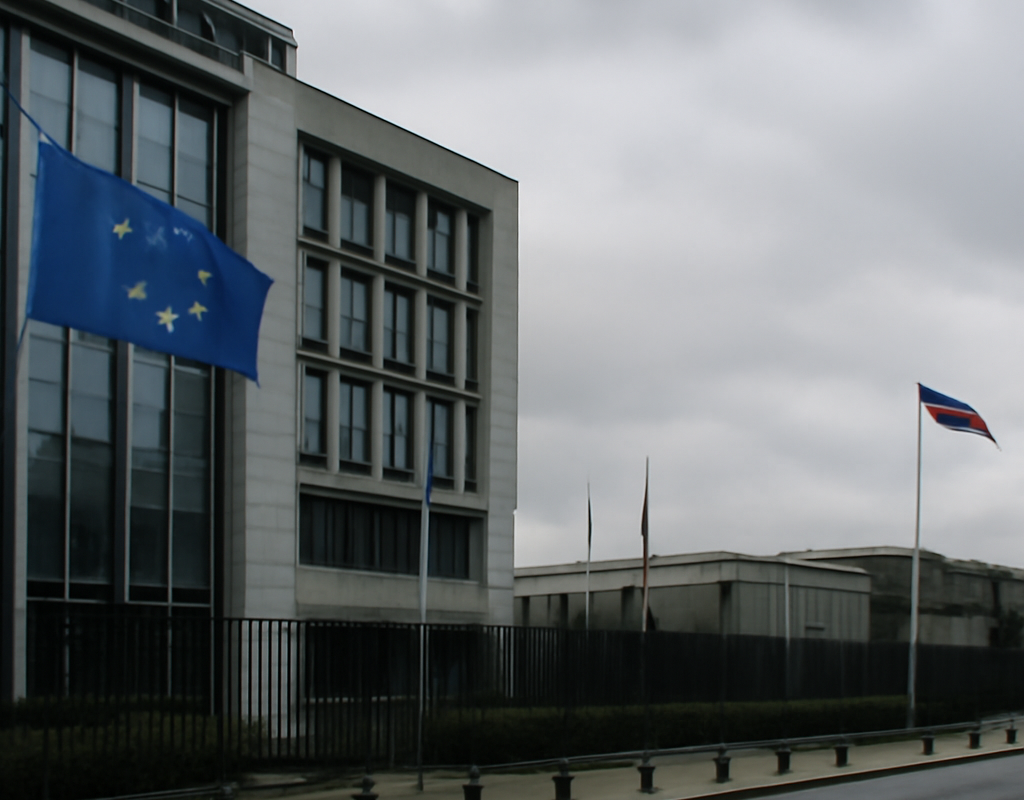
North Korea has rejected criticism from the European Union over its human-rights record, telling the bloc to focus on its own affairs. The dispute highlights continuing tensions between Pyongyang and European governments over accountability, sanctions and international scrutiny.
The statement comes as the EU remains engaged in wider diplomatic efforts concerning North Korea’s nuclear programme, ballistic-missile development and cooperation with Russia. Although the disagreement is centred on human rights, it forms part of a broader deterioration in relations between Pyongyang and Western governments.
North Korea rejects EU criticism
North Korean authorities have dismissed the European Union’s concerns about conditions inside the country and accused the bloc of interfering in its domestic affairs. Pyongyang’s response reflects its long-standing position that international criticism of its human-rights record is politically motivated.
The EU has consistently raised concerns about alleged violations in North Korea, including restrictions on political freedoms, access to information, freedom of movement and conditions for ordinary citizens. The country is among the most closed societies in the world, making independent verification of developments particularly difficult.
North Korea’s response does not represent a change in policy. Pyongyang has repeatedly rejected international resolutions and criticism relating to human rights, arguing that such measures are designed to undermine its sovereignty.
Why the dispute matters for European policy
The exchange is significant because North Korea’s human-rights situation is linked to several areas of European foreign policy. EU institutions and member states have to balance criticism of abuses with the need to address security risks connected to nuclear weapons, missile tests and military cooperation with Russia.
European Union policy toward North Korea generally combines diplomatic pressure with restrictive measures. These measures are separate from any future decision on additional sanctions and should not be interpreted as a new package unless formally adopted through the relevant EU procedures.
The main issues shaping European affairs involving Pyongyang include:
- North Korea’s nuclear weapons programme and repeated claims that its nuclear status is permanent.
- Ballistic-missile launches that raise concerns for South Korea, Japan and regional security.
- Alleged human-rights violations and restrictions on humanitarian access.
- North Korea’s expanding political, economic and military relationship with Russia.
- International efforts to enforce United Nations sanctions and prevent sanctions evasion.
North Korea’s growing relationship with Russia
The disagreement with the EU comes amid closer ties between North Korea and Russia. The two countries have expanded political and economic cooperation since Russia’s full-scale invasion of Ukraine in 2022.
The source material reports that road and rail links between Russia and North Korea have received renewed attention, including the opening of a new bridge connecting North Korea with China after years of delay. Such infrastructure projects may support trade and cross-border movement, although their longer-term economic effect remains difficult to assess.
Western governments have also raised concerns about North Korean support for Russia’s war effort. Reports cited in the source material allege that North Korean workers have been involved in drone assembly in Russia. Any such activity would raise questions about sanctions, labour rights and the transfer of resources connected to the war in Ukraine.
The European Union has not treated every allegation as an established fact. Evidence, official investigations and formal findings remain important before responsibility or legal consequences can be determined.
Security concerns remain separate but connected
North Korea’s recent missile activity has added to the security concerns surrounding the country. South Korean and Japanese authorities have reported launches into nearby waters, while Pyongyang has continued to present its weapons development as necessary for national defence.
For European governments, the issue is relevant beyond East Asia. North Korea’s relationship with Russia creates a potential link between European security and Indo-Pacific security. Cooperation involving weapons, military technology or personnel could affect the enforcement of international sanctions and complicate diplomatic efforts over Ukraine.
However, a North Korean missile launch is not itself an EU decision. Responsibility for immediate military assessments lies primarily with regional governments, including South Korea and Japan, alongside their security partners. The EU’s role is more likely to involve diplomacy, sanctions policy, humanitarian engagement and coordination with international organisations.
What does this mean for Ireland?
Ireland is affected mainly through its participation in the European Union’s common foreign and security policy and its broader commitment to international law and human rights. The dispute does not create a direct change to Irish law or impose new obligations on Irish citizens.
Any future EU sanctions decision would need to follow the appropriate legal process before becoming binding. Irish businesses and financial institutions would then be required to comply with applicable EU restrictive measures, including restrictions on listed people, entities, goods or financial transactions.
Ireland may also be affected indirectly if North Korean cooperation with Russia contributes to wider sanctions-evasion risks or changes the European security environment. Irish foreign-policy discussions are likely to remain focused on humanitarian concerns, the rules-based international order and the enforcement of United Nations measures.
What happens next?
The immediate dispute is unlikely to produce a diplomatic breakthrough. North Korea has shown little willingness to accept external criticism of its domestic system, while the EU is expected to continue expressing concern about human rights and regional security.
The next steps will depend on developments in several areas:
- Whether the EU issues a further formal statement or pursues additional diplomatic action.
- Whether North Korea conducts further missile or nuclear-related activities.
- Whether evidence emerges of deeper military cooperation between Pyongyang and Moscow.
- Whether United Nations sanctions monitoring identifies new cases of evasion.
- Whether diplomatic channels involving North Korea, South Korea, the United States or China reopen.
Conclusion
North Korea’s demand that the EU “mind its own business” reflects Pyongyang’s established rejection of international scrutiny over human rights. For the European Union, however, the issue cannot be separated entirely from nuclear proliferation, sanctions enforcement and North Korea’s closer relationship with Russia. The immediate position remains unchanged: criticism continues, no diplomatic resolution has been reported, and any new EU measures would require formal approval before taking effect.