

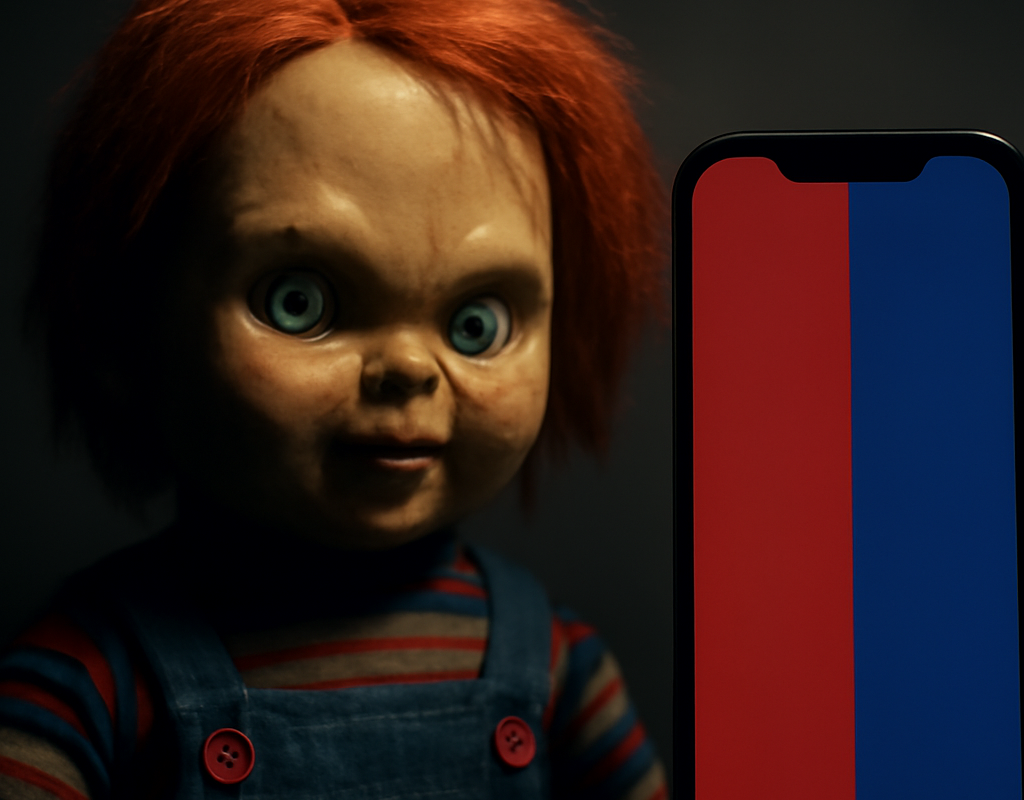
A political image featuring the horror character Chucky has triggered a public dispute between the doll’s creator and rapper Nicki Minaj. Writer Don Mancini objected after Minaj shared a seemingly AI-generated version of Chucky wearing a pink suit and a “Vote red” pin in support of Donald Trump and the Republican Party.
The clash comes amid intense debate over celebrity political endorsements, artificial intelligence and the use of fictional characters in campaign messaging. Minaj has not publicly responded to Mancini’s criticism.
Why is the Chucky creator angry with Nicki Minaj?
Mancini criticised the image in posts on X, describing Minaj’s version of the character as an “imposter”. He said Chucky was aligned with the “blue wave” associated with Democratic victories in the US midterm elections, rather than with Trump’s movement.
In a follow-up post, Mancini highlighted themes associated with the Chucky franchise, including its queer representation and its opposition to immigration enforcement by US Immigration and Customs Enforcement. He also referred to Chucky’s fictional child, Glen/Glenda, who was introduced in the 2004 film Seed of Chucky.
Mancini later shared an image of a Chucky doll with blue hair and wrote that Minaj’s version was not authorised by him and was not an AI representation of the character.
What image did Nicki Minaj share?
Minaj posted an image showing a version of the famous killer doll dressed in pink, with a badge reading “Vote red”. The post formed part of her continuing public support for Trump and the MAGA movement during the US midterm election campaign.
The image drew particular attention because Minaj had previously referenced Chucky in her verse on Kanye West’s 2010 song Monster. In that performance, she used the character as a metaphor for destroying a rival’s career.
However, Mancini’s response focused on the political meaning attached to the character. His objection reflects a wider question in popular culture: whether creators should be able to challenge political campaigns that use recognisable fictional figures without their approval.
Who created Chucky?
Chucky was created by writer Don Mancini for the 1988 horror film Child’s Play. The character became the central antagonist of a franchise that has expanded to eight feature films and a television series.
Across the franchise, Chucky has developed beyond the original premise of a murderous doll. Later stories introduced themes involving family, identity and gender, including Glen/Glenda. Those elements form the basis of Mancini’s argument that the character does not fit comfortably with the political message in Minaj’s post.
- Character: Chucky, the killer doll from Child’s Play
- Creator: Writer Don Mancini
- Political image: A pink-suited Chucky with a “Vote red” badge
- Dispute: Mancini objected to the character’s use in a pro-Trump message
- Response from Minaj: No public reply to Mancini’s posts was reported
How does the dispute connect to US politics?
Minaj has been an outspoken supporter of Trump and has described herself as one of his strongest fans. She also appeared with Trump during the campaign period leading up to the midterm elections.
The election result was described in the source report as a major setback for Trump’s party, with Democrats regaining control of both chambers of Congress. Trump subsequently argued on Truth Social that Republicans would have won by a landslide had his name been on the ballot.
Against that background, the Chucky image became part of a broader political conversation about celebrity advocacy, online campaigning and the use of artificial intelligence to create persuasive visual content.
Why AI-generated political images are controversial
AI-generated or apparently AI-assisted images can make it difficult for audiences to distinguish between an authorised campaign graphic and an unofficial piece of digital content. The issue becomes more complicated when the image uses a copyrighted character or a figure closely associated with a particular creator.
Political images involving entertainment properties can raise several concerns:
- Authorisation: Creators may object when their work is used to promote a candidate or party without permission.
- Meaning: A fictional character may carry themes that conflict with the political message attached to it.
- Authenticity: Viewers may not immediately know whether an image is official, fan-made or AI-generated.
- Platform debate: Social media posts can spread political imagery rapidly, even when the rights or provenance of the image are unclear.
What happens next?
There was no indication in the source material that Mancini had begun legal proceedings against Minaj, and no formal copyright claim was reported. The dispute therefore remained a public disagreement between a creator and a celebrity over the political use of a fictional character.
For now, the central issue is cultural rather than institutional: Mancini has publicly rejected the political identity assigned to Chucky in Minaj’s image, while Minaj has not responded directly to his criticism.
Conclusion
The dispute shows how political campaigns and online personalities increasingly use familiar pop-culture imagery to communicate with audiences. In this case, Chucky creator Don Mancini has made clear that he does not endorse Nicki Minaj’s Trump-themed interpretation of the character. The episode also highlights the growing tension between AI-generated political content, creative ownership and the established meaning of fictional characters.