Ireland’s Nations Championship victory over Fiji offered more than a straightforward result. The match highlighted concerns around officiating and kicking, while also showing how Rob Baloucoune’s pace can transform Ireland’s attack ahead of the meeting with South Africa.
Across the weekend, Wales’ defensive effort against New Zealand and France’s efficiency against South Africa provided further talking points. These are five key lessons from the latest round of international rugby.
1. Refereeing needs clearer authority
One of the weekend’s most striking themes was the growing influence of video officials during matches. Ireland’s game against Fiji featured several exchanges between referee Angus Gardner and television match official Mike Adamson, with the process sometimes appearing lengthy and unclear.
The concern is not the use of technology itself, but how responsibility is shared. A referee should remain the clear decision-maker, while the TMO’s role is to provide relevant evidence rather than steer the outcome. Longer matches and repeated reviews can affect the rhythm of games and test supporters’ patience.
The issue was visible in the Aviva Stadium, where a Mexican wave lasted for more than five minutes during the second half. That moment underlined how delays can drain momentum from a contest.
2. Ireland’s kicking game still needs work
Fiji head coach Jake White offered an important statistical observation after the match. He said Ireland have tended to struggle when opponents kick around 31 times, while Fiji kicked only 21 times in Dublin.
White also pointed to Ireland’s effectiveness in competing for high balls during the win over Argentina, claiming that Andy Farrell’s side had achieved a 45 per cent return from kicks received or contested. That aspect was less convincing against Fiji, as Ireland found it harder to collect loose possession and turn the aerial contest into attacking opportunities.
The kicking strategy will be especially significant against South Africa. The Springboks are likely to apply pressure through territory, contestable kicks and physicality, meaning Ireland will need greater accuracy both when kicking and when defending the resulting chase.
3. Baloucoune’s pace is becoming essential
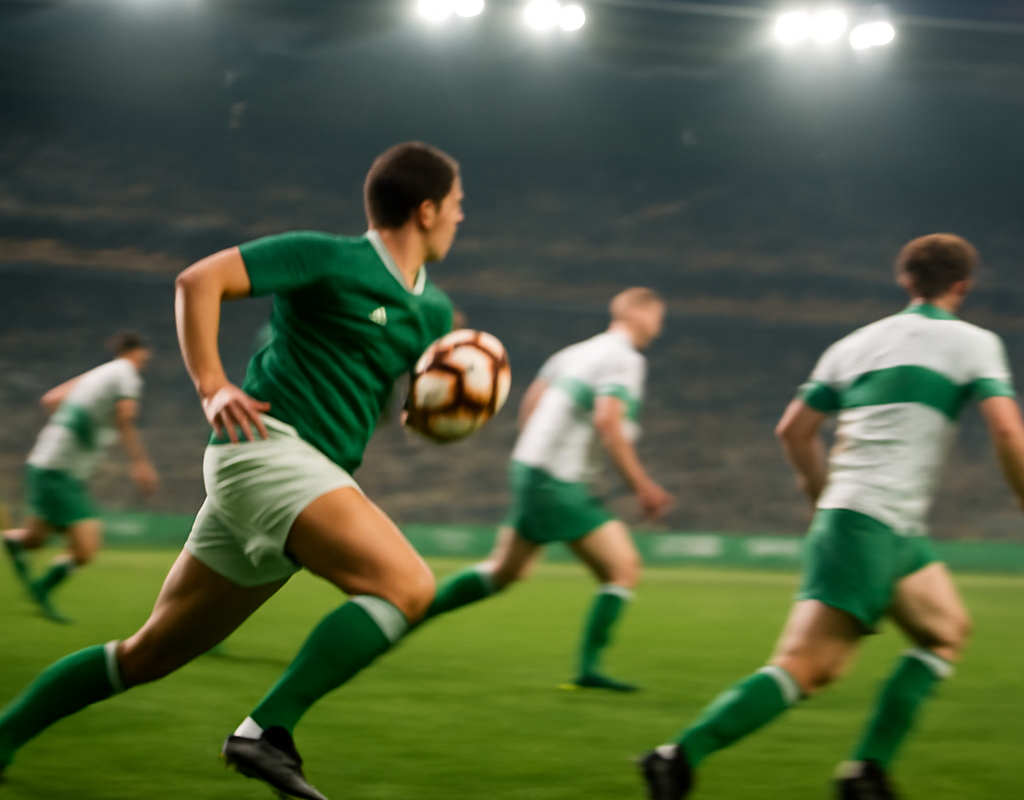
Rob Baloucoune’s contribution against Fiji went well beyond his two tries. His acceleration and ability to attack space from unexpected positions created uncertainty in the Fijian defensive line.
His involvement in Tommy O’Brien’s first try was particularly significant. Baloucoune’s change of direction forced a defender to turn inwards, opening a gap for his pass to reach Mack Hansen. Hansen then released O’Brien, who finished the move.
A similar pattern appeared during the victory over Argentina, when Baloucoune’s speed helped create the opportunity for Hugo Keenan’s first try. His role gives Ireland another way to break defensive systems: rather than relying solely on structured phases, they can use sudden acceleration to make defenders hesitate.
There were also missed chances. Baloucoune might have added another try had a pass reached him in open space, while he was unable to gather a cross-field kick from Sam Prendergast. Even so, his pace has become one of Ireland’s most valuable attacking assets.
4. The number 13 remains a problem for Ireland
Jamie Osborne’s pectoral injury has deepened Ireland’s difficulty at outside centre. Garry Ringrose has already been ruled out of the tournament with a hamstring problem, and Osborne’s injury came early in the Fiji match.
Andy Farrell now has limited options for the South Africa fixture. Robbie Henshaw and Bundee Aki are the most obvious alternatives, although both are generally more comfortable at inside centre. Henshaw started at 13 against Argentina, while Aki moved inside after Osborne left the field against Fiji.
That reshuffle allowed Stuart McCloskey to come off the bench and fill the number 12 position. Injuries to Tom Farrell and Jude Postlethwaite have made the selection issue more difficult, leaving Ireland short of natural outside-centre options.
5. Defensive work and red-zone efficiency matter
Wales secured their first victory over New Zealand in 73 years through an extraordinary defensive performance. The Welsh made 346 tackles, with Dafydd Jenkins leading the way on 38. Jac Morgan made 31, James Botham 30, and seven other Welsh players recorded at least 20 tackles.
Ireland, meanwhile, stood out for their efficiency inside Fiji’s 22-metre line. They averaged 3.1 points from 14 entries into the red zone, compared with Fiji’s 0.9 points per visit.
The comparison with France’s win over South Africa was also revealing. The Springboks averaged 1.5 points from 12 visits, while France produced 2.6 points from only eight entries. The figures show why finishing attacks effectively can be just as important as creating territory.
What Ireland must improve before facing South Africa
Ireland’s win over Fiji delivered encouragement, particularly through Baloucoune’s attacking threat and the team’s red-zone returns. However, the next challenge will be more demanding.
- Improve the quality and consistency of aerial contests.
- Use kicking more intelligently against a powerful South African defence.
- Find a reliable solution at outside centre.
- Maintain attacking speed without sacrificing accuracy.
- Convert pressure into points when opportunities arise.
The weekend’s rugby showed that Ireland have the attacking tools to trouble leading teams, but also exposed details that could decide the South Africa match. The clearest lesson is that Ireland’s speed, especially through Baloucoune, must be matched by sharper decision-making and greater control of the kicking game.