

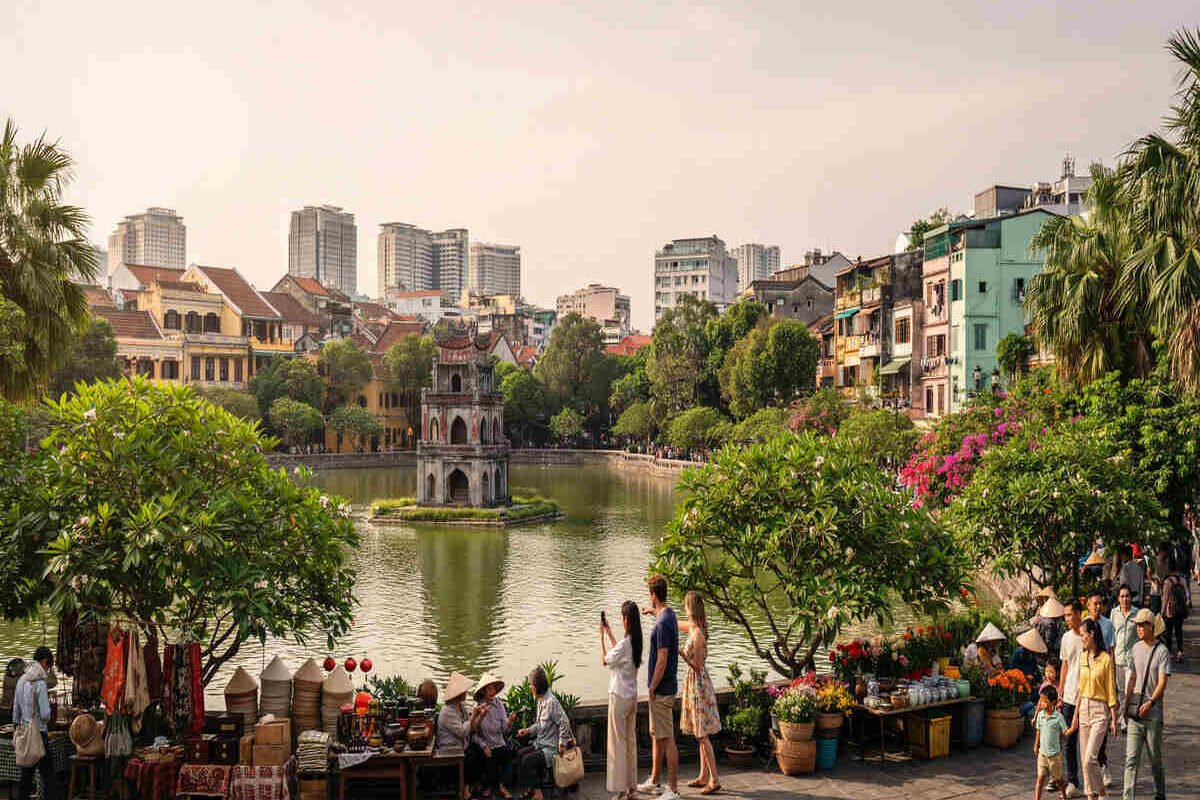
Hanoi is planning a major expansion of its tourism industry, with a target of welcoming between 47 million and 50.5 million visitors each year by 2030. The strategy places Vietnam’s capital at the centre of a wider Southeast Asian tourism push, combining heritage attractions, craft villages, upgraded hotels, night-time entertainment and digital visitor services.
The plan is significant for travellers considering Hanoi as a cultural destination. It could bring more accommodation, improved connections and a broader choice of experiences, while also increasing pressure on historic areas, traditional communities and local infrastructure.
Hanoi’s 2030 tourism strategy
Under Plan No. 406/KH-UBND, issued by the municipal government on 19 October 2026, Hanoi aims to attract:
- 47 million to 50.5 million visitors annually by 2030
- 13 million to 15 million international visitors
- 34 million to 35.5 million domestic visitors
- Tourism revenue of approximately VND 295 trillion to VND 340 trillion
The city wants tourism to account for around 7.5% to 8% of its economy. It also plans to increase the average international stay to between 3.5 and four days, while domestic visitors are expected to stay for approximately 2.5 to three days.
These targets are considerably higher than current visitor numbers, meaning Hanoi will need sustained growth in arrivals, transport capacity, hotel supply and visitor spending over the next four years.
Strong growth in Hanoi and Vietnam
Hanoi recorded approximately 27.5 million visitors between January and September 2026, an increase of 6.2% compared with the same period in 2025. International arrivals reached about 6.67 million, rising by 22%, while domestic tourism contributed roughly 20.9 million visitors.
Tourism revenue during the period increased by 13.3% to around VND 113.2 trillion. The figures indicate that international demand is currently growing faster than domestic visitor numbers.
Across Vietnam, approximately 17.7 million international visitors arrived during the first nine months of 2026, representing a 14.5% year-on-year increase. China supplied nearly four million visitors and South Korea approximately 3.1 million. India, Japan, the United States and Australia were also identified as important markets.
Those national figures do not confirm how many visitors from each market travelled specifically to Hanoi. However, they show the scale of the international demand that the capital hopes to attract.
Heritage attractions remain central to Hanoi’s appeal
Hanoi’s historic character is a major part of the tourism strategy. The Old Quarter, Hoan Kiem Lake, the Imperial Citadel of Thang Long and the Temple of Literature are expected to remain key visitor attractions.
The city plans to link these landmarks with cultural performances, food experiences and creative events. It is also seeking national tourist-area recognition for the Hoan Kiem area, Ba Vi and Huong Son.
For visitors, this could mean more structured cultural itineraries and greater opportunities to experience Hanoi beyond its best-known central streets. It also creates a challenge: increased visitor numbers must be managed without damaging monuments, public spaces or the character of historic neighbourhoods.
Craft villages offer experiences beyond the city centre
Traditional villages are another important part of the programme. Hanoi has identified Bat Trang pottery village, Van Phuc silk village and Duong Lam ancient village as destinations with potential for further development.
- Bat Trang: known for its pottery traditions
- Van Phuc: associated with traditional silk production
- Duong Lam: recognised for historic village architecture and rural heritage
The city wants at least three craft or ancient villages to become high-quality tourism destinations. If managed carefully, these areas could spread visitor spending to local families, artists and small businesses rather than concentrating tourism in the Old Quarter alone.
More hotels, evening activities and digital services planned
To support its visitor target, Hanoi plans to add at least 10,000 rooms in four- and five-star accommodation by 2030. Authorities are also aiming for average hotel occupancy of approximately 68% to 70%.
The strategy includes a stronger night-time economy, with additional walking streets, food stalls, performances and cultural activities. The city is also considering areas suitable for extended entertainment and shopping. A digital food map and regular culinary and craft events are intended to make Hanoi’s cuisine a more visible part of the visitor experience.
Technology will play a growing role. Hanoi aims to digitise 70% of its main tourism destinations and priority visitor areas by 2030. Its HanoiGo platform is expected to provide multilingual information about attractions, routes, accommodation and booking contacts.
What the plans could mean for future visitors
Travellers could benefit from a wider range of hotels, better visitor information and easier ways to combine Hanoi with other Vietnamese destinations. The city is studying stronger tourism connections with Ninh Binh, Hai Phong, Lao Cai, Hue and Da Nang, potentially supporting longer multi-stop trips.
At the same time, visitors should expect the most popular heritage areas to become busier if the strategy succeeds. Infrastructure, cleanliness, traffic management and conservation will be important factors in determining whether growth improves the experience or creates pressure on local communities.
The strategy does not mean that all planned projects are already complete. Accommodation, transport links, digital tools and tourism-area upgrades will be developed over time, so travellers should check current information when arranging a visit.
Hanoi’s tourism growth will depend on balance
Hanoi has the cultural assets and rising international demand needed to expand its tourism economy, but reaching 50.5 million annual visitors will require careful implementation. The city must improve transport and visitor facilities while protecting historic buildings, craft traditions and natural areas.
The clearest takeaway from Hanoi’s tourism strategy is that future growth will be judged not only by arrival numbers, but by the quality and sustainability of the visitor experience. Travellers planning a Hanoi trip can expect more accommodation, cultural programming and digital support by 2030, while the city’s success will depend on preserving the heritage that makes it attractive in the first place.