

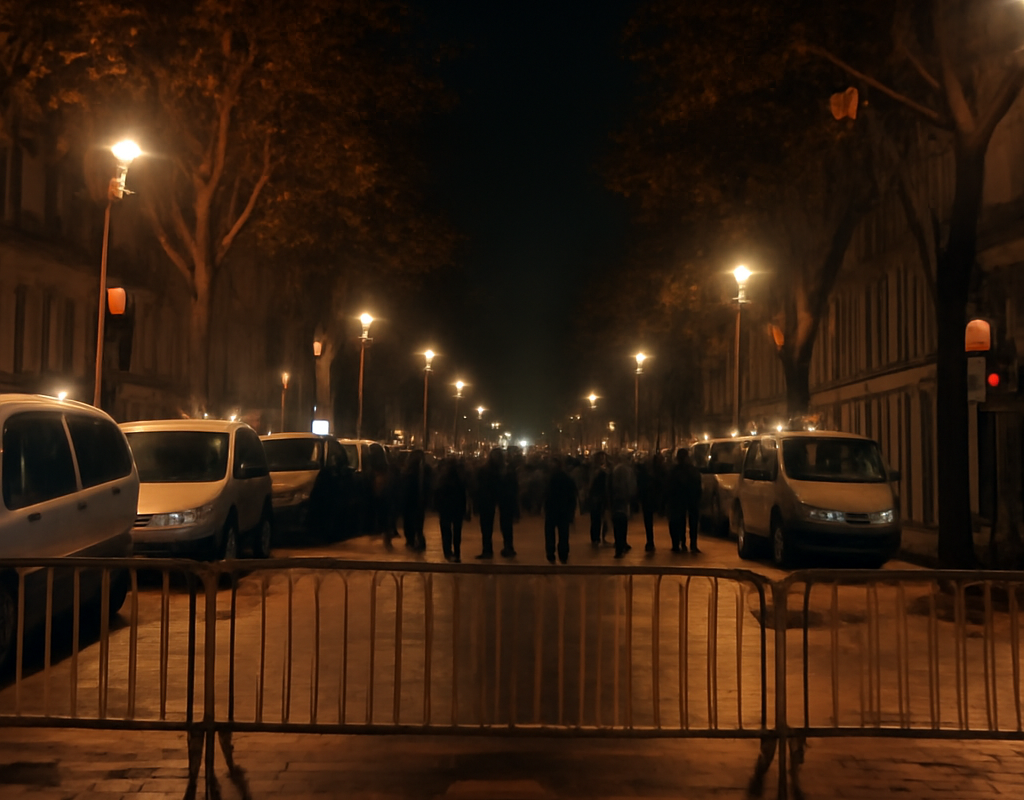
France is deploying around 70,000 police officers on Saturday as authorities prepare for a third consecutive weekend of demonstrations, with officials warning of a heightened risk of disorder during Halloween celebrations.
The national security operation follows violence and looting during earlier protests and comes amid a widening movement involving students, trade unions and supporters of the yellow vest movement. Demonstrators are protesting school conditions, rising living costs and higher fuel prices.
Why France is preparing for major protests
The demonstrations began in mid-September after pupils protested against school conditions in Paris’s suburbs. The movement subsequently spread nationwide, drawing support from trade unions and political groups and developing into a broader social campaign.
French authorities are particularly concerned because Saturday’s protests coincide with Halloween, when large numbers of people are expected to be outdoors into the evening. An official source close to the Interior Ministry warned of a “very high risk of public disorder”, citing calls for undeclared gatherings and unauthorised marches towards government buildings and other state institutions.
The unrest also comes roughly six months before France’s presidential election, giving the demonstrations wider political significance. However, the immediate security operation is focused on public order and the management of planned gatherings.
What security measures are in place?
Authorities are increasing police numbers across the country and have recalled some officers from leave. Others have had scheduled rest days cancelled to reinforce the operation.
Paris police have also imposed a curfew on Saturday and Sunday nights in districts that experienced significant unrest during protests on 17 October. The measures are intended to reduce the risk of renewed violence after demonstrations that were otherwise largely peaceful were followed by looting and disorder.
Interior Minister Laurent Nuñez said protests in city centres had been prohibited. Demonstrations would be permitted on the outskirts of cities only if organisers provided assurances that they could take place safely and orderly.
Nuñez also said gatherings presented as Halloween celebrations could be stopped if authorities believed they were being used to conceal protest activity. Officials have pointed to online calls for a “revolution” and “insurrection” as part of their assessment of the potential threat.
Protest organisers challenge restrictions
Trade unions and yellow vest representatives have criticised the restrictions, arguing that a broad ban on city-centre demonstrations is disproportionate. In a joint statement, major unions said they would examine possible legal challenges against what they described as a serious restriction on a fundamental democratic freedom.
The dispute highlights the balance French authorities must strike between protecting public safety and preserving the right to peaceful assembly. Any enforcement action will be closely watched, particularly after rights organisations accused police of using excessive force during earlier stages of the student movement.
The government’s position is that restrictions are necessary because of the risk of unauthorised marches, attacks on public institutions and violence after dark. Organisers, meanwhile, maintain that restrictions should not prevent peaceful demonstrations about education and household finances.
What is driving the wider movement?
Although the initial demonstrations focused on school conditions, the agenda has broadened. Participants are also raising concerns about the cost of living and rising fuel prices, issues that have contributed to previous periods of social unrest in France.
The government announced several measures aimed at addressing student grievances earlier in the week. Unions have rejected those steps as insufficient, suggesting that demonstrations could continue beyond Halloween.
The protests therefore combine several overlapping grievances:
- Concerns about school conditions, particularly among students and pupils;
- Opposition to the pressure created by higher household costs;
- Anger over rising fuel prices;
- Broader criticism of government policy ahead of the presidential election.
What happens next?
The immediate focus will be on whether Saturday’s demonstrations remain peaceful and whether authorities can prevent unauthorised gatherings from escalating. Police operations are expected to continue into the night, particularly in Paris districts subject to curfew measures.
The legal and political dispute over protest bans may also continue. Unions have indicated that they are considering avenues of appeal, while rights groups are likely to scrutinise how restrictions and policing are applied.
For the wider European context, the events are a national French public-order operation rather than an EU decision. Their significance lies in the scale of the mobilisation, the connection between student and cost-of-living concerns, and the potential political impact ahead of France’s presidential election.
Conclusion
France’s deployment of 70,000 police officers reflects authorities’ concern that Halloween could intensify an already tense protest movement. The central challenge will be maintaining public safety without unnecessarily restricting peaceful assembly. The weekend’s events may also indicate whether the campaign over school conditions and living costs is losing momentum or becoming a broader force in French politics.