Sinn Féin leader Mary Lou McDonald has again pressed Taoiseach Micheál Martin to explain Israel’s possible role in a proposed EU mission to Lebanon, as the Dáil voted against her party’s call for a referendum on removing Ireland’s triple lock.
Irish news: McDonald seeks clarity on EU Lebanon mission
During tense exchanges in Dáil Éireann on Wednesday, McDonald asked what involvement Israel might have in the mission’s intelligence sharing, operational coordination and planning.
The issue has become central to the wider dispute over the Government’s plan to change the rules governing overseas deployments by the Defence Forces. Sinn Féin argues that the public should have a direct say before the existing safeguards are removed.
McDonald had raised similar questions during a Sinn Féin private members’ debate the previous evening. She asked whether Israel had been consulted about the mission’s objectives, operations or areas of activity, and whether intelligence or surveillance information had been shared or might be shared.
What the Government says about the mission
Minister of State at the Department of Foreign Affairs Neale Richmond said the proposed EU operation would have a different role and location from the United Nations Interim Force in Lebanon, known as Unifil.
According to Richmond, the EU mission would provide training and advisory assistance to the Lebanese armed forces and internal security forces north of the Litani river. He said this area is outside Unifil’s current zone of operations.
The Unifil operation is in its final stages after the United States withdrew its backing. The proposed changes to Ireland’s deployment rules would allow Defence Forces personnel to take part in the EU mission without the current requirement for approval from the United Nations Security Council.
Triple lock dispute intensifies in Dáil Éireann updates
Ireland’s triple lock currently requires three forms of approval for overseas missions involving more than 12 Defence Forces personnel: authorisation from the UN Security Council, backing from the Dáil and Government approval.
The Government is legislating to remove the UN Security Council requirement while retaining the other domestic approvals. Ministers have argued that reform is needed to allow Ireland to participate in European security and peace-support missions when a Security Council mandate is unavailable.
McDonald said the change could expose future Irish governments to pressure from more powerful states. She argued that neutrality would be weakened if the UN safeguard were removed and called for a referendum rather than leaving the decision to whichever government is in office.
She also criticised the Government’s stated argument that the reform is needed to keep pace with Europe, suggesting that several states whose approval would become more influential represented former colonial powers.
Taoiseach accuses Sinn Féin leader of misrepresenting proposal
Martin rejected McDonald’s characterisation of the proposed mission and the legislation. He accused her of deliberately conflating separate issues and misrepresenting what the EU operation would involve.
The Taoiseach said Israel had undermined Lebanon, but added that Iran had also done so. He argued that supporting and strengthening Lebanon’s democratically elected government was appropriate.
Martin also warned McDonald not to suggest that Irish soldiers would be supporting Israel or taking sides in a peacekeeping operation. He said such claims could endanger Defence Forces personnel already serving in Lebanon.
McDonald denied making that suggestion. She accused the Taoiseach of using “dishonesty, sleight of hand and duplicity” in his push to remove the triple lock, while maintaining that Irish neutrality would remain unchanged.
Dáil rejects referendum motion
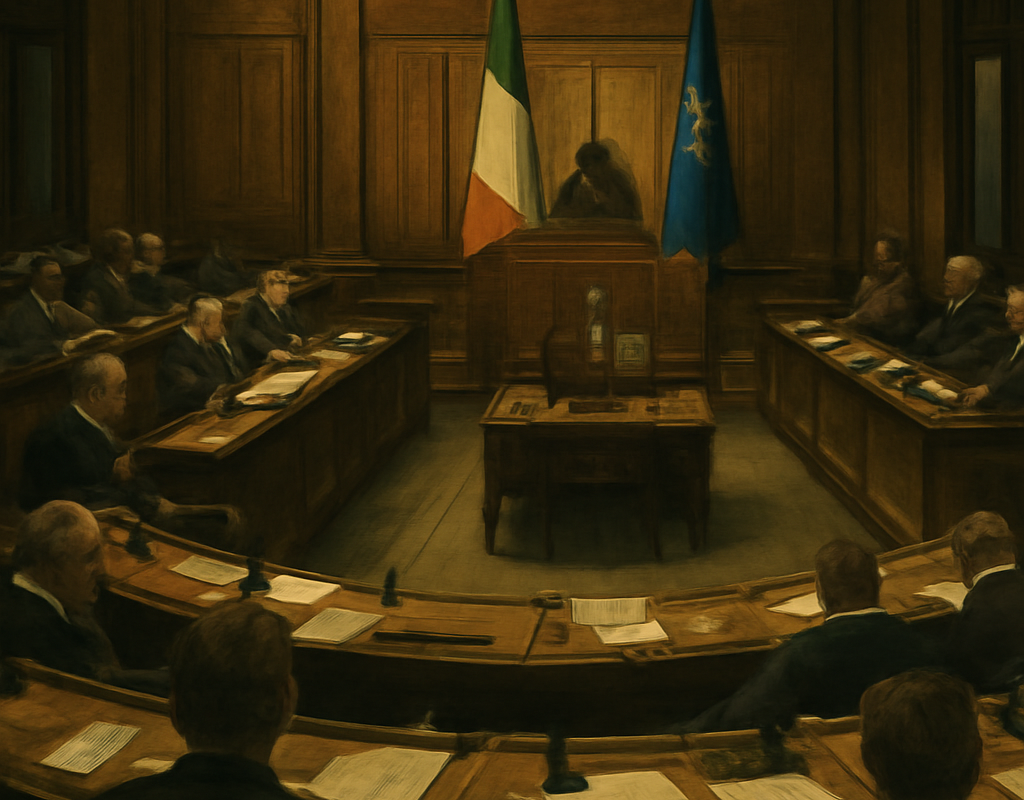
The dispute continued into a vote on Wednesday evening. TDs voted 84 to 77 against the Sinn Féin motion, which sought to defend Irish neutrality and require a referendum on removing the triple lock.
Independent Dublin Bay North TD Barry Heneghan, who generally supports the Government, voted with the Opposition. The result allows the Government’s legislation to proceed, although the political argument over neutrality, UN authorisation and Ireland’s role in European security missions is likely to continue.
Why the vote matters
- The proposed EU mission would train and advise Lebanese security forces north of the Litani river.
- The Government says the mission would operate outside the Unifil area.
- Sinn Féin wants clearer information about any contact or coordination with Israel.
- The Government is seeking to remove the UN Security Council element of the triple lock.
- The Dáil rejected a motion calling for a referendum on that change by 84 votes to 77.
What happens next?
The Government’s legislation remains the next major stage in the dispute. Its progress will determine whether Ireland can deploy personnel to future EU missions without a UN Security Council resolution, provided the Dáil and Government approve the deployment.
For now, the disagreement reflects two competing views of Irish foreign policy: the Government’s case for greater flexibility in European missions, and Sinn Féin’s argument that UN authorisation is an essential protection for neutrality and democratic accountability.
The key takeaway from this latest Irish news development is that the Dáil has rejected a referendum on the triple lock, but questions about Israel’s relationship with the proposed Lebanon mission remain at the centre of the political debate.