A British Airways flight bound for Lagos was disrupted at London Heathrow on 17 November 2026 after the aircraft’s nose landing gear moved from the taxiway onto soft ground before take-off. No injuries were reported, but the incident left passengers facing uncertainty over the flight’s final status and onward travel arrangements.
What happened to British Airways flight BA75?
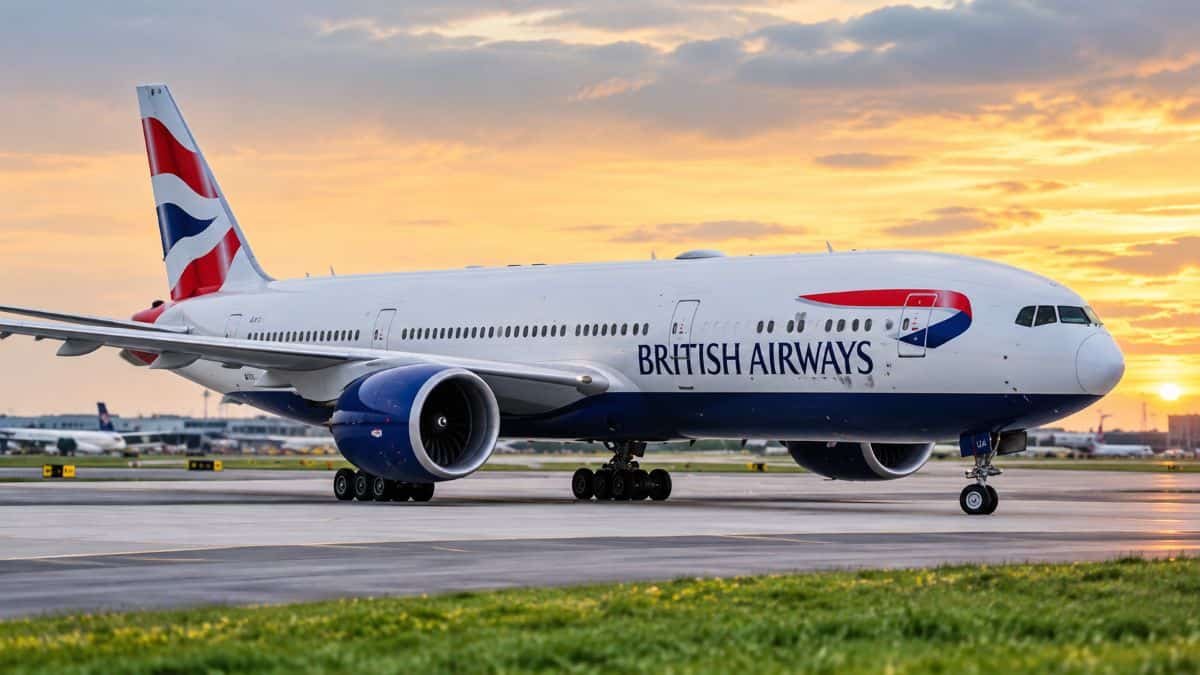
British Airways flight BA75 was preparing to leave Heathrow for Murtala Muhammed International Airport in Lagos when the Boeing 787-10 Dreamliner reportedly moved beyond the paved taxiway. Its nose landing gear entered a muddy grass verge, leaving the aircraft unable to continue taxiing normally.
Ground personnel attended the aircraft and helped passengers leave using mobile stairs. Travellers were then taken back to the terminal while staff assessed the situation and considered alternative arrangements.
The event is described as a taxiway excursion. That means an aircraft has moved outside the designated taxiway surface during ground operations. It was not a runway excursion, emergency landing or incident involving an aircraft leaving the runway after take-off or landing.
Aircraft and route involved
The aircraft was identified in initial reports as a Boeing 787-10 Dreamliner registered G-ZBLF. It was operating the international route between London Heathrow and Lagos, a service used by business travellers, tourists and people visiting family and friends.
The exact number of passengers on board and the aircraft’s technical condition have not been independently confirmed through an accessible official investigation record. The precise cause is also unknown. It would therefore be premature to attribute the incident to pilot error, equipment failure or any other specific factor.
Reported details of the incident
- Airline: British Airways
- Flight: BA75
- Date: 17 November 2026
- Departure airport: London Heathrow
- Destination: Lagos, Nigeria
- Aircraft: Boeing 787-10 Dreamliner
- Incident type: Taxiway excursion before take-off
- Injuries: None reported
Were passengers injured, and was the flight cancelled?
Initial accounts stated that no passengers or crew members were injured. British Airways apologised for the disruption and indicated that staff were assisting affected travellers with their onward arrangements.
However, reports differed over whether BA75 was cancelled completely or later operated using alternative arrangements. That distinction is important for passengers seeking a refund, rebooking or compensation. Travellers should check their booking directly with British Airways rather than relying solely on early reports or social media posts.
Passengers with onward flights, hotel bookings or airport transfers should also confirm whether their arrival time has changed. Those travelling on a single booking should ask the airline about protected connections and alternative transport.
Did the incident cause wider Heathrow disruption?
The available information indicates that the immediate problem was centred on the British Airways aircraft and its passengers. Heathrow was not reported to have suffered a confirmed airport-wide shutdown or a major programme of additional cancellations as a result.
Heathrow’s 2025 statistics provide context for the scale of the airport, but they do not measure the effect of this individual event. The airport recorded approximately 84.5 million passengers and 475,596 passenger aircraft movements during that year. Around 3.4 million passenger movements were linked to Africa, while total cargo handled was approximately 1.59 million tonnes.
No verified incident-specific figures were available for additional delayed flights, affected taxiways or other cancelled departures on 17 November. The event should therefore be treated as an individual aircraft disruption, not evidence of a general Heathrow failure.
What passenger rights may apply?
Passengers affected by a cancellation or significant delay may have rights under applicable UK aviation consumer protection rules. Depending on the circumstances, the airline may need to offer a choice between a refund and alternative transport. Where a delay requires an overnight stay, meals, refreshments and accommodation may also be relevant.
Compensation is a separate question. Eligibility can depend on the length of the delay, the cause of the disruption and whether the airline could reasonably have prevented it. Since the cause and final operating status of BA75 had not been officially established, passengers should not assume that compensation is automatically due.
Affected travellers should keep:
- booking confirmations and boarding documents;
- emails or messages from British Airways;
- receipts for reasonable expenses; and
- details of replacement transport or accommodation.
These records may be useful when requesting reimbursement, a refund or a formal review of a claim.
What remains unknown about the Heathrow incident?
Several key details remain unresolved, including the precise cause, the length of the recovery operation, the extent of any aircraft damage and the final status of the Lagos service. There is also no independently confirmed passenger count in the available information.
Until an official investigation record or direct airline statement clarifies those points, claims about responsibility should be treated cautiously. The incident should not be confused with an in-flight emergency or with unrelated British Airways events at Heathrow.
What should BA75 passengers do now?
Passengers should first check the British Airways booking system or contact the airline for confirmation of their individual itinerary. They should ask specifically whether the flight was cancelled, delayed or replaced, and what arrangements apply to any connecting journey.
Travellers should also avoid making non-refundable changes until the airline confirms the available options, unless immediate arrangements are necessary. Keeping a clear record of communications and expenses will help if a complaint or passenger-rights claim is later submitted.
Key takeaway from the British Airways Heathrow disruption
The BA75 incident shows how a ground movement problem can interrupt a long-haul journey even when nobody is injured and wider airport operations continue. British Airways passengers affected by the Heathrow–Lagos disruption should verify their booking, preserve expense records and wait for confirmed information before pursuing compensation. The available evidence supports describing this as a taxiway excursion, while its cause and final flight outcome remain unconfirmed.