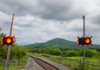
A new automatic enforcement camera is being introduced at the Farranfore railway crossing in County Kerry, targeting drivers who ignore flashing red lights or exceed the speed limit. The move is part of a wider national plan to improve safety at Ireland’s level crossings.
Breaking News: Camera goes live at Farranfore crossing
The GoSafe camera is scheduled to begin operating at midday on Tuesday, October 6th, 2026. It will record vehicle registration plates when motorists fail to stop while the crossing’s red warning lights are flashing or when they travel through the area above the permitted speed.
Drivers who are caught ignoring the red lights face an €80 fixed-charge fine and two penalty points. A speeding offence at the crossing carries a €160 fine and three penalty points.
Why the Kerry railway crossing is being monitored
The camera has been installed because of continuing concerns about driver behaviour at the Farranfore level crossing. Railway crossings require motorists to stop before the line whenever warning lights operate, regardless of whether a train is immediately visible.
Attempting to cross after the lights begin flashing can leave drivers with very little time to react. Speeding also increases the risk of a collision and makes it harder for motorists to stop safely if traffic, barriers or another vehicle obstruct the crossing.
Key facts
- Location: Farranfore railway crossing, County Kerry
- Operator: GoSafe, working with Gardaí and transport authorities
- Start time: 12pm on Tuesday, October 6th, 2026
- Red-light offence: €80 fine and two penalty points
- Speeding offence: €160 fine and three penalty points
Second camera in six-site railway safety programme
The Farranfore installation is the second automatic enforcement camera planned for problematic railway crossings in Ireland. The first was installed at Merrion Gates in south Dublin, where transport authorities identified repeated attempts by motorists to pass the stop line while red lights were flashing.
Iarnród Éireann plans to extend the programme to five further locations. These include Minish in County Kerry and Knockcroghery in County Roscommon, where speeding has been identified as the principal concern.
Additional Dublin sites are expected at Serpentine Avenue, Sandymount, Sutton and Coolmine. The installations are intended to address local safety problems rather than create a general road-monitoring network.
How the enforcement system will work
The cameras will capture the registration plates of vehicles involved in suspected offences. Gardaí and GoSafe will operate the enforcement system with Iarnród Éireann, Transport Infrastructure Ireland and Kerry County Council.
The programme follows work assigned to Transport Infrastructure Ireland in early 2024 to develop a national strategy for camera-based enforcement at railway crossings. The approach brings together road policing, railway safety and local authority responsibilities.
Garda assistant commissioner for roads policing Denis Ferry said the force welcomed the next stage of cooperation between transport safety partners and that effective technology could help protect rail and road users through enforcement.
Level-crossing collisions remain a safety concern
Figures cited in the report show that motorists and cyclists drove into level-crossing gates 23 times in 2025, compared with 28 incidents in 2024. Although the number fell, each incident can place drivers, passengers, railway staff and train passengers at serious risk.
The issue has also been highlighted by a fatal collision at Kiltybo near Ballyhaunis in County Mayo this year. A train struck a car at a user-operated crossing, killing 12-year-old Eoin Doyle. His father, Declan, was injured but his injuries were not life-threatening.
The introduction of automatic cameras is therefore being presented as one part of a broader effort to reduce dangerous decisions at crossings. Enforcement cannot replace careful driving: road users must obey the signals, stop at the marked line and only proceed when it is safe and permitted.
Read More
Follow DailyDigest for further Ireland News, transport updates and public safety developments.
What motorists should do at a level crossing
- Reduce speed as you approach the crossing.
- Stop before the marked line when red lights flash or barriers begin to close.
- Never drive around a lowered barrier or try to beat the warning system.
- Keep the crossing clear and do not stop on the tracks.
- Proceed only after the warning lights have stopped and the route ahead is unobstructed.
Drivers should also remain alert for cyclists, pedestrians and vehicles that may be using the crossing at the same time. Poor visibility, wet roads and congestion can make a hazardous situation worse.
What happens next?
The Farranfore camera will now begin collecting evidence of suspected red-light and speeding offences. The remaining planned sites are expected to be introduced as the national enforcement programme develops, although the source information does not provide specific activation dates for each location.
For drivers, the practical message is straightforward: railway warning lights must be treated as an immediate stop signal. The new system means offences that might previously have gone undetected can now lead to fines and penalty points.
Frequently asked questions
Where is the new railway camera?
It is at the Farranfore railway level crossing in County Kerry.
When does the camera start operating?
The camera is scheduled to go live at 12pm on Tuesday, October 6th, 2026.
What is the penalty for ignoring flashing red lights?
The stated penalty is an €80 fine and two penalty points.
What is the penalty for speeding?
Drivers caught speeding at the crossing face a €160 fine and three penalty points.
Which other crossings are included in the plan?
Planned locations include Minish in Kerry, Knockcroghery in Roscommon and several Dublin crossings, including Serpentine Avenue, Sandymount, Sutton and Coolmine.
Conclusion
The new Farranfore camera marks a significant step in Ireland’s effort to tackle dangerous behaviour at railway crossings. This Breaking News Ireland development carries a clear warning for motorists: stopping for red lights and respecting speed limits is essential, and automatic enforcement will make violations more likely to result in penalties.