Switzerland’s Grand Train Tour gives visitors a way to experience the Alps from the comfort of a train rather than relying on strenuous hikes. Linking lakeside cities, historic towns, mountain resorts and cross-border routes, the journey is a standout option for European travellers planning a scenic rail holiday.
What is Switzerland’s Grand Train Tour?
The Grand Train Tour of Switzerland is a connected railway itinerary covering approximately 1,280 kilometres across eight sections. According to Switzerland Tourism, the route passes 11 large lakes and five UNESCO World Heritage Sites, combining panoramic services, regular trains and selected connecting transport.
Travellers do not need to complete the entire circuit. Individual sections can be chosen according to available time, budget and interests, making the experience suitable for families, older travellers and visitors seeking accessible mountain scenery. Services operate within Switzerland’s year-round rail network, although timetables and panoramic connections can vary by season.
- Approximate route length: 1,280 kilometres
- Number of main sections: eight
- Large lakes along the wider itinerary: 11
- UNESCO World Heritage Sites: five
- Travel options: panoramic trains, regular rail services and connecting transport
Lucerne, Interlaken and Montreux showcase Switzerland’s lakes
Lucerne is a natural starting point for the Grand Train Tour. Its historic centre, lakeside setting and mountain backdrop provide an introduction to Switzerland’s blend of heritage and scenery. The Lucerne–Interlaken Express then travels through the Bernese Oberland, passing valleys and lakes on its way to Interlaken.
Interlaken sits between Lake Thun and Lake Brienz and offers onward connections towards Montreux. The GoldenPass route continues through Alpine settlements and countryside before reaching Lake Geneva. Montreux adds a lakeside and cultural dimension, with a waterfront setting and access to western Switzerland and the Valais Alps.
Zermatt and the Glacier Express bring the high Alps into view
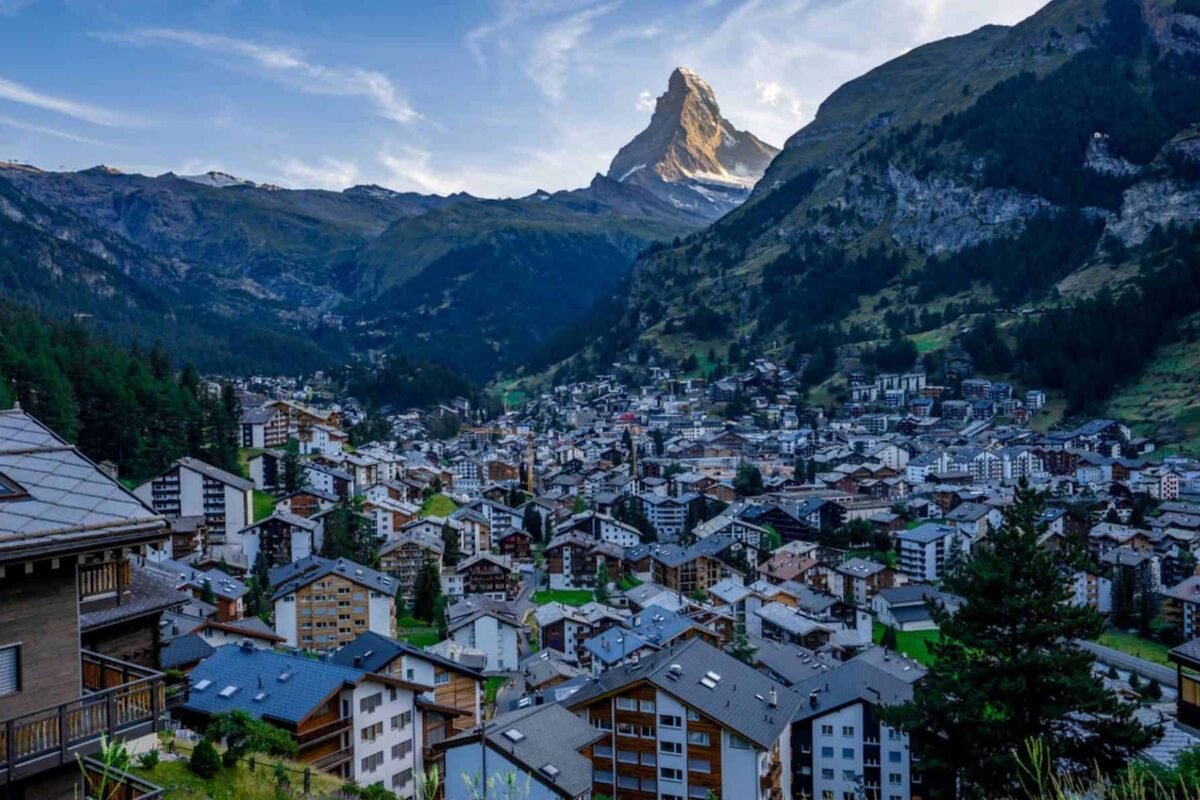
The route towards Zermatt leads into the Valais Alps, an area associated with steep mountain slopes and the Matterhorn. Visitors can arrange a separate journey on the Gornergrat Railway for elevated views over the surrounding peaks, subject to availability and separate ticket arrangements.
From Zermatt, the Glacier Express links two famous mountain resorts: Zermatt and St Moritz. Its route crosses valleys, tunnels and bridges, including the celebrated Landwasser Viaduct. The journey is designed for sightseeing from the carriage, but passengers should plan carefully because seat reservations are compulsory on the Glacier Express.
St Moritz provides a further base for Alpine tourism, accommodation and onward travel. The combination of Zermatt, the Glacier Express and St Moritz is among the most recognisable sections of Switzerland’s scenic railway network.
The Bernina Express adds a cross-border rail journey to Italy
The Bernina Express extends the experience beyond Switzerland by connecting the Alpine railway network with Tirano in northern Italy. The route climbs through high-altitude landscapes, passes glaciers and mountain valleys, and then descends towards the Italian border.
Ospizio Bernina, at 2,253 metres above sea level, is one of the route’s notable points. The Albula and Bernina railway lines are part of a UNESCO World Heritage property recognised for their engineering and historic importance. Travellers may also be able to continue between Tirano and Lugano using connecting services, although routes and operating periods should be checked before booking.
How European travellers can reach Switzerland by train
The Grand Train Tour fits naturally into wider European holidays. TGV Lyria connects Paris with Swiss gateways including Geneva, Lausanne, Basel and Zurich, allowing travellers from France to combine a city break with mountain and lakeside destinations.
Travellers from Spain can consider international rail connections from Barcelona via Lyon, although the journey generally involves a change and requires careful timetable planning. Italy offers particularly convenient links, with Milan connected to Switzerland by international rail services and Tirano providing access to the Bernina route.
For visitors travelling from Ireland, reaching Switzerland by rail usually involves several international connections. Flights from Ireland to Switzerland may be more practical for a short break, while rail can become part of a longer European itinerary. International tickets, domestic Swiss fares and panoramic reservations may need to be booked separately.
Planning costs, reservations and the best route
The cost of a Grand Train Tour holiday depends on the sections selected, accommodation, international travel and whether a Swiss Travel Pass or other rail product suits the itinerary. A complete circuit is not essential: choosing two or three sections can create a shorter and more manageable trip.
Before departure, travellers should:
- Check seasonal timetables for panoramic services and connecting buses.
- Confirm whether seat reservations are compulsory or recommended.
- Allow extra time for international rail connections.
- Compare point-to-point fares with available Swiss rail passes.
- Book accommodation early in popular destinations such as Zermatt and St Moritz.
- Check luggage arrangements and the rules for each international operator.
Weather can also affect mountain excursions and connecting transport, even when the main railway network continues operating. Checking official railway information before each stage is therefore important.
Why the Grand Train Tour stands out
Switzerland’s Grand Train Tour brings together the country’s major Alpine landscapes without requiring visitors to organise separate hiking routes or mountain transfers. It links urban heritage, lakes, engineering landmarks and resort communities while also connecting with France, Italy and wider European rail journeys.
For travellers seeking a scenic and flexible way to explore Switzerland, the strongest approach is to select a realistic combination of sections rather than rushing through the entire route. With reservations, connections and seasonal changes checked in advance, the journey can become a memorable European rail holiday built around the Alps.