
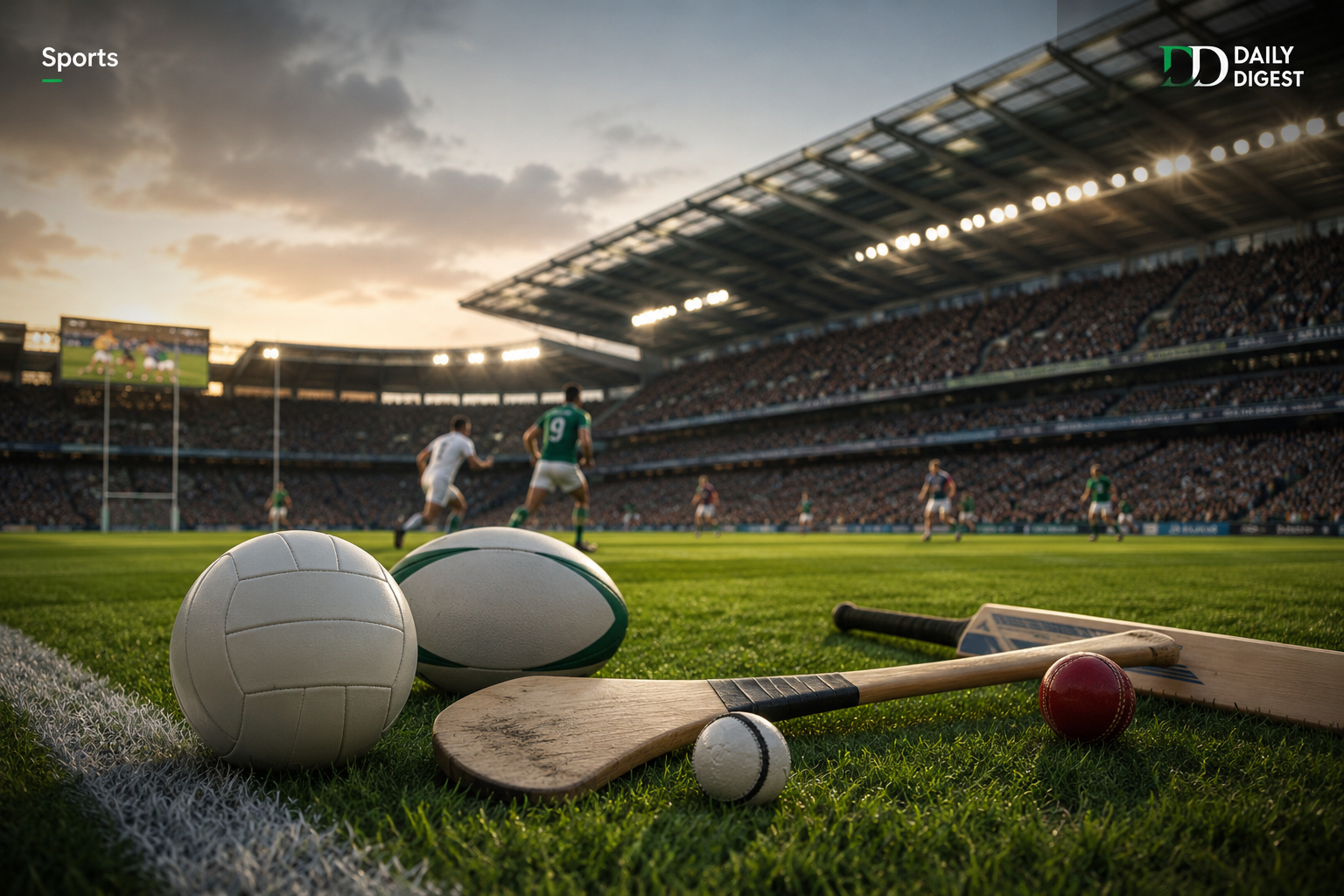
Ireland’s victory over South Africa at the Aviva Stadium has prompted unusually sharp criticism in the Springboks’ media, with questions now being asked about the world champions’ attacking direction less than a year before the World Cup. The result also strengthens Ireland’s position in the growing conversation around sports Ireland and the future of international rugby.
Few observers expected Andy Farrell’s side to come out on top after South Africa’s dominance at the set piece in their previous meeting. The Springboks won 24-13 in Dublin last year and had appeared capable of turning the scrum and maul into decisive weapons once again.
That prediction did not materialise. South Africa still won scrum penalties, but Ireland prevented the set piece from controlling the match. Instead, the hosts combined effective attacking play with disciplined defensive work to secure a convincing win.
Ireland win exposes new South Africa concerns
The scale of the reaction in South Africa reflects how highly the Springboks had been regarded during 2026. Their defeat in Dublin was their fourth loss in seven matches, and the aura of near-invincibility surrounding the team has clearly weakened.
South Africa Times columnist Mark Keohane argued that the hosts were the better side throughout the contest. His assessment also raised the possibility that South Africa’s victory in the previous year may have been an exception rather than proof of a lasting advantage in the rivalry.
Ireland scored three first-half tries compared with South Africa’s one, establishing a lead that reflected the difference in attacking ambition and execution. The Springboks had territory and possession late in the match, but could not create the controlled, patient sequences needed to overturn the result.
That failure was particularly striking because South Africa’s traditional strengths were expected to give them a platform. When the scrum and maul did not produce the usual level of dominance, the visitors struggled to find alternative ways through Ireland’s defence.
South Africa’s attacking game under scrutiny
Former Springboks coach Nick Mallett said on the Talking Boks podcast that South Africa were now behind both England and Ireland in attacking fluency. He also suggested that the team may be missing the individual brilliance previously supplied by players such as Cheslin Kolbe.
Former South Africa international Schalk Burger delivered a similar warning on local television. He questioned whether the team’s concentration on the scrum and maul had come at the expense of broader attacking development.
His criticism focused on a recurring pattern: South Africa gaining territory but failing to turn it into sustained, varied attack. Too many phases ended with forward carries, allowing the defence to anticipate what was coming next.
- South Africa’s set piece did not dominate as expected.
- Ireland’s defence remained organised under pressure.
- The Springboks struggled to build attacking continuity.
- Late possession produced pressure but not enough clear chances.
What the result means before the World Cup
The defeat does not erase South Africa’s achievements during the year. Despite losing on two successive weekends, the Springboks topped the southern hemisphere section and qualified for the Nations Championship final. Ireland, meanwhile, finished third in its section despite losing only once across the summer and autumn windows.
SuperSport’s Gavin Rich suggested that the previous gap between the northern and southern hemispheres had narrowed significantly. That argument will be closely followed as teams prepare for the next World Cup, when squad management and player workloads will become increasingly important.
South Africa’s coaching situation is also part of the discussion. Rassie Erasmus was serving a six-match ban, meaning he was absent from the coaching box for the Dublin fixture. The defeat has encouraged speculation about how much influence his absence had, although the match itself showed that South Africa’s problems extended beyond the touchline.
For Ireland, the performance provides evidence that their attack can trouble the world champions while their defensive structure withstands the Springboks’ most familiar threats. It is an important result in ireland rugby, but it should be judged as one significant performance rather than a guarantee of future success.
A warning rather than a World Cup verdict
South Africa still has time to address the issues highlighted in Dublin. The team’s physical strengths remain clear, and the Nations Championship qualification demonstrates that they remain among the leading sides in the southern hemisphere.
However, the reaction from former players and South African rugby commentators underlines the nature of the challenge. If opponents can contain the scrum and maul, the Springboks need more variety, speed and creativity in open play.
Ireland’s win has therefore become more than another entry in the year’s ireland sports results. It has shifted the tone of the rivalry and given Irish rugby supporters a compelling reason to believe that the gap between the two hemispheres is no longer as wide as it once appeared. The clearest takeaway is that South Africa’s World Cup preparations now require attacking answers as well as physical authority.
