

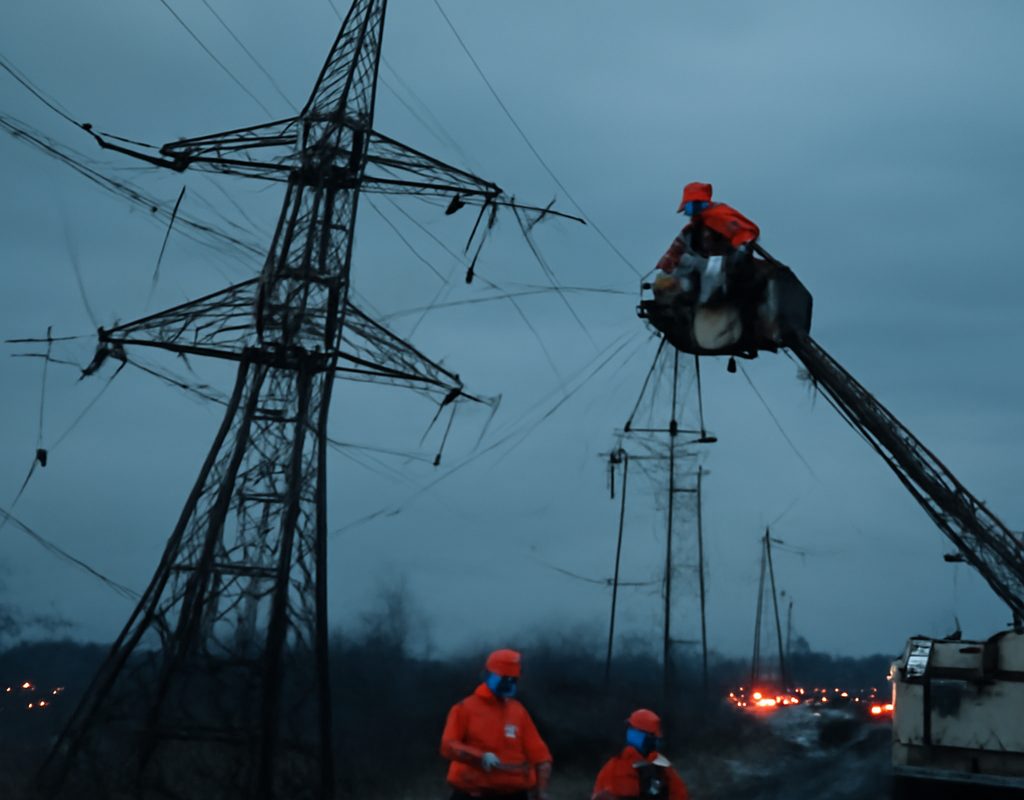
Russian strikes on Ukraine’s energy infrastructure have left more than 850,000 people without electricity, while a further drone attack was reported at a site where rescuers were searching after a deadly bombing. The attacks come as winter approaches and ahead of planned talks involving Ukraine, Russia and the United States.
Ukrainian energy company DTEK said the overnight assault had targeted facilities in the eastern Dnipropetrovsk region. More than 600,000 residents in the Pavlohrad, Samar, Kamianske and Dnipro districts, including the city of Dnipro, were initially affected.
Authorities later said power was being restored in parts of the region, although outages and heating disruptions were also reported elsewhere in Ukraine.
Energy facilities targeted across Ukraine
Ukraine’s President Volodymyr Zelenskyy said the strikes caused widespread disruption, including in Kharkiv Oblast in the northeast and Zhytomyr region in the northwest.
In Zhytomyr, 140 apartment buildings were reportedly left without heating after a Russian strike. Local authorities in Kharkiv said approximately 250,000 customers in the region had lost power, although electricity was subsequently restored.
The attacks have increased concern about the resilience of Ukraine’s energy system during the colder months. Damage to power-generation and distribution infrastructure can affect electricity, district heating, water services and communications, particularly when repairs are complicated by continuing attacks.
- More than 850,000 people across Ukraine were reportedly affected by power outages.
- More than 600,000 residents in Dnipropetrovsk region were initially without electricity.
- About 250,000 customers in Kharkiv region were also affected before power was restored.
- Heating was disrupted in 140 apartment buildings in Zhytomyr region.
Further strike reported at Komyshuvakha rescue site
Zelenskyy also said Russia had launched a drone attack on the site of an earlier strike in Komyshuvakha, where emergency workers were conducting search operations.
The earlier bombing, reported on Monday, killed at least 55 people, according to the Ukrainian account cited in the report. Rescuers continued looking for people who might remain under the rubble when the follow-up drone attack took place.
Ukraine’s State Emergency Service said emergency personnel had been deliberately targeted but that no one was injured in the attack. The claim has not been independently verified in the supplied report.
The initial strike hit a school that Kyiv said was being used for humanitarian purposes. It followed a localised truce that had enabled evacuees to leave Oleshky, a city in the Russian-occupied part of Ukraine’s southern Kherson region.
Casualties reported in Dnipro
A separate strike on a residential area of Dnipro killed one person and injured three others, according to Oleksandr Hanzha, head of the regional military administration.
Officials said a fire broke out and at least one private house was destroyed. Rescue teams were also assessing whether people could be trapped beneath the debris.
The reports illustrate the continuing risks faced by civilians and emergency workers in areas targeted by Russian missiles and drones. They also underline the difficulty of maintaining essential services while attacks continue.
Ukraine reports intensified attacks ahead of talks
Zelenskyy said Russian forces had launched 115 missiles, almost 1,900 guided aerial bombs and more than 3,000 attack drones against Ukraine over the previous week. These figures were presented by the Ukrainian president and were not independently verified in the supplied material.
He accused Moscow of increasing military pressure in an effort to influence Ukraine’s position before planned trilateral discussions between Kyiv, Moscow and Washington in Abu Dhabi. The supplied report does not provide a confirmed timetable or agenda for those talks.
The Kremlin’s position and an independent assessment of the reported strikes were not included in the source material. As with all claims made during the war, casualty figures, damage assessments and responsibility for individual incidents may change as authorities investigate.
What the attacks mean for Ukraine
The latest disruption adds to the pressure on Ukraine’s energy network as winter draws closer. Restoring electricity and heating is an immediate priority for local authorities, while repeated attacks can make long-term repairs more difficult.
For civilians, the consequences extend beyond temporary blackouts. Loss of power can interrupt heating systems, water pumping, medical services, transport and communications. Apartment buildings connected to district-heating networks may be particularly vulnerable when electricity supplies fail.
The developments are also relevant to European security and diplomacy. The European Union has provided political, financial and humanitarian support to Ukraine, while the wider conflict continues to affect regional energy planning, defence policy and cross-border assistance. However, the reported outages are primarily a consequence of attacks inside Ukraine and do not indicate an electricity disruption across the European Union.
What happens next?
Ukrainian authorities and energy companies are expected to continue emergency repairs and assess damage to infrastructure. Rescue services will also continue search and recovery operations at affected sites where people may remain missing.
Further diplomatic developments depend on whether the planned talks involving Ukraine, Russia and the United States proceed and whether the parties agree on their scope. No outcome from those discussions was confirmed in the supplied report.
Conclusion
The latest Russian strikes have caused major power and heating disruptions across Ukraine while adding to the civilian toll of the war. More than 850,000 people were reportedly left without electricity, with repairs under way in several regions. The immediate priorities are restoring essential services, supporting rescue operations and protecting Ukraine’s energy infrastructure as winter approaches.