

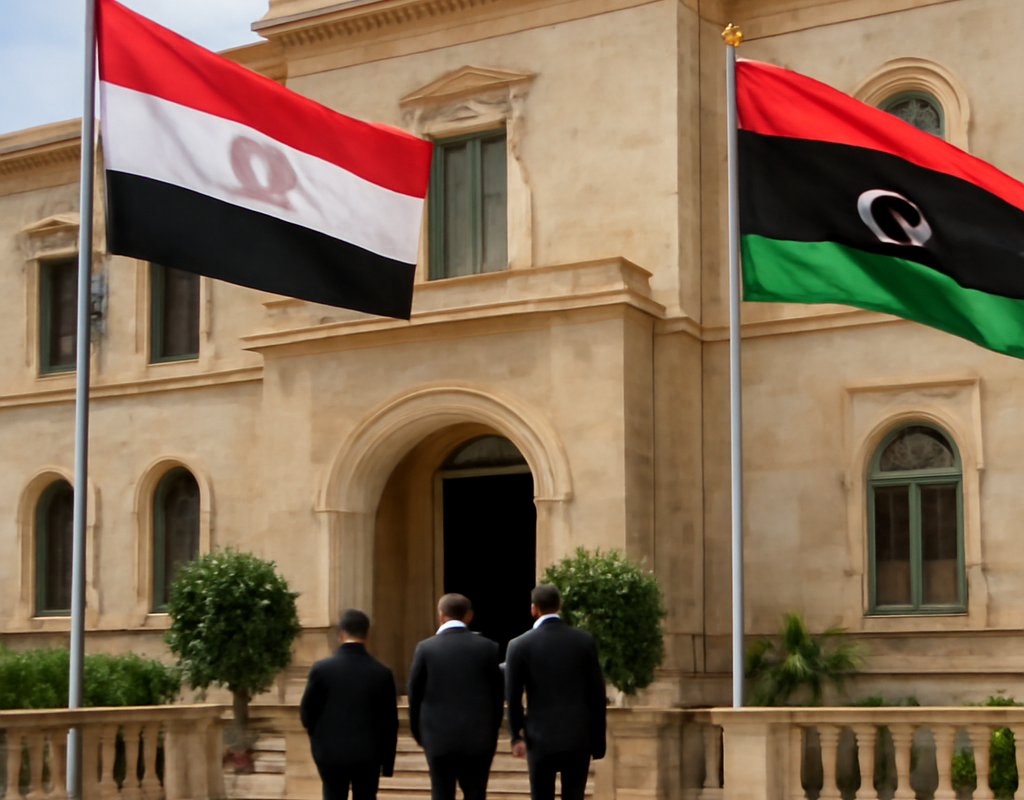
Standfirst: Egypt has reopened its historic embassy building in Tripoli during a ministerial visit focused on trade, energy and Libya’s disputed maritime agreement with Turkey. The move signals closer engagement with Libya’s western-based government while highlighting continuing tensions in the eastern Mediterranean.
Egypt reopened its embassy building in Tripoli on 8 November 2026, more than a decade after it was closed following the kidnapping of embassy staff. Foreign Minister Badr Abdelatty attended the ceremony and held talks with Libyan officials on economic cooperation, energy projects and maritime boundaries.
The visit is significant because Cairo has traditionally supported eastern Libya’s political and military camp, while the embassy is located in the capital and the internationally recognised Government of National Unity operates from Tripoli. The renewed diplomatic engagement could affect regional energy plans and the wider dispute over maritime zones in the eastern Mediterranean.
Egypt restores its diplomatic presence in Tripoli
Egypt closed the embassy building in January 2014 after gunmen kidnapped five members of its diplomatic staff. Although Egypt’s diplomatic mission resumed operations in Tripoli in May 2021, the historic embassy building itself remained closed until Saturday’s reopening.
Libya’s acting foreign minister, Taher al-Baour, joined Abdelatty at the ceremony. The Egyptian minister later met Abdulhamid Dbeibah, prime minister of Libya’s internationally recognised Government of National Unity.
The discussions included measures to facilitate trade between the neighbouring countries. According to Egypt’s foreign ministry, Dbeibah also praised the contribution of Egyptian companies and workers to reconstruction activity in Libya.
Energy cooperation is central to the talks
Energy was another major part of Abdelatty’s visit. He met Libya’s acting oil minister and called for faster progress on proposed gas pipeline projects linking the two countries.
The talks also covered plans to refine Libyan crude oil in Egypt before exporting it. Libya’s state news agency reported that the Libyan minister would travel to Cairo for further discussions.
For both countries, closer energy cooperation could support investment, trade and infrastructure development. However, the projects are also connected to broader disagreements over access to offshore resources and the legal boundaries of maritime zones.
Why Egypt objects to the Turkey-Libya maritime agreement
Abdelatty raised Egypt’s objections to a 2019 agreement between Turkey and Libya’s then government in Tripoli. The agreement establishes a maritime boundary between Turkish and Libyan zones in the eastern Mediterranean, an area where several states claim rights to explore for oil and gas.
Egypt argues that its concerns should be considered when maritime boundaries are defined. Dbeibah told Egyptian broadcaster Al-Qahera News that officials from Egypt and Libya would examine maps and their competing claims at a future meeting.
The dispute also involves Greece and Cyprus. Greece says the agreement fails to recognise the maritime rights of Greek islands, including Crete, which lies between the Turkish and Libyan coasts. Egypt and Cyprus have also opposed the arrangement.
The disagreement has wider European significance because maritime claims in the eastern Mediterranean affect energy exploration, regional diplomacy and relations between Turkey, EU member states and neighbouring countries.
EU position on the maritime deal
Libya’s eastern-based parliament ratified the agreement on 20 October, despite having opposed it for years. The following day, the European Union said the deal infringed on the rights of other countries and could not have legal effect on them.
Turkey has rejected that interpretation. Foreign Minister Hakan Fidan described the agreement as legitimate from both a legal and political perspective.
The competing positions mean that the agreement remains a source of diplomatic tension rather than a settled maritime arrangement. Further discussions between Egypt and Libya may focus on the maps and legal arguments underpinning each country’s claims.
What the development means for Europe
This latest European affairs development is not an EU decision, but it matters to European foreign policy because it concerns EU member states, Turkey, Libya and possible energy routes into Europe.
The main areas to watch are:
- Maritime law: Greece, Cyprus, Egypt, Turkey and Libya hold differing views about the boundaries of offshore zones.
- Energy security: Gas infrastructure and crude-oil processing plans could influence future regional trade.
- EU diplomacy: The European Union has already said the agreement cannot affect the rights of other countries.
- Libya’s political divide: Egypt’s engagement with Tripoli comes despite its longstanding ties with Libya’s eastern-based authorities.
- Regional stability: Diplomatic cooperation may reduce tensions, but unresolved territorial claims continue to complicate relations.
For Ireland, the immediate impact is indirect. Ireland is not a party to the maritime dispute, but developments affecting EU energy policy, Mediterranean security and relations with Turkey can become relevant to wider European foreign-policy discussions.
What happens next?
The next stage is expected to involve further Egypt-Libya talks on maritime maps, trade and energy projects. The proposed visit by Libya’s acting oil minister to Cairo could provide more detail on pipeline cooperation and crude-refining plans.
At the same time, the disagreement over the 2019 Turkey-Libya agreement is likely to continue through diplomatic channels. The positions of Greece, Cyprus, Egypt and Turkey remain opposed, while the EU has stated that the arrangement cannot determine the rights of other countries.
The reopening of Egypt’s embassy building therefore carries both practical and political importance. It strengthens Cairo’s direct engagement with Tripoli, but it does not resolve Libya’s internal division or the contested maritime claims in the eastern Mediterranean.
Conclusion
Egypt’s embassy reopening marks a renewed diplomatic step in relations with Libya’s Tripoli-based government. The visit combines efforts to expand trade and energy cooperation with a clear Egyptian challenge to the Turkey-Libya maritime agreement. For Europe, the development is important because it links Mediterranean diplomacy, offshore energy and the legal interests of EU member states. Further talks in Cairo and Tripoli will determine whether cooperation can advance without deepening the regional maritime dispute.