




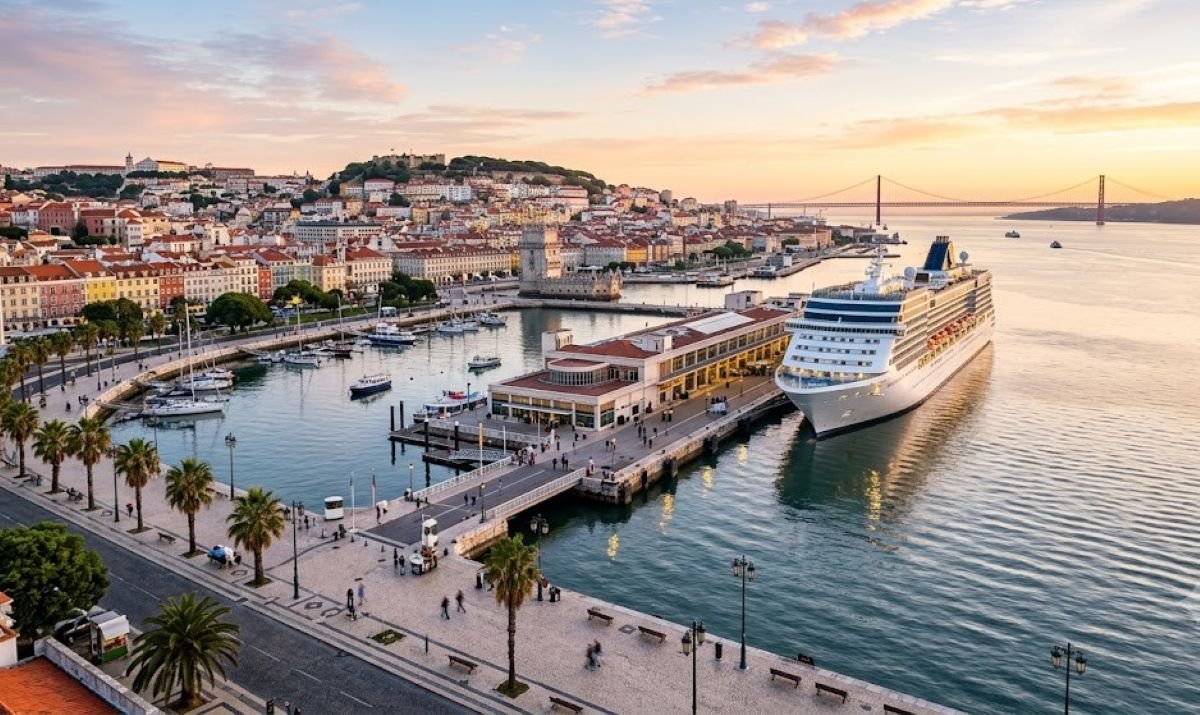
Portugal cruise boom is no longer a niche story for the shipping industry—it is becoming one of the biggest travel developments in Europe in 2026. With cruise passenger numbers climbing, port calls increasing, and major coastal hubs expanding their role in global itineraries, Portugal is emerging as a powerful force in the continent’s maritime tourism economy.
Fresh data from national and regional authorities shows that the country is on track for a record-breaking year. From Lisbon to Madeira and Leixões, Portugal’s ports are handling more ships, more passengers, and higher-value turnaround traffic that delivers a far greater economic impact than traditional day-stop cruise visits.
Portugal Cruise Boom Is Accelerating in 2026
The scale of the Portugal cruise boom is striking. Industry projections indicate that Portuguese ports could welcome around 1,970,275 cruise passengers by the end of 2026, a year-on-year rise of 6%. Port calls are also expected to reach roughly 1,138, up 8% from the previous year.
National statistics have reinforced that momentum. Recent multi-quarter figures point to a 17.9% increase in ship calls and a 7.9% rise in passenger volume, underlining how quickly Portugal’s cruise market is expanding.
This matters for Europe because cruise lines do not add capacity lightly. When vessels are reassigned, itineraries are redesigned, and docking schedules are tightened months in advance, it signals long-term confidence in a destination. Portugal is benefiting from that strategic shift.
- Higher passenger volumes are boosting local tourism spending
- More ship calls are increasing pressure on port infrastructure
- European cruise networks are recalibrating routes around Portuguese demand
- Atlantic and Mediterranean corridors are becoming more interconnected
Why Portugal Is Becoming a Key European Cruise Hub
The Portugal cruise boom is being driven by more than headline numbers. The country offers a strong mix of geographic advantage, modernizing terminals, cultural appeal, and access to both Atlantic and Mediterranean routes.
Strategic location on major sea routes
Portugal sits in a prime position for transatlantic, Iberian, and Western European cruise itineraries. That makes it attractive for operators looking to build flexible schedules that include island stops, city breaks, and embarkation hubs.
Investment in port capacity
Ports are scaling up to handle larger ships and more complex passenger flows. These upgrades are especially important as turnaround traffic grows, requiring efficient baggage handling, customs coordination, transfers, and terminal services.
High-value tourism appeal
Cruise passengers are not just passing through. In cities where voyages begin or end, travellers often arrive early or stay longer, spending on hotels, restaurants, shopping, and guided experiences.
Read more: Ireland luxury train journeys and scenic rail holidays and hidden gems in Ireland for slow travel escapes
Madeira Is Leading the Early-Year Surge
One of the clearest signals behind the Portugal cruise boom is coming from Madeira. During the first quarter of 2026, the Port of Funchal recorded 129 cruise ship arrivals, an increase of 24 ships compared with the same period a year earlier.
Transit passenger traffic reached 324,224 in those first three months alone, up 24.2% year on year. That is a remarkable result for an island destination that has become especially attractive during cooler months in northern Europe.
European visitors dominate this traffic mix, accounting for 97.5% of total arrivals. German passengers made up 47.9% of the volume, while British travellers represented 28.4%. Those figures confirm Madeira’s importance as a warm-weather Atlantic stop with broad appeal across core European source markets.
The island’s climate, scenery, and excursion-friendly layout make it particularly valuable for cruise operators. For local businesses, that translates into strong demand for:
- Short guided tours
- Food and wine experiences
- Retail and handicraft spending
- Transport and port-side services
Lisbon Is Turning Cruise Traffic Into Bigger Economic Value
Lisbon is playing a different, but equally important, role in the Portugal cruise boom. The capital is strengthening its status as a turnaround port, where passengers start or end their voyages rather than simply stopping for a few hours.
At the Lisbon Cruise Terminal, turnaround traffic surpassed 206,226 passengers across 121 calls. That distinction is crucial because turnaround passengers spend much more than transit visitors. According to figures cited by port authorities, a turnaround traveller contributes an average of €573 to the local economy, compared with around €39 for a transit passenger.
That spending gap helps explain why Lisbon’s cruise strategy is so significant. The city’s homeport activity has generated direct regional economic impact of more than €80 million, benefiting hotels, restaurants, taxis, shops, and tourism operators.
For the wider travel sector, Lisbon’s rise suggests that cruise growth in Portugal is not only about volume. It is also about yield, longer visitor stays, and deeper urban tourism integration.
Explore more: luxury Ireland castle stays and country house escapes and best places in Ireland for coastal road trips
Leixões Is Locking In Future Growth
In northern Portugal, Leixões continues to strengthen the country’s cruise footprint. Managed by APDL, the Porto Cruise Terminal has maintained heavy operational activity through June and builds on a yearly traffic base that previously exceeded 225,692 passengers.
What sets Leixões apart is its long-term positioning. Under the Cruise Portugal brand, officials have been securing future routing agreements stretching through late 2026 and into 2027. That gives the northern port stronger visibility in forward cruise planning and supports the broader Portugal cruise boom narrative.
Its appeal is also practical: the terminal offers efficient passenger handling while providing fast access to Porto’s cultural and culinary attractions, including historic districts and famous wine cellars.
What This Means for Europe’s Travel Industry
The Portugal cruise boom is having an impact beyond the country’s shoreline. As Portugal absorbs more cruise capacity, European itinerary planning is shifting. Cruise lines are balancing demand across Atlantic island routes, Iberian ports, and major gateway cities, with Portugal increasingly central to those decisions.
The economic implications are significant as well. The cruise sector is reported to generate about €940 million in total economic output for Portugal, supporting jobs across hospitality, transport, retail, shore excursions, logistics, and port services.
Still, rapid growth also raises important questions about congestion, sustainability, local infrastructure, and destination management. If passenger numbers keep rising, authorities will need to ensure that growth remains balanced and beneficial for residents as well as visitors.
Conclusion
The Portugal cruise boom is redefining how Europe’s western seaboard fits into global travel patterns. Record passenger projections, stronger homeport operations in Lisbon, surging island traffic in Madeira, and future-focused planning in Leixões all point to one conclusion: Portugal is becoming one of the most influential cruise markets in Europe. If current trends hold, the Portugal cruise boom will not just shape one country’s tourism future—it could help redraw the map of European cruise travel for years to come.
FAQs
Why is Portugal seeing a cruise tourism surge in 2026?
Portugal is benefiting from strong demand for cruise holidays, strategic port investments, and its location on key Atlantic and European sea routes.
Which Portuguese destinations are leading cruise growth?
Madeira, Lisbon, and Leixões are among the biggest growth drivers, each serving different roles in transit, turnaround, and long-term itinerary planning.
Why are turnaround passengers so important?
They typically spend more on hotels, dining, shopping, and local transport because they start or end their trips in the port city.
How many cruise passengers could Portugal welcome in 2026?
Current projections suggest Portuguese ports could handle about 1.97 million cruise passengers by year-end.