




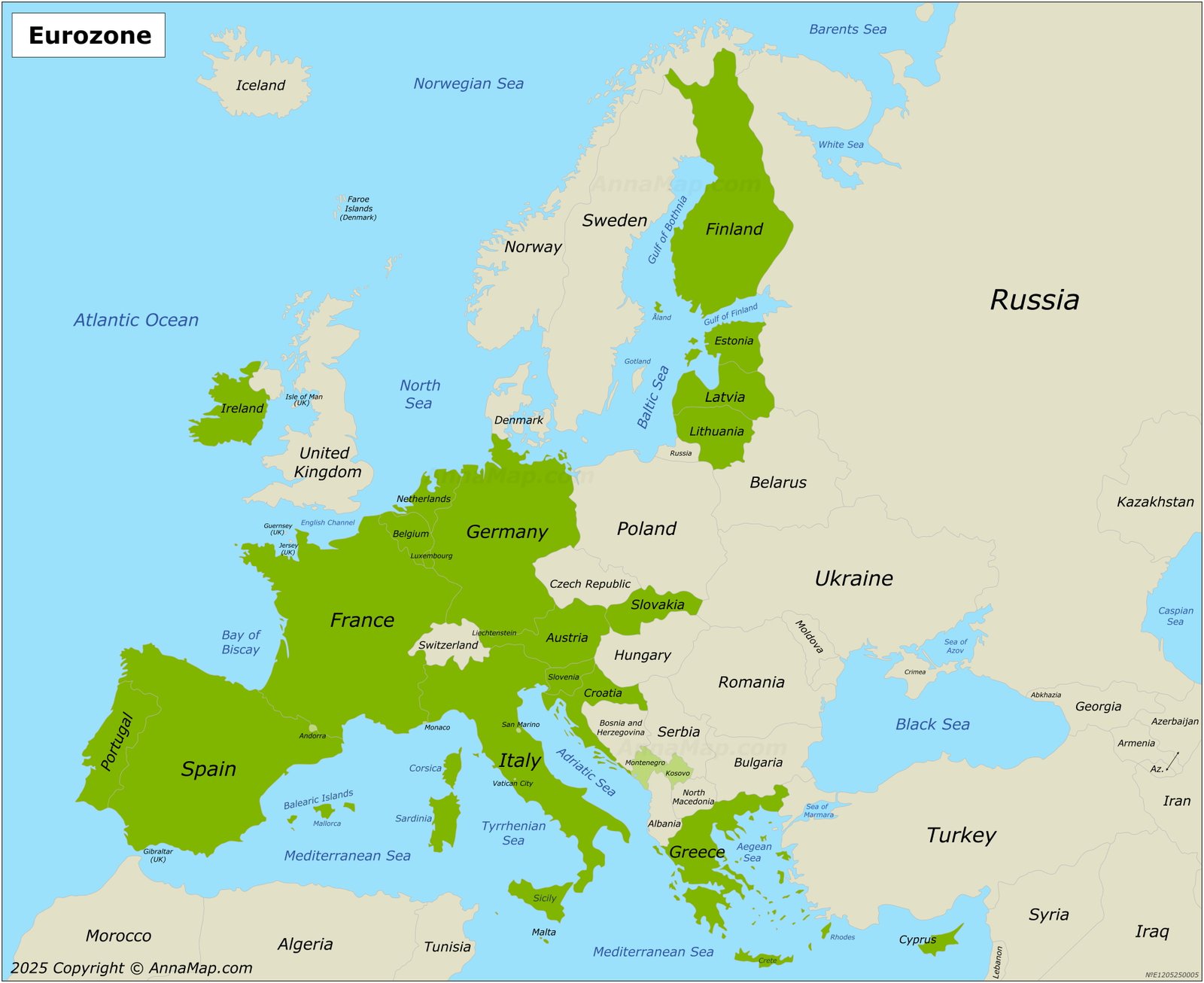
The eurozone is entering a difficult period as geopolitical conflict, higher energy costs, defence spending, weak economic growth and renewed inflation risks place pressure on European governments, businesses and households.
Tensions in the Middle East have disrupted global oil supplies and raised concerns about the security of key shipping routes. At the same time, NATO leaders are debating Europe’s military responsibilities, future support for Ukraine and the possibility of a reduced American defence presence on the continent.
These developments are directly connected to the eurozone economy.
Higher oil and gas prices can increase petrol, diesel, electricity, transport, food and manufacturing costs. Larger defence budgets may strengthen European security but leave governments with less money for housing, healthcare, infrastructure and social programmes.
The European Central Bank must therefore make decisions in an unusually complicated environment. Inflation is falling from its latest peak, but the impact of the Middle East conflict has not disappeared. Economic growth remains weak, and higher interest rates could create further pressure for homeowners and businesses.
Eurozone latest news: the key issues
The main issues currently affecting the eurozone include:
- Middle East tensions and energy security
- Volatile oil and natural-gas prices
- NATO defence-spending demands
- Uncertainty about the future US role in Europe
- Russia’s war against Ukraine
- Weak eurozone economic growth
- Inflation remaining above the ECB target
- The possibility of further interest-rate increases
- High housing and rental costs
- Government debt and budget pressures
- Trade tensions and industrial competition
- Heatwaves, food prices and climate-related disruption
- Migration and border policy
- Europe’s dependence on imported energy and defence equipment
Together, these issues are creating one of the most challenging periods for European economic and security policy in recent years.
What is the eurozone?
The eurozone is the group of European Union countries that use the euro as their official currency.
It is important not to confuse the eurozone with the European Union or NATO.
The European Union is a political and economic group containing countries that do not all use the euro.
NATO is a military alliance that includes many European countries, the United States, Canada and Turkey. Some NATO members are not part of the European Union, while some EU countries are not NATO members.
However, decisions made by the EU, NATO and the European Central Bank often affect the same governments, businesses and households.
Why is the eurozone under pressure?
The eurozone is being affected by several crises at the same time.
The Middle East conflict has disrupted oil production and shipping. NATO members are being asked to spend more on defence. European economies are growing slowly, while households continue to deal with high living costs.
Governments must decide how to fund military investment without increasing debt too aggressively or reducing essential public services.
The European Central Bank must also decide whether inflation is under control or whether another energy shock could push prices higher again.
These issues are connected rather than separate.
A conflict affecting oil supplies can raise inflation. Higher inflation can lead to higher interest rates. Higher borrowing costs can reduce investment and economic growth. Slower growth can then make it harder for governments to fund defence, housing and public services.
Middle East tensions and the eurozone economy
The Middle East remains one of the world’s most important energy-producing regions.
Conflict involving Iran and other regional powers has disrupted production and raised concerns about oil and gas passing through the Strait of Hormuz.
The Strait of Hormuz is a narrow shipping route connecting the Persian Gulf with global markets. A significant share of the world’s oil and liquefied natural gas passes through it.
When the route is threatened, markets react quickly because traders fear that supplies may be delayed or completely interrupted.
The European Central Bank has said the Middle East conflict caused a sharp rise in oil prices and is likely to weigh on eurozone economic activity. The impact comes through energy costs, transportation, manufacturing and lower consumer spending.
How Middle East tensions affect people in Europe
A disruption thousands of kilometres away can eventually affect everyday costs across Europe.
Higher crude-oil prices can contribute to increases in:
- Petrol
- Diesel
- Heating oil
- Airline tickets
- Shipping costs
- Food distribution
- Plastic products
- Packaging
- Fertiliser
- Manufacturing
- Electricity generation in some markets
Businesses may absorb part of the increase temporarily, but sustained higher costs are often passed on to consumers.
That is why Middle East tensions matter even in countries that do not directly import large quantities of Iranian oil.
Energy is traded internationally, and major disruptions influence global prices.
Is Europe facing an oil shortage?
Europe is not currently facing a complete absence of oil, but the market remains vulnerable.
The International Energy Agency previously coordinated a record release of strategic oil reserves after the Middle East conflict caused a major supply disruption.
Global oil supply fell sharply during the most intense stage of the crisis, while attacks on energy infrastructure and disruption around the Strait of Hormuz created uncertainty about future deliveries.
An interim agreement involving the United States and Iran later reduced immediate market fears and helped oil prices fall. However, the reopening and full restoration of shipping and production may take time.
The European Commission has continued consulting EU countries about oil-supply security and market conditions.
Why oil prices remain a risk
Oil markets respond not only to actual supply losses but also to the possibility of future disruption.
Prices can rise because of:
- Military attacks on oil facilities
- Shipping restrictions
- Mine risks in important waterways
- Sanctions
- Port closures
- Insurance costs
- Production cuts
- Damage to refineries
- Political instability
- Fear that negotiations may collapse
Even when oil prices fall after ceasefire or diplomatic developments, the underlying risk may remain.
This is why European policymakers are cautious about declaring the energy shock over.
ECB warns that the Iran shock is not over
European Central Bank Executive Board member Isabel Schnabel has warned that the eurozone has not returned to the economic conditions that existed before the Iran conflict.
Although oil prices have eased from their highest levels, core inflation remains a concern and gas prices are still significantly above their pre-conflict levels.
Supply-chain pressures, refinery margins and higher food costs linked to extreme weather could create further inflationary pressure.
The warning suggests that the European Central Bank will remain cautious when deciding whether to raise, hold or eventually reduce interest rates.
Eurozone inflation latest
Eurozone annual inflation fell to 2.8% in June 2026, down from 3.2% in May.
Core inflation, which excludes more volatile food and energy prices, also eased to 2.4%.
This was better than some economists expected, but headline inflation remains above the European Central Bank’s 2% target.
The fall reduces the immediate pressure for another interest-rate increase. However, the ECB is unlikely to assume that inflation has been defeated.
Potential inflation risks include:
- Another rise in oil prices
- Higher natural-gas costs
- Food shortages
- Poor harvests
- Fertiliser disruption
- Higher shipping costs
- Wage pressure
- Defence spending
- New trade tariffs
- Climate-related crop damage
Will the ECB raise interest rates again?
A further rate increase remains possible, but it is not guaranteed.
The ECB raised its key deposit rate to 2.25% in June after the Middle East energy shock pushed inflation higher.
The fall in June inflation has strengthened the argument for waiting before making another move.
The next decision will depend on:
- Oil and gas prices
- Core inflation
- Wage growth
- Economic activity
- Consumer demand
- Business pricing
- Food-price developments
- Middle East negotiations
- Currency movements
The ECB faces a difficult balance.
Raising rates may reduce inflation, but it can also weaken investment, increase mortgage costs and slow the economy.
Holding rates steady may support growth, but inflation could return if energy prices rise again.
What higher interest rates mean for households
Higher ECB rates can affect:
- Tracker mortgages
- New fixed-rate mortgage offers
- Personal loans
- Business loans
- Credit-card borrowing
- Construction finance
- Property investment
- Government borrowing
Households with tracker mortgages may feel changes more quickly because their rates are connected to ECB policy.
People seeking a new mortgage may also face lower borrowing capacity when rates are higher.
For the housing market, higher rates can slow demand but may also reduce new construction by increasing development costs.
Eurozone economic growth remains weak
The eurozone economy contracted by 0.2% during the first quarter of 2026 compared with the previous quarter.
The Organisation for Economic Co-operation and Development expects eurozone growth of only around 0.8% for 2026, partly because of the Middle East conflict and higher energy costs. Growth may improve in 2027 if trade and energy conditions stabilise.
Weak growth creates major challenges for governments.
Countries need stronger economic activity to generate tax revenue, fund defence investment, improve infrastructure and support ageing populations.
Eurozone unemployment remains relatively low
Despite weak growth, the eurozone labour market has remained more resilient than many expected.
The seasonally adjusted unemployment rate stood at 6.2% in May 2026, down slightly from the previous year.
However, the overall figure hides important regional differences.
Some countries and industries continue to face:
- Youth unemployment
- Long-term unemployment
- Skills shortages
- Labour-force ageing
- Weak productivity
- Difficulties recruiting engineers, healthcare staff and construction workers
The labour market is therefore both strong and uneven.
NATO tensions place new pressure on Europe
NATO leaders are meeting in Ankara at a time of growing disagreement between the United States and European allies.
The alliance is discussing:
- European defence spending
- US troop levels in Europe
- Support for Ukraine
- Military production
- Air and missile defence
- Drone technology
- Weapons shortages
- The conflict involving Iran
- The future of transatlantic security
The summit is taking place under the theme of building a stronger Europe within a stronger NATO.
Why are NATO and Europe arguing?
The United States has repeatedly told European members that they must take greater responsibility for their own defence.
Washington is asking allies to increase military spending and reduce their dependence on American weapons, soldiers and logistics.
European governments agree that defence spending must rise, but disagreement remains over:
- How quickly spending should increase
- Whether a 5% of GDP target is realistic
- Which spending should count as defence
- How Europe should fund the increase
- Whether the US will reduce its military presence
- How much support should continue going to Ukraine
- Whether NATO should be involved in Middle East operations
The latest summit has also been affected by tension over the recent conflict with Iran and the level of support provided by European allies to the United States.
Could the United States reduce troops in Europe?
The possibility of a reduced American military presence is one of Europe’s biggest security concerns.
The Pentagon has been reviewing US force levels, and European countries fear that reductions could occur before they have the capacity to replace American personnel, weapons and intelligence systems.
Europe still depends heavily on the United States for:
- Air defence
- Missile defence
- Intelligence
- Satellite systems
- Strategic transport
- Long-range weapons
- Nuclear deterrence
- Military logistics
Building European alternatives will require large investments and several years of industrial development.
Europe’s weapons and ammunition shortage
European allies are increasingly concerned that American weapons may not always be available when needed.
The United States has supplied weapons to Ukraine, supported operations in the Middle East and maintained commitments in Asia.
This has placed pressure on stockpiles of systems including:
- Patriot air-defence missiles
- HIMARS rocket systems
- Tomahawk missiles
- Artillery ammunition
- Air-defence interceptors
- Precision-guided weapons
Europe is attempting to expand domestic production, but factories cannot increase capacity immediately.
The transition towards greater European defence independence could therefore leave a period of vulnerability.
NATO support for Ukraine
Support for Ukraine remains a major issue at the NATO summit.
Allies are expected to maintain substantial military assistance as Ukraine continues defending itself against Russia.
European members face pressure to provide more weapons and financial support as American priorities shift.
At the same time, voters in some countries are questioning the long-term cost of the war, particularly while domestic housing, healthcare and living-cost problems remain unresolved.
This creates a political challenge for European leaders: maintaining support for Ukraine while demonstrating that domestic needs are not being ignored.
Defence spending versus public services
European governments are being asked to increase defence budgets significantly.
This raises a simple but politically difficult question: where will the money come from?
Possible options include:
- Higher taxes
- Additional government borrowing
- Reduced spending elsewhere
- Joint EU debt
- Special defence funds
- Changes to fiscal rules
- Private investment in defence companies
- Redirecting existing infrastructure budgets
Countries with high public debt have less flexibility than those with stronger finances.
Higher defence spending may support manufacturing and employment, but it could also compete with funding for:
- Housing
- Healthcare
- Education
- Transport
- Pensions
- Climate programmes
- Social protection
Germany and the eurozone industrial problem
Germany remains central to the eurozone economy, but its industrial sector faces major challenges.
Manufacturers have been affected by:
- High energy costs
- Weak global demand
- Chinese competition
- Trade tensions
- Automotive disruption
- Labour shortages
- Expensive investment
- Regulatory uncertainty
Germany’s earlier economic model relied heavily on affordable imported energy, strong exports to China and global demand for German industrial products.
All three areas have become less reliable.
Weak German growth affects the wider eurozone because the country is a major buyer, supplier and investor across Europe.
France and government-debt concerns
France faces the difficult task of increasing defence spending while controlling government debt and its budget deficit.
Political divisions make major spending cuts or tax increases difficult.
Investors closely monitor French borrowing costs because a loss of confidence in one of the eurozone’s largest economies could affect the wider European bond market.
France also faces pressure involving:
- Pension costs
- Public services
- Industrial competitiveness
- Energy investment
- Social unrest
- Political fragmentation
Italy’s debt and growth challenge
Italy has one of the largest government-debt burdens in the eurozone.
The country benefits when borrowing costs remain stable, but higher interest rates can increase the cost of refinancing public debt.
Italy also needs investment in:
- Productivity
- Transport
- Digital infrastructure
- Energy
- Employment
- Regional development
Slow growth makes it more difficult to reduce debt relative to the size of the economy.
Ireland’s position within the eurozone
Ireland enters this period with stronger growth and employment figures than many eurozone countries, but it remains highly exposed to international developments.
Ireland is vulnerable to:
- Oil-price increases
- Higher transport costs
- Global trade tensions
- Changes affecting multinational companies
- Housing shortages
- Electricity and infrastructure constraints
- ECB interest-rate decisions
- Food-price inflation
- Changes in corporate-tax revenue
Ireland’s distance from continental Europe also makes shipping, aviation and imported fuel particularly important.
A prolonged Middle East energy crisis could increase costs for Irish motorists, airlines, farmers, manufacturers and retailers.
Spain, Portugal and Greece
Southern European countries have experienced stronger tourism and services activity, but they face serious climate and energy challenges.
Extreme summer temperatures can affect:
- Tourism
- Agriculture
- Water supplies
- Electricity demand
- Worker productivity
- Health services
- Wildfire prevention
- Food prices
Heatwaves can also reduce hydroelectric output and increase demand for air conditioning.
At the same time, tourism remains an important source of employment and revenue.
Climate change and food inflation
Europe’s economic problems are no longer limited to traditional financial indicators.
Extreme heat, drought, floods and wildfires increasingly affect prices and productivity.
Heatwaves can damage:
- Wheat
- Fruit
- Vegetables
- Olive production
- Grapes
- Animal feed
- Dairy output
- Livestock health
Higher fertiliser and transport costs can then make the impact worse.
The ECB has warned that extreme weather may contribute to renewed food inflation even as energy-price pressures begin to ease.
Housing remains a major eurozone issue
Housing affordability remains one of Europe’s most politically sensitive problems.
Many cities face:
- High rents
- Insufficient new construction
- Labour shortages
- Expensive building materials
- Planning delays
- High borrowing costs
- Short-term rental pressure
- Population growth
- Limited social housing
Higher interest rates can reduce property demand, but they also make it more expensive for developers to build.
This means rate increases do not automatically solve the housing shortage.
Migration and border policy
Migration remains another major topic across Europe.
Governments are balancing several competing needs:
- Protecting borders
- Processing asylum applications
- Filling labour shortages
- Supporting refugees
- Preventing exploitation
- Funding accommodation
- Maintaining public confidence
- Sharing responsibility between countries
Disagreement continues over how migrants and asylum seekers should be distributed among EU states.
The issue is closely linked to elections and the growth of nationalist and anti-establishment political parties.
European trade tensions
Europe is also dealing with trade pressure from the United States and China.
The main concerns include:
- Tariffs
- Electric-vehicle competition
- Steel and aluminium
- Technology controls
- Agricultural exports
- Industrial subsidies
- Semiconductor supply
- Pharmaceutical production
European leaders want to protect domestic industries without triggering a wider trade war.
A major tariff escalation could weaken exports and increase costs for consumers.
The euro exchange rate
Geopolitical tension can influence the value of the euro.
The currency may weaken when investors become concerned about:
- European growth
- Energy dependence
- Political instability
- Interest-rate differences
- Military conflict
A weaker euro can make European exports more competitive, but it also raises the cost of imported oil, gas and other goods priced in dollars.
This can add to inflation.
Eurozone trending topics
The following subjects are currently driving public interest and online searches around the eurozone:
Eurozone inflation
People are searching for the latest inflation rate, food-price increases and whether the cost-of-living crisis is easing.
ECB interest rates
Mortgage holders, borrowers and investors want to know whether the European Central Bank will raise rates again.
Oil prices and Iran
Search interest is increasing around the Iran conflict, the Strait of Hormuz and the impact on petrol and diesel prices.
NATO summit
The Ankara NATO summit is trending because of arguments about defence spending, the US military presence and support for Ukraine.
European defence spending
Readers are looking for information about the proposed 5% defence target and what it could mean for taxes and public services.
Ukraine war
Military support, peace negotiations, sanctions and weapons supplies remain major topics.
Europe heatwave
Extreme temperatures, health warnings, drought and wildfires are generating significant interest across the continent.
Eurozone recession
Weak growth and the first-quarter contraction have increased searches about whether Europe is entering a recession.
Mortgage rates
Homeowners and buyers are monitoring ECB policy and bank lending rates.
Petrol and diesel prices
Oil-market instability has increased searches about fuel-price changes.
European housing crisis
Rising rent, limited supply and mortgage affordability remain major issues.
Euro exchange rate
Travellers and businesses are following changes in the euro against the dollar and sterling.
Europe energy crisis
Concerns about oil, natural gas, electricity prices and strategic reserves have returned.
NATO and Iran
The relationship between the Middle East conflict and NATO unity has become an important geopolitical search topic.
Could the eurozone enter a recession?
A recession is possible, but it is not inevitable.
The economy contracted during the first quarter, and growth forecasts remain weak.
The risk would increase if:
- Oil prices rise sharply again
- Middle East negotiations collapse
- Trade tariffs expand
- Interest rates remain high
- Consumer spending falls
- German industry weakens further
- Government spending is cut
- Financial markets become unstable
However, low unemployment, household income growth and easing inflation may provide some support.
What could improve the eurozone outlook?
The outlook could improve if:
- The Middle East ceasefire holds
- The Strait of Hormuz fully reopens
- Oil and gas prices fall
- Inflation moves towards 2%
- Interest rates stabilise
- Consumer confidence improves
- German manufacturing recovers
- Global trade strengthens
- Defence investment supports European industry
- Ukraine moves closer to a sustainable peace
A stable energy market would be particularly important because it would improve both inflation and growth prospects.
What could make the situation worse?
The most serious risks include:
- A renewed Middle East war
- Closure of the Strait of Hormuz
- Another major oil-price surge
- Escalation in Ukraine
- Reduced US military support
- Weapons shortages
- A transatlantic trade dispute
- New inflation
- Higher ECB interest rates
- A European sovereign-debt crisis
- Severe heatwaves and crop failures
Several of these risks could occur simultaneously.
Frequently asked questions
What is the biggest issue facing the eurozone?
The most immediate challenge is balancing weak economic growth with inflation and energy risks. NATO spending, Middle East tensions and the Ukraine war add further pressure.
How does the Middle East conflict affect Europe?
It affects oil and gas supplies, shipping, inflation, transport costs, manufacturing and consumer confidence.
Why is the Strait of Hormuz important?
A significant amount of global oil and liquefied natural gas passes through the route. Disruption can cause energy prices to rise quickly.
Is eurozone inflation falling?
Yes. Annual inflation declined to 2.8% in June 2026, but it remains above the ECB’s 2% target.
Will ECB interest rates rise again?
Another increase is possible, but falling inflation has reduced the urgency. The ECB will closely monitor energy costs and core inflation.
Is the eurozone in recession?
The economy contracted in the first quarter, but a formal recession depends on subsequent economic data.
Why is NATO asking Europe to spend more?
The United States wants European allies to take greater responsibility for their own defence and reduce their dependence on American military support.
Could the US withdraw troops from Europe?
A major withdrawal has not been confirmed, but US force levels are under review and the possibility is causing concern among European allies.
How much does NATO want countries to spend?
Current discussions include a much larger target that could move total defence and security-related spending towards 5% of GDP, although the details and implementation period remain politically disputed.
Will oil prices increase again?
They could rise if Middle East negotiations fail, shipping is disrupted or energy infrastructure is attacked.
How will this affect Ireland?
Ireland could face higher fuel, transport, food and business costs. ECB interest-rate decisions will also affect mortgages and borrowing.
Why is European growth so weak?
High energy costs, weak industrial activity, trade uncertainty, interest rates and geopolitical conflict have limited investment and demand.
What are the main eurozone trending topics?
The leading topics include inflation, ECB rates, NATO, Iran, oil prices, Ukraine, the European heatwave, housing, recession concerns and defence spending.
What Europe faces next
The eurozone is not dealing with one isolated crisis.
It is managing the combined impact of military conflict, energy insecurity, weak economic growth, political division, climate disruption and changing relations with the United States.
The Middle East conflict has shown that Europe remains vulnerable to international energy shocks.
The NATO debate has shown that the continent cannot assume the United States will always provide the same level of military support.
The inflation debate has shown how quickly higher energy prices can affect mortgages, food and everyday household costs.
The next several months will depend heavily on whether the Middle East ceasefire holds, whether oil supplies recover and whether NATO leaders can maintain unity while asking European countries to spend far more on defence.
Europe has the financial and industrial resources to respond, but the political decisions will be difficult.
Governments must strengthen security without abandoning housing, healthcare and living-cost priorities. The ECB must control inflation without deepening the economic slowdown. Businesses must adapt to energy and trade uncertainty, while households continue dealing with high prices.
For the eurozone, the central question is no longer whether geopolitical tension will affect the economy. It already has.
The real question is whether Europe can turn the pressure into a long-term strategy built around greater energy independence, stronger defence capacity, stable prices and sustainable economic growth.