

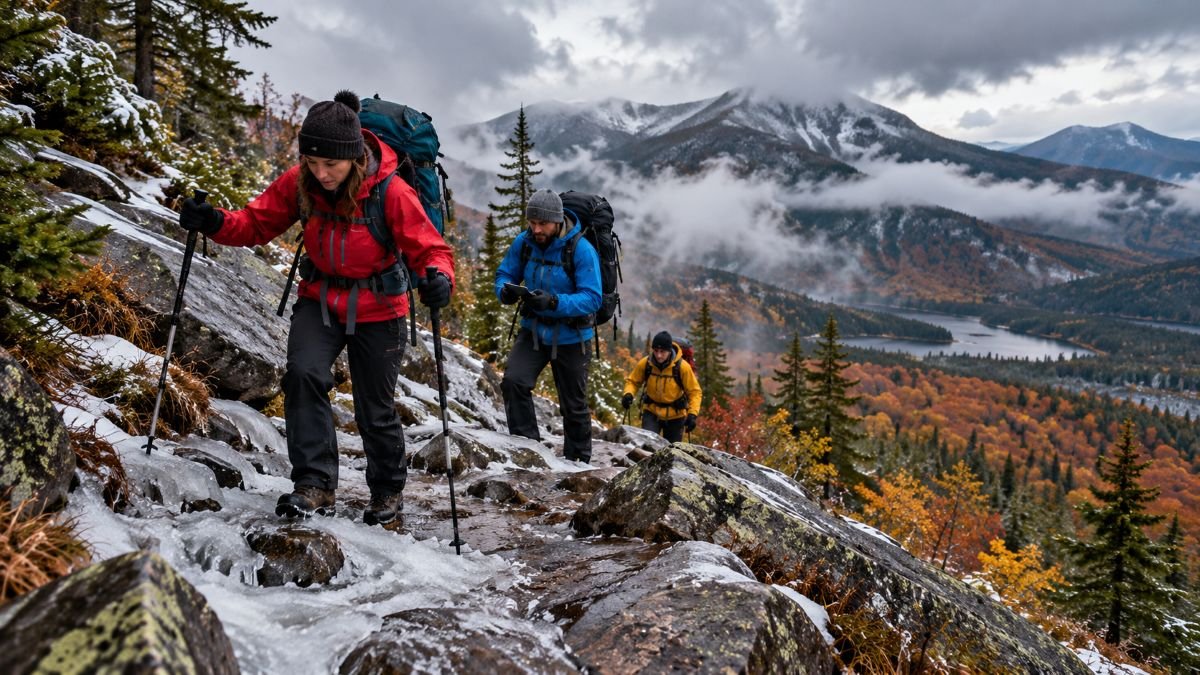
Autumn and spring hiking can bring quieter trails and dramatic scenery, but conditions across America’s mountain destinations can change quickly. In New York, Forest Rangers carried out 362 search-and-rescue missions statewide in 2025, underlining why visitors need careful planning before entering remote wilderness.
The Adirondacks are among the areas requiring particular caution, with snow, ice, freezing temperatures, shorter daylight hours and rapidly shifting weather creating hazards for hikers. Similar seasonal challenges affect Mount Rainier in Washington, Zion National Park in Utah and the Grand Canyon in Arizona.
Why off-season hiking in the Adirondacks requires preparation
The Adirondack Park covers roughly six million acres of forests, summits and wilderness trails. Its scale means that hikers can quickly find themselves far from roads, mobile-phone coverage and immediate assistance.
Conditions can also vary substantially during a single walk. Temperatures may fall by about 5°F for every 1,000 feet gained in elevation, meaning rain at a trailhead can become snow or freezing conditions higher on a mountain. Wet surfaces may turn icy, while wind exposure and early darkness can make navigation more difficult.
Hikers should not rely on a mild forecast at the starting point. Before setting out, they should check mountain-specific weather information and allow enough time to turn back before visibility and daylight deteriorate.
New York rescue figures show the importance of route planning
New York State Department of Environmental Conservation Forest Rangers recorded 362 search-and-rescue missions in both 2024 and 2025. During the first six months of 2026, they completed a further 126 missions.
The figures cover different outdoor emergencies and are not limited to hiking incidents in the Adirondacks. They should therefore not be interpreted as a ranking of individual trails. However, they demonstrate that wilderness rescues remain a regular requirement across the state.
Recent incidents also show how ordinary plans can become difficult. A hiker near Upper Wolfjaw Mountain required assistance after becoming disoriented after dark in September 2025. In April 2026, three hikers were lost near Haystack Mountain after encountering challenging conditions.
Other US hiking destinations face seasonal hazards
Off-season risks differ according to geography, altitude and trail conditions. Visitors should consult the relevant park authority rather than assume that experience on one trail applies elsewhere.
- Mount Rainier, Washington: Snow, whiteouts, strong winds and icy terrain can create serious exposure and navigation risks.
- Zion National Park, Utah: Cold water, flash flooding and hypothermia are important concerns, particularly in routes such as The Narrows.
- Grand Canyon, Arizona: Temperature extremes, dehydration and the difficulty of returning uphill can make even popular routes physically demanding.
- Acadia National Park, Maine: Wet or icy granite can become slippery and increase the risk of falls.
- Great Smoky Mountains: Ice and swollen streams may affect routes across parts of Tennessee and North Carolina.
- Mount Washington, New Hampshire: Severe winds, snow and rapidly changing mountain weather can affect hikers even outside winter.
These examples highlight the need for destination-specific advice. There is no single list that can reliably identify the “most dangerous” trail, because conditions can change by date, elevation and route.
What hikers should carry during the shoulder seasons
Appropriate equipment can reduce exposure and improve a hiker’s ability to respond if plans take longer than expected. Recommended preparations include:
- Waterproof outer clothing and warm insulating layers
- Sturdy footwear and traction equipment where ice or snow is possible
- A paper map, compass and fully charged navigation device
- A headlamp with spare batteries, even for a daytime walk
- Enough food and water for delays
- Emergency shelter and basic first-aid supplies
- A charged emergency communication device where mobile coverage is unreliable
- A written itinerary shared with someone who is not on the hike
Route choice matters as much as equipment. Hikers should match the trail to their fitness, experience and available daylight, then set a realistic turnaround time. Continuing toward a summit after conditions worsen can make a safe return far more difficult.
Recognising cold-weather emergencies
Hypothermia can develop when the body loses heat faster than it can produce it, particularly when clothing becomes wet or wind exposure increases. Warning signs can include uncontrollable shivering, confusion, unusual tiredness, poor coordination and changes in behaviour.
Anyone showing these symptoms should be moved away from wind and moisture, given dry insulation where possible and assessed urgently. If a group cannot safely leave the area, it should contact emergency services and provide its precise location, route and condition.
What travellers should check before setting out
Visitors planning an off-season hike in New York or another US national park should check the latest information from the relevant park service, state authority or ranger station. Trail closures, weather warnings, river levels and seasonal restrictions may change with little notice.
Travellers from Ireland should also consider the practical limits of travel insurance. Policies may contain requirements concerning declared activities, specialist equipment, guided excursions or route difficulty. Checking cover before departure is preferable to assuming that every hiking incident is included.
Conclusion
The 362 Forest Ranger rescue missions recorded across New York in 2025 do not measure Adirondack hiking incidents alone, but they reinforce the wider lesson from America’s mountain destinations: off-season conditions deserve respect. Whether visiting the Adirondacks, Mount Rainier, Zion or the Grand Canyon, hikers should check local forecasts, carry suitable clothing and navigation equipment, share their plans and turn back when conditions deteriorate. The safest trip begins with preparation before reaching the trailhead.