
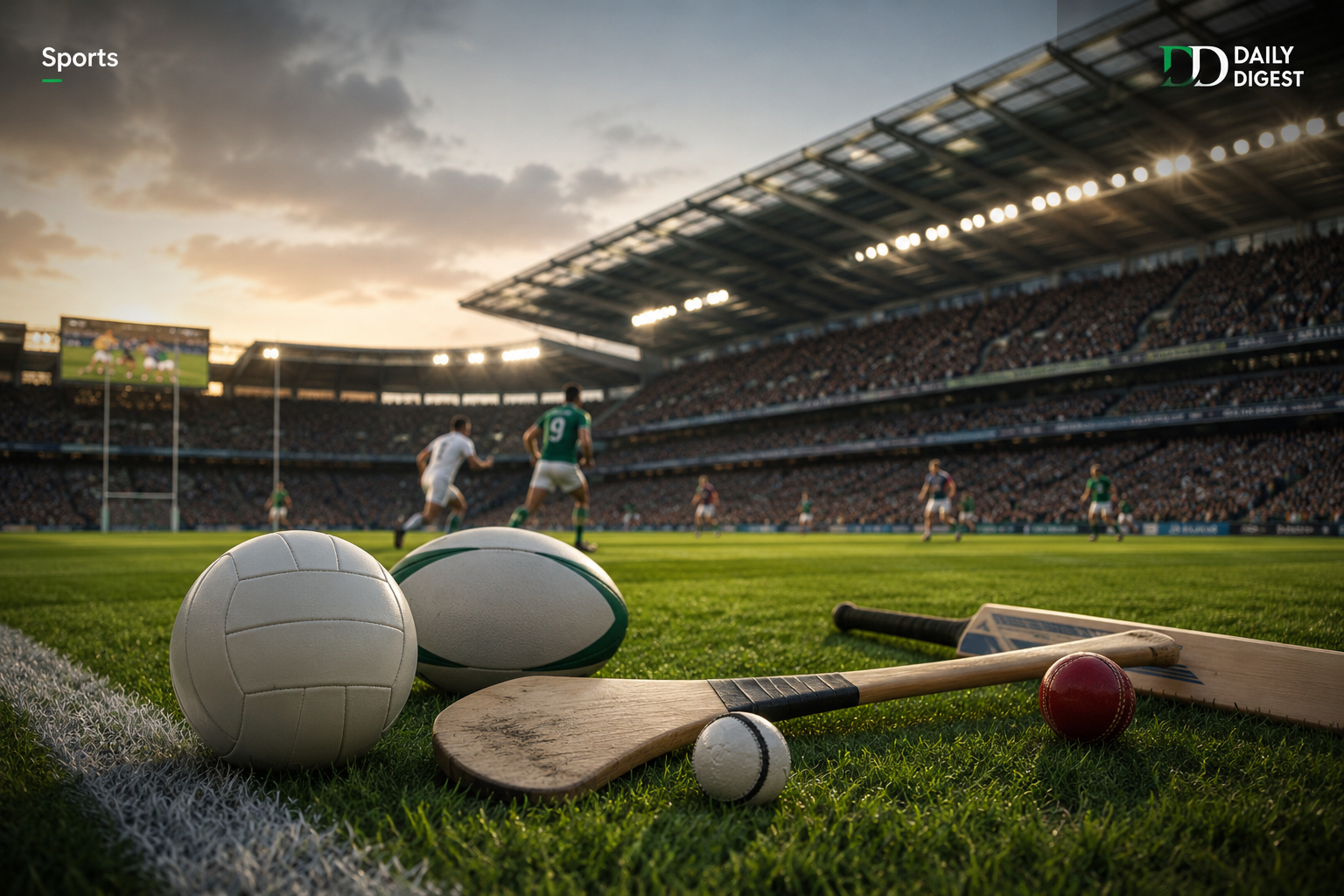
Irish rugby fans had plenty to discuss after Ireland’s Nations Championship clash with South Africa at the Aviva Stadium, but the match broadcast became a major talking point for an unexpected reason. Viewers repeatedly criticised the use of the stadium’s spider cam, saying the unusual angles made key moments difficult to follow.
Ireland v South Africa broadcast draws criticism
The fixture carried significant sporting importance, with both teams still competing for a place in the Nations Championship final. It also renewed a fierce modern rivalry shaped by the teams’ meeting at the 2023 World Cup and the tensions surrounding the build-up to the Dublin encounter.
However, many viewers felt the television production failed to match the intensity of the contest. The floating camera was used repeatedly during open play, rather than being limited mainly to kicks at goal or into touch. Fans watching Ireland sports coverage said the perspective often made it harder to identify players, understand attacking patterns and follow the ball.
What is a spider cam?
A spider cam is suspended above the pitch by cables and can move across the stadium, offering sweeping overhead views. It has become increasingly familiar in major rugby broadcasts, particularly since the 2011 World Cup.
Used selectively, the camera can provide a dramatic view of a kick or show the shape of a defensive line. The criticism in this match centred on timing: viewers believed it was deployed during important phases when a conventional side-on angle would have shown the action more clearly.
Rónan Kelleher try highlights the problem
The strongest criticism came during Ireland’s third try just before half-time. Rónan Kelleher eventually crossed in the corner after receiving a quick offload from Josh van der Flier, putting Ireland ahead before the break.
Before the score, the spider cam followed Sam Prendergast’s kick towards the corner. The broadcast then held the elevated perspective as Kelleher prepared to take the lineout. That left the decisive passage of play distant and partially obscured, with some viewers struggling to see the lineout clearly before the rapid attack developed.
For supporters following the game live, the issue was not simply a matter of style. The camera choice affected the ability to understand how Ireland created the opening and how Kelleher finished the move. The moment became a particularly visible example of the wider complaints about the production.
Fans call for clearer Ireland rugby coverage
Comments from viewers across social media described the camera work as distracting and difficult to watch. Several supporters argued that the production team appeared to prioritise dramatic imagery over the basic requirement of showing the match clearly.
Other reactions questioned whether similar angles would be used for ordinary Irish rugby or club fixtures, while some viewers wondered if a technical or production issue was responsible. Despite the criticism, the spider cam continued to appear during the second half, including during a phase near the halfway line around the hour mark.
- Viewers said the overhead angle obscured important attacking phases.
- The camera was used repeatedly during open play.
- The Kelleher try was widely cited as the clearest example of poor timing.
- Fans preferred traditional side-on views for tactical clarity.
Why camera choice matters in rugby
Rugby is a fast, multi-layered sport in which the most important detail can happen away from the ball. A wide side-on view helps viewers see support runners, defensive movement and the relationship between the attacking line and the try area.
An elevated moving camera can be effective for replays or set-piece context, but it is less useful when it replaces the primary view during a developing attack. That is especially true in a high-profile Ireland rugby fixture, where supporters want to assess decision-making as well as enjoy the atmosphere of a major match.
The reaction also reflects the wider expectations surrounding live sports broadcasting. High-profile games attract international audiences, and viewers increasingly expect coverage to provide both atmosphere and clarity. When a creative shot hides the decisive action, it risks becoming the story instead of enhancing it.
The match remained the main story
Although the broadcast attracted substantial attention, the contest itself remained a significant meeting between Ireland and the Springboks. The Nations Championship context, the teams’ recent rivalry and the pre-match controversy involving South Africa coach Rassie Erasmus all added to the pressure surrounding the fixture.
For Irish supporters, the Kelleher score was an important moment in a gripping game. Many viewers simply wanted future coverage to ensure that such moments are shown from an angle that captures the skill, movement and physical contest involved.
Clearer pictures should come first
The reaction to the Ireland v South Africa broadcast offers a straightforward lesson for live rugby production: innovation works best when it supports the action. The spider cam can add atmosphere, but it should not replace a clear view during lineouts, attacks in the 22 or try-scoring opportunities.
For fans seeking Ireland sports updates, the takeaway is simple. Dramatic camera technology has a place in rugby coverage, but during decisive phases, clarity should come before spectacle.