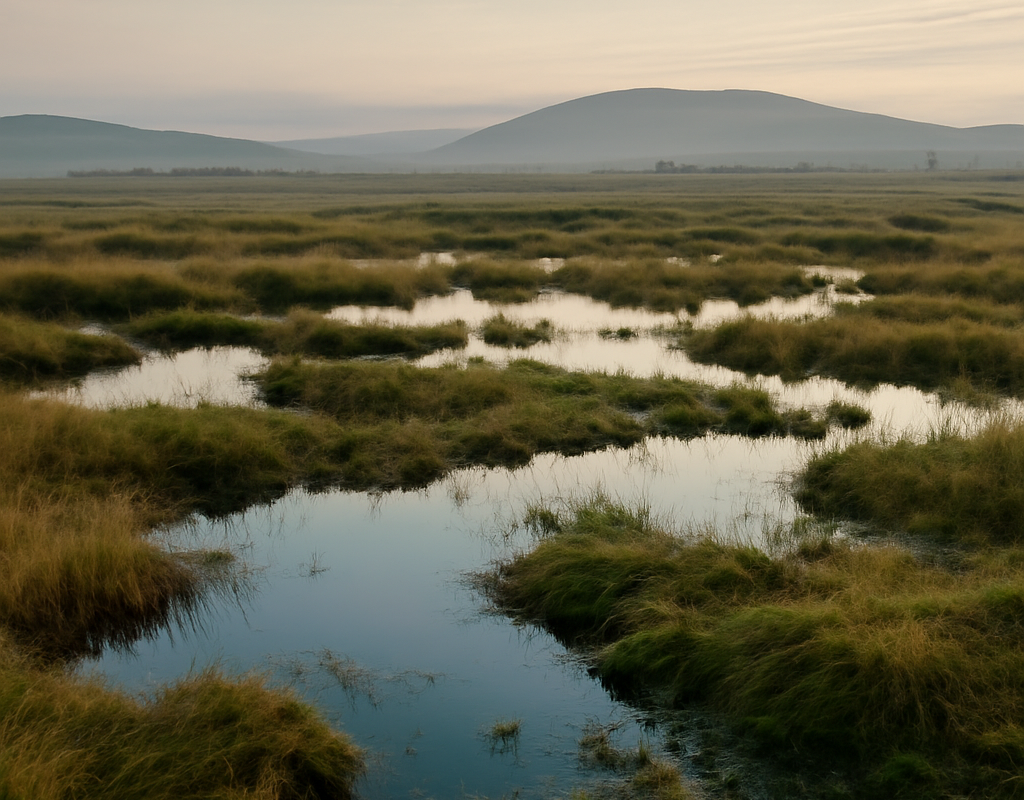
Ireland has joined the Peatland Breakthrough initiative at Cop31, pledging to share its experience of restoring damaged bogs with countries around the world. The international programme aims to mobilise $100 billion (€90.7 billion) for peatland protection and restoration by 2030.
Ireland takes champion-country role in global peatland plan
Climate Minister Darragh O’Brien said Ireland would act as a “champion country” for the initiative, using national expertise to support peatland projects overseas. Germany, Peru and Uganda have also made the commitment, while Canada has endorsed the programme.
The initiative has two central goals by 2030:
- To halt the loss of healthy peatlands worldwide.
- To place at least 30 million hectares of degraded peatlands under restoration.
For Ireland, the announcement builds on work already under way across the country. The Department of Climate said a recent rehabilitation programme covered 24,500 hectares, described as one of the largest peatland restoration projects in the world.
Why peatlands matter in the climate crisis
Peatlands cover only about 3 to 4 per cent of the planet’s land surface, but they store up to one third of the carbon held in the world’s soils. When these landscapes remain wet and intact, they can act as important carbon stores and support distinctive ecosystems.
Drainage for farming, forestry or development changes that role. Degraded peatlands can release stored carbon and become significant sources of greenhouse gas emissions. Restoration generally involves rewetting damaged areas and helping natural peat-forming processes recover, although the specific work required varies between locations.
The benefits extend beyond emissions reduction. Healthy peatlands can support biodiversity, improve water quality and contribute to local communities, according to Irish Government ministers involved in the announcement.
Ireland’s peatland challenge
About 21 per cent of Ireland’s land area is technically peatland. However, only a small proportion remains in a healthy, preserved condition after decades of agricultural and forestry use.
That history gives Ireland practical experience of the difficulties involved in restoring bogs at scale. It also means the country’s contribution will involve more than financial support: officials are expected to share knowledge from domestic rehabilitation programmes with international partners.
Ministers highlight biodiversity and water-quality gains
Minister for Climate Darragh O’Brien said Ireland was committed to using peatland rehabilitation to advance climate action, biodiversity protection, water quality and community interests. He added that the country was ready to share its progress and lessons with the international community.
Minister for Nature Christopher O’Sullivan and Minister for Agriculture Martin Heydon also welcomed Ireland’s participation. O’Sullivan described peatland restoration as one of the most effective actions available for biodiversity, while noting its wider benefits for climate, water and communities.
Peatlands feature amid difficult Cop31 negotiations
The announcement was made as climate and environment ministers from as many as 196 countries arrived in Antalya, Turkey, for the second and final week of Cop31 negotiations.
Officials made only modest progress during the previous week, with major disagreements still unresolved. The outstanding issues include faster emissions cuts, climate finance from wealthier countries to poorer nations, the role of human rights and justice in climate policy, and how to reflect scientific assessments of the 1.5-degree temperature goal.
Against that backdrop, the Peatland Breakthrough offers a specific international framework focused on one of the world’s most important carbon-rich ecosystems. Its success will depend on securing the proposed finance and turning commitments into restoration projects in affected countries.
Ireland’s wider climate plans
O’Brien was also due to publish the first phase of a national electrification plan. The plan is intended to accelerate the shift from petrol and diesel vehicles to electric alternatives, while supporting the replacement of oil and gas heating in homes and buildings with electric systems.
The electrification announcement and the peatland commitment reflect two different strands of climate policy: cutting future fossil-fuel emissions and protecting carbon already stored in natural landscapes. Both will require long-term implementation as well as clear targets.
What Ireland’s Cop31 commitment means
Ireland’s role in the Peatland Breakthrough places its domestic restoration experience within a wider global effort. The country has extensive peatlands but also a substantial legacy of drainage and degradation, making its practical knowledge relevant to other nations facing similar challenges.
The immediate test will be whether the initiative can attract the planned $100 billion and deliver measurable progress by 2030. For Ireland, becoming a champion country creates an opportunity to demonstrate that peatland restoration can combine climate action with gains for nature, water quality and communities.
Ireland’s Cop31 peatland commitment is therefore both an international pledge and a test of how effectively domestic restoration lessons can be applied on a global scale.