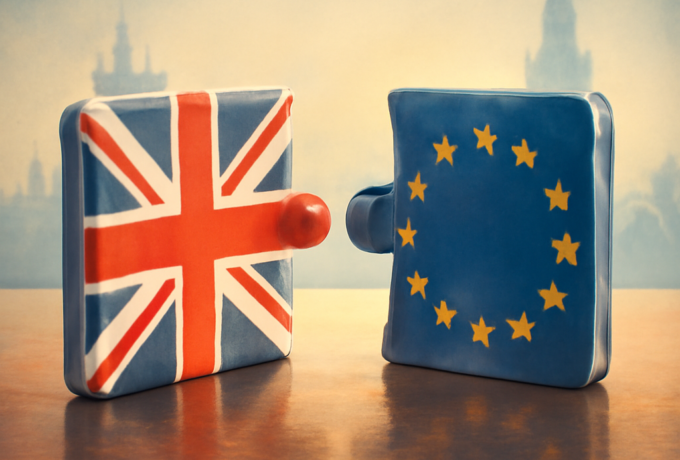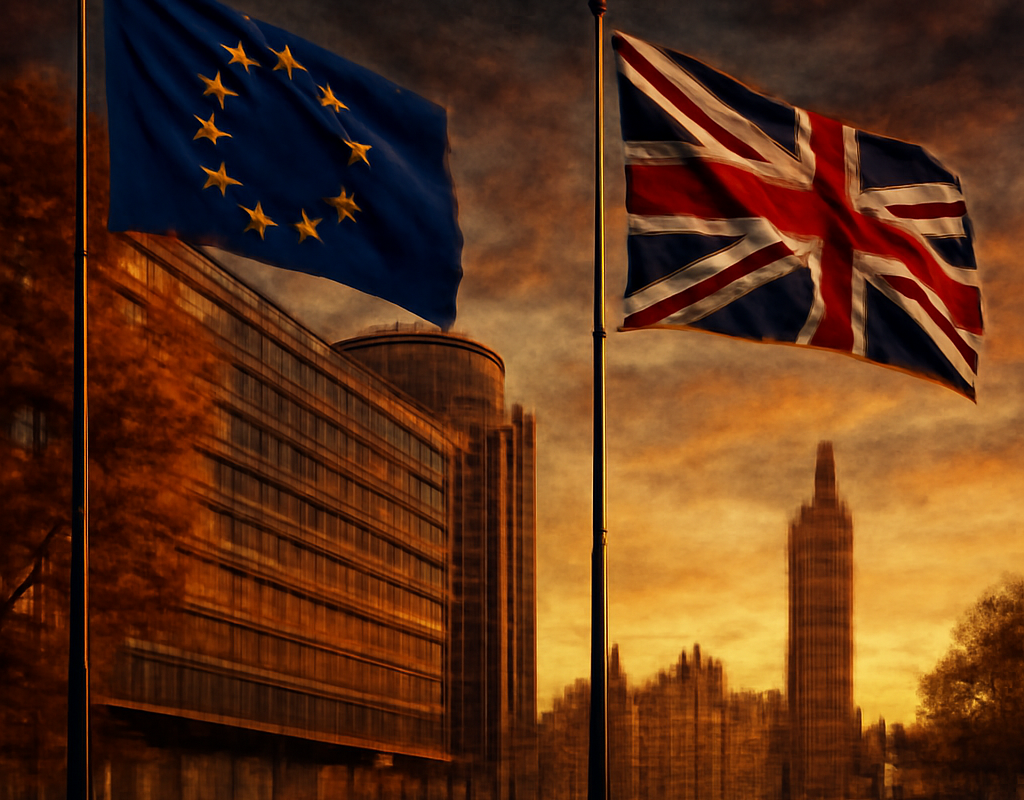
Nigel Farage has accused UK Prime Minister Andy Burnham of betraying Brexit voters as Britain moves towards new agreements with the European Union. The dispute highlights the political tension surrounding closer EU-UK relations, particularly in food, farming and single-market rules.
Farage condemns closer EU-UK cooperation
Speaking to Euronews on 20 November 2026, the Reform UK leader said he was angry that Brexit-related arguments had returned to the centre of British politics. He claimed the agreements being discussed at the Brussels summit would bring the UK back into parts of the EU single market.
Farage focused on arrangements covering foodstuffs and farming. In his view, Britain could be required to follow European Union regulations without having a vote over how those rules are made. He described that prospect as a betrayal of Labour’s earlier commitment not to rejoin the single market.
The summit is expected to address practical cooperation between the UK and the EU. However, the political language surrounding the meeting shows how difficult it remains for British governments to balance easier trade and cooperation with promises to preserve Brexit-era independence.
Brexit’s record remains contested
Farage defended Brexit when asked whether leaving the EU had weakened Britain’s economy or international influence. He pointed to the UK’s support for Ukraine and the AUKUS security partnership with Australia as evidence that Britain had become more globally active since leaving the bloc.
He also argued that the effect of Brexit on the economy was difficult to separate from the disruption caused by the Covid-19 pandemic. According to Farage, Britain had performed strongly in areas including artificial intelligence and financial services, while he criticised the EU single market as an unsuccessful economic model.
His position was less positive on immigration. Farage acknowledged that Brexit had failed to deliver one of its central political promises: reducing overall immigration. He blamed Conservative governments for allowing immigration to reach record levels after the UK had formally regained control of its borders.
That admission is significant because controlling immigration was one of the strongest arguments used by Brexit campaigners. Farage nevertheless rejected the idea that disappointment with Brexit automatically meant voters wanted Britain to rejoin the European Union.
Farage calls for referendum on any return to the EU
Farage said that any future Labour campaign to rejoin the EU should include a referendum. He warned that reopening the membership question could divide the country again, but argued that voters would have to give their consent if the government sought to reverse Brexit.
The comments underline the continuing importance of Brexit in UK politics, even as the immediate focus shifts towards closer cooperation. A return to the EU is not the same as negotiating sector-specific arrangements, but opponents of closer alignment argue that individual agreements could gradually reduce the practical distance between Britain and the bloc.
MEP says Europe would welcome Britain back
Tobias Cremer, a German Socialist Member of the European Parliament, offered a sharply different assessment. He argued that Brexit had imposed major economic costs on the UK and said a majority of British voters now favoured rejoining the EU.
Cremer also contrasted the fall in EU immigration with the rise in non-EU immigration since Brexit. He said the changing international environment made closer European cooperation increasingly important, particularly following Russia’s war against Ukraine, China’s growing assertiveness and uncertainty about the United States.
In his view, cooperation on security, defence and trade would serve both Britain and the EU. Asked whether the UK could return to the EU within five years, he said that was his personal wish rather than a confirmed political timetable.
What the summit means for EU-UK relations
The EU-UK summit is not, on the evidence provided, a decision to reverse Brexit. Instead, it reflects efforts to manage practical problems created by Britain’s departure while preserving the formal separation between the UK and the European Union.
- Trade: Food and farming arrangements could reduce friction for businesses operating across the Channel.
- Regulation: Closer alignment may require Britain to follow selected EU rules, raising concerns about democratic oversight.
- Security: Cooperation is being discussed against a backdrop of war in Ukraine and wider geopolitical uncertainty.
- Politics: Any move towards EU membership would be far more contentious and, according to Farage, should require a referendum.
The argument between Farage and Cremer captures two competing interpretations of the UK’s future: one focused on sovereignty and the rejection of EU rule-making, and another centred on the economic and security benefits of closer European ties.
The wider Brexit debate continues
For British voters, the central question is no longer simply whether Brexit should have happened. It is how far the UK should cooperate with the EU while remaining outside its institutions. The Brussels summit could therefore influence debates about trade, regulation and foreign policy without reopening the legal question of membership.
As EU-UK relations develop, disagreements over immigration, economic performance and democratic control are likely to remain central to British politics. Farage’s intervention shows that even limited alignment with European rules can quickly become a wider argument about the meaning of Brexit.
The key takeaway is that the EU-UK summit marks a debate about practical cooperation, not an announced return to the European Union. Whether closer ties are seen as sensible diplomacy or a betrayal of Brexit will depend on which political priorities British voters place first.