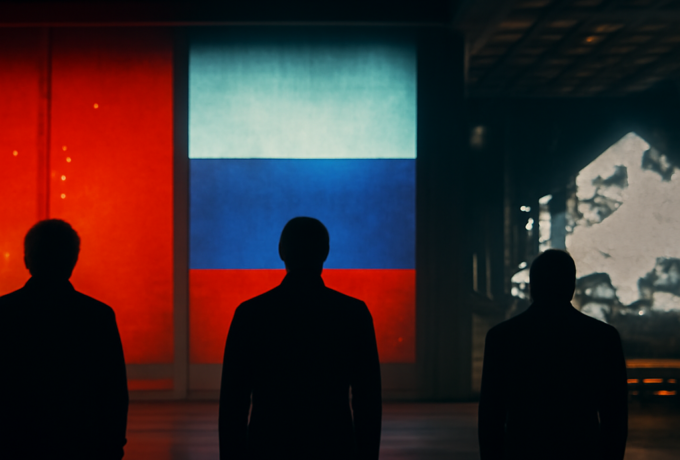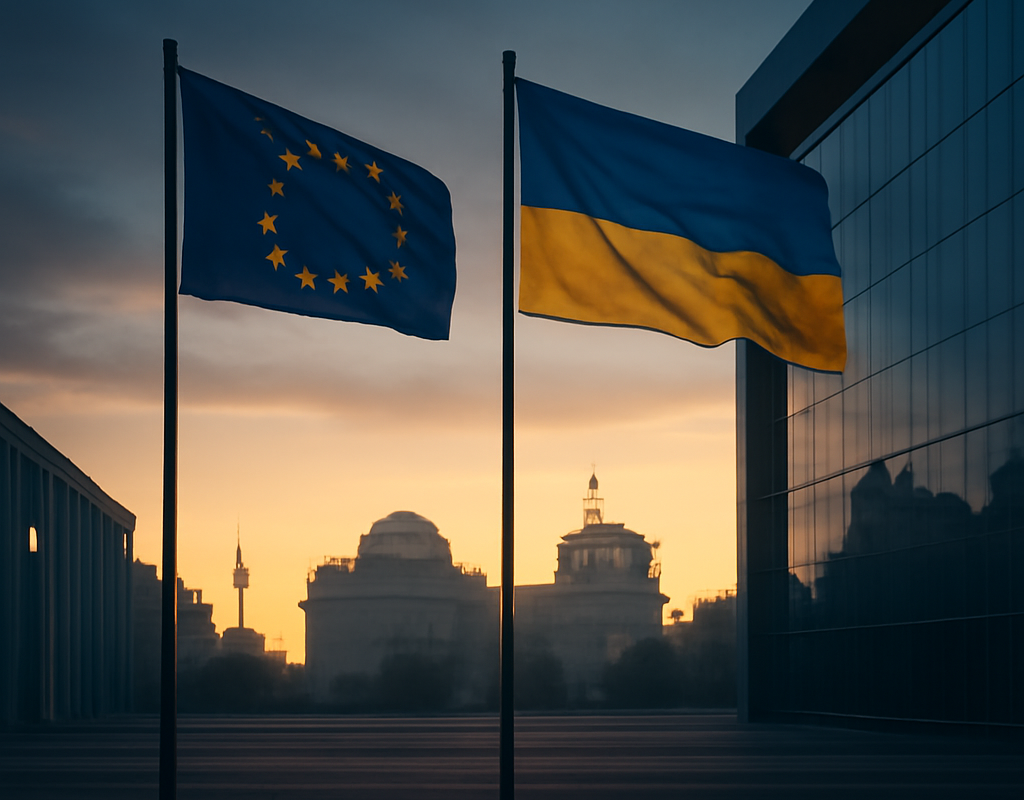
Europe is facing a decisive test over its role in negotiations on Ukraine as Donald Trump, Xi Jinping and Vladimir Putin prepare for a high-level trilateral meeting in China. At the same time, more than 40 countries from the Coalition of the Willing are gathering in Berlin to discuss continued support for Kyiv and define Europe’s position on any future ceasefire talks.
Europe’s Ukraine role comes into focus
The China meeting has revived comparisons with the 1945 Yalta Conference, where the leaders of the United States, the United Kingdom and the Soviet Union helped shape the post-war order. For countries in central and eastern Europe, that history remains deeply sensitive because the Baltic states’ occupation and annexation by the Soviet Union went unchallenged by the Western Allies.
Norwegian Foreign Minister Espen Barth Eide said he did not expect the latest trilateral to create new spheres of influence, but warned that an agreement between major powers to divide the world would be undesirable. The concern is not simply historical. Any settlement over Ukraine would have direct consequences for European security, borders and the future of the continent’s defence arrangements.
Fredrik Wesslau of the European Council on Foreign Relations said Russia’s president may seek an outcome in which Russia, the US and China determine the broader geopolitical future. However, he argued that the fundamentals of European security cannot be decided without European involvement.
Berlin meeting seeks common European red lines
The Coalition of the Willing meeting in Berlin is intended to demonstrate continued backing for Ukraine while European governments consider what conditions would be required for meaningful negotiations. Representatives from Germany, France, Italy, Poland and the United Kingdom are also expected to discuss Europe’s potential red lines.
The talks follow an informal European Council meeting in Dublin, after which the five countries, alongside officials from the European Council and European Commission, were tasked with engaging with Russia. The central question is whether Europe can present a united position if Washington pushes rapidly towards a ceasefire agreement.
Former Estonian President Toomas Hendrik Ilves criticised recent US comments about Ukrainian strikes on Russian oil refineries and data centres, particularly in light of Russia’s continuing attacks on Ukraine. German Defence Minister Boris Pistorius has publicly challenged Washington’s criticism of Ukraine’s long-range strikes, signalling a more assertive stance from at least one major European government.
Why European involvement matters
- European states would be directly affected by any changes to Ukraine’s borders or security guarantees.
- The war has reshaped Europe’s defence planning, energy policy and relationship with Russia.
- A settlement reached without Kyiv and European governments could be difficult to implement or sustain.
- The meeting tests whether EU countries and their partners can coordinate beyond statements of support.
EU proposes a further €45 billion loan for Ukraine
The European Commission has proposed a new €45 billion support loan for Ukraine, in addition to an ongoing €90 billion loan. Commission President Ursula von der Leyen said the funding would give Kyiv a stronger position at the negotiating table while helping the country withstand Russia’s attacks.
The proposed loan would be raised through joint EU borrowing. Slovakia, the Czech Republic, Hungary and Bulgaria have indicated that they want to opt out, although von der Leyen said she remained confident that all 27 member states would support the plan.
The proposal is linked to negotiations over the EU’s next long-term budget. Another unresolved issue is the cost of servicing the debt. The combined loans are estimated to create annual interest costs of about €6 billion. The EU has said it reserves the right to use immobilised Russian assets to repay the principal, adding a significant legal and political dimension to the financing plan.
Energy, enlargement and other EU developments
EU Energy Commissioner Dan Jørgensen described a new agreement to speed up permitting as an important step towards modernising Europe’s power grid. Faster approvals are intended to support renewable energy, electrification, electric transport and heat-pump adoption, although funding the required infrastructure remains a major challenge.
Meanwhile, Montenegro is under pressure to maintain its EU accession timetable. Podgorica is expected to close two negotiation chapters—regional policy and taxation—but still has 10 chapters to complete before the winter recess. Bilateral disputes with Croatia remain a political obstacle, even though Montenegro could potentially join in 2028 if negotiations extend into early next year.
The European People’s Party is also expected to consider suspending Serbia’s Serbian Progressive Party at its December assembly. The move follows scrutiny of the party’s links to Russia and its handling of protests in Serbia, according to the source report.
What Europe’s latest Ukraine talks mean
The immediate outcome of the Xi-Trump-Putin meeting remains uncertain, but its symbolism is already significant. Europe is attempting to show that support for Ukraine and decisions about European security cannot be separated from European participation.
Berlin’s discussions, the proposed EU loan and the continuing diplomatic activity all point to the same challenge: Europe must translate political unity into financial, military and diplomatic influence. The strongest message from the latest EU news is that any durable settlement will require Ukraine and Europe to be at the table—not treated as subjects of an agreement made elsewhere.