

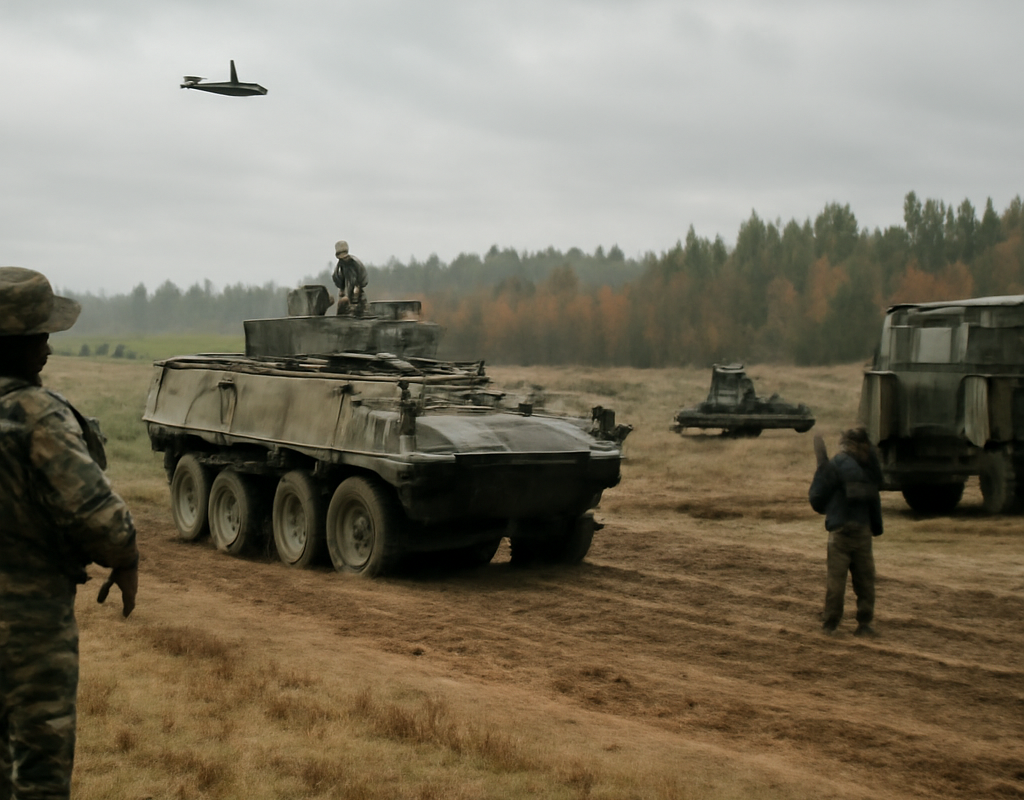
European troops are set to rehearse a possible post-war deployment in Poland, highlighting how European countries are preparing for security arrangements linked to the conflict in Ukraine. The force is separate from NATO and has limited United States involvement, according to the supplied report.
The exercise comes as diplomatic efforts continue alongside the war. US-led talks between Russia and Ukraine were expected to resume the following week, while fighting and long-range attacks continued. The planned rehearsal therefore links military preparedness with a possible future political settlement, but it does not represent a confirmed deployment into Ukraine.
What is being rehearsed?
The exercise is intended to test how a European force could operate in the event of a post-war mission connected to Ukraine. Poland is hosting the rehearsal, making the country a significant staging point for European security planning because of its proximity to Ukraine and its role as a major regional logistics hub.
The available information does not establish that troops will enter Ukraine or that a final political decision has been taken to create such a mission. Instead, the exercise appears to focus on readiness, coordination and command arrangements should European governments later agree to a deployment.
- The rehearsal is taking place in Poland.
- The force was established in 2025.
- It has an operational headquarters in Paris.
- It is not a NATO operation.
- The United States has limited involvement.
- The activity concerns possible post-war planning rather than a confirmed active deployment.
Why Poland matters to European security planning
Poland has become central to European defence discussions since Russia’s full-scale invasion of Ukraine. Its location gives it strategic importance for transport, military logistics and coordination between countries supporting Ukraine.
A rehearsal on Polish territory can allow participating countries to examine practical questions before any mission is authorised. These may include movement of personnel and equipment, communications, command structures, medical support and cooperation between national contingents. Such preparations do not determine the outcome of negotiations, but they can reveal whether governments have the capacity to act together if a political agreement is reached.
How the force differs from NATO
The planned activity should not be confused with a NATO exercise or an operation under the alliance’s command. NATO and European-led arrangements can involve overlapping countries, but they have different legal, political and military structures.
The force described in the report has its headquarters in Paris and little US involvement. That points to a European-led framework rather than a conventional NATO mission. The distinction matters because any future deployment would require participating governments to settle its mandate, rules of engagement, financing, command arrangements and relationship with other international actors.
It also means that the rehearsal itself should not be presented as proof that European troops are being sent to Ukraine. The current confirmed development is preparation for a possible scenario.
The wider diplomatic context
The military planning is taking place while diplomatic activity continues. Talks involving Russia and Ukraine were expected to resume in the United Arab Emirates, according to the supplied report. The continuation of negotiations means the political conditions for any post-war security force remain uncertain.
A future mission could depend on several factors:
- whether Russia and Ukraine reach a ceasefire or wider settlement;
- whether Ukraine requests or accepts an international security presence;
- whether European governments agree on the mission’s purpose and structure;
- whether participating countries secure parliamentary and legal approval; and
- whether the force can operate safely and with a clear mandate.
Until those questions are answered, the rehearsal is best understood as contingency planning. It may improve preparedness, but it cannot itself create a peacekeeping mission or guarantee that one will be deployed.
What it means for Europe and Ireland
The exercise reflects a broader debate about European defence and strategic responsibility. Governments across Europe have been considering how much security capacity they can provide without relying entirely on the United States. A European-led force connected to Ukraine would be a major political and operational undertaking.
For Ireland, the immediate relevance lies in the wider European security debate rather than in any confirmed Irish participation. Ireland’s approach to international security and overseas deployments is shaped by national policy and legal requirements. The supplied report does not identify Ireland as part of the force or the rehearsal.
The developments may nevertheless affect European discussions on defence cooperation, support for Ukraine and the future security architecture of the continent. Any formal EU decision, national deployment announcement or mandate would need to be assessed separately from this exercise.
What happens next?
The next steps will depend on both the outcome of diplomatic talks and decisions by the governments involved in the force. Further information would be needed to establish which countries are participating, the size of the exercise, its precise timetable and the conditions under which a post-war mission could be activated.
For now, the key point is that European troops are rehearsing for a possible future role in Ukraine-related security arrangements. The exercise signals preparation, not a final deployment decision.
Conclusion
The planned Polish rehearsal shows that European governments are preparing for possible post-war security responsibilities while negotiations continue. It is separate from NATO, has limited US involvement and does not confirm that troops will enter Ukraine. The eventual significance of the exercise will depend on whether diplomacy produces an agreement and whether European states can secure a clear, lawful and workable mandate for any future mission.