

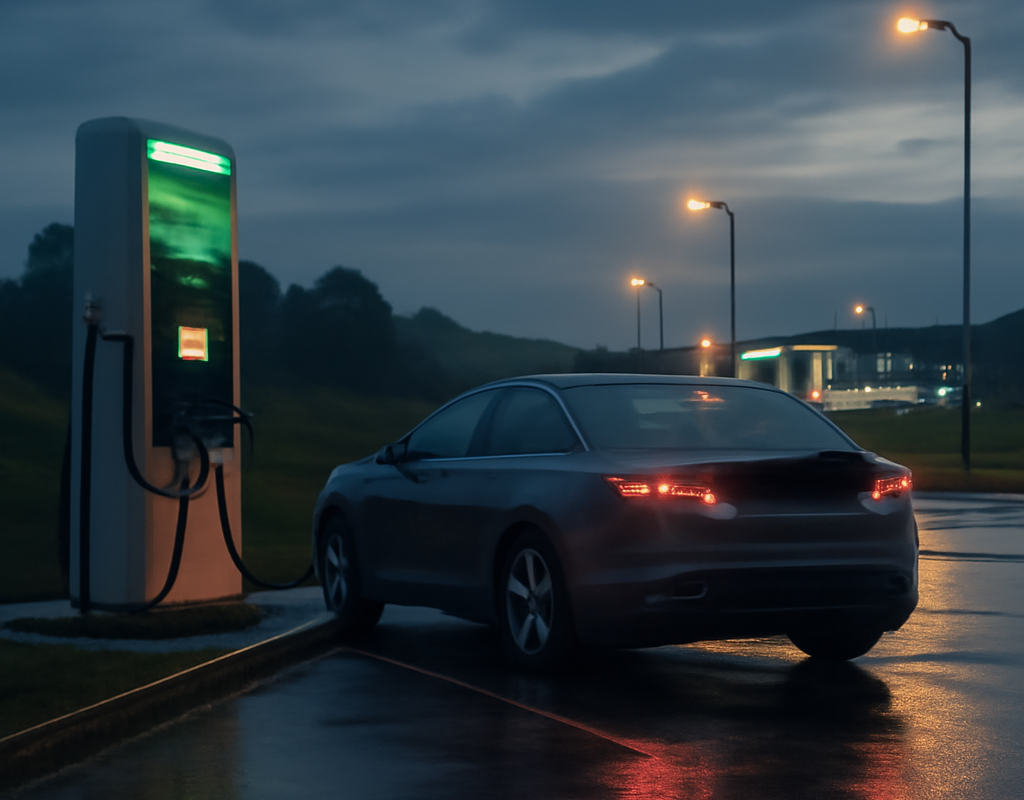
Electric vehicle drivers in Ireland who rely on public charging points are facing a growing cost disadvantage, with roadside charging now reported to be more expensive than refuelling comparable petrol or diesel cars. The development is especially significant for motorists without access to a home charger, who are exposed to higher electricity prices and public-network fees.
Public EV charging costs rise across Ireland
The latest electricity price increases have changed the financial calculation for some electric car owners. While home charging can still offer savings in many circumstances, drivers using motorway services, filling stations and other public charging locations may now pay substantially more for each journey.
The sharpest impact is being felt by households and drivers who cannot install a charger at home. These motorists must depend on commercial charging networks, where the price of electricity can include energy costs, network charges, parking fees and other service expenses.
According to the reported figures, roadside electricity can cost up to six times more than charging at home. That difference means the total running cost of an EV depends not only on the vehicle’s efficiency, but also on where it is charged.
Why charging location matters
Electric vehicles are often promoted as a lower-cost alternative to petrol and diesel cars because electricity can be cheaper than liquid fuel when a vehicle is charged at home. Public charging removes much of that advantage.
- Home charging: usually provides the most predictable and potentially lowest-cost option.
- Public charging: can involve higher electricity rates and additional service charges.
- Rapid charging: offers speed and convenience but may carry a premium price.
- Drivers without off-street parking: may have little choice but to use public infrastructure.
This creates an uneven experience for EV owners. A motorist with a driveway, private parking space or workplace charger may continue to benefit from lower charging costs, while a driver living in an apartment or terraced home may face significantly higher bills.
What the development means for Irish motorists
The change could influence decisions for people considering an electric car, particularly in urban areas where home charging is not always practical. It also highlights the importance of comparing the full cost of ownership rather than looking only at the purchase price or advertised fuel savings.
Potential buyers may need to consider:
- Whether they have reliable access to overnight charging.
- How frequently they would need to use public or rapid chargers.
- The tariffs available through charging operators in their area.
- The vehicle’s battery size and real-world energy consumption.
- Whether workplace or destination charging is available.
For existing EV drivers, the immediate issue is how to reduce reliance on expensive roadside charging. Planning journeys around lower-cost charging locations, charging during available off-peak periods and checking tariffs before plugging in may help control expenses. Drivers should also review whether their electricity supplier offers a dedicated EV or night-rate plan.
Read More
Follow DailyDigest for further Ireland News, consumer updates and public services coverage.
Why public charging prices are under scrutiny
The cost of public charging matters beyond individual household budgets. Ireland is seeking to increase the number of electric vehicles on its roads as part of wider efforts to reduce transport emissions. If public charging becomes consistently more expensive than petrol or diesel, the financial incentive to switch may weaken for motorists who cannot charge privately.
That does not mean every EV journey is now more expensive. Costs vary according to the vehicle, charging provider, location, speed of charge and electricity tariff. However, the reported trend raises questions about whether Ireland’s charging network is affordable and accessible enough for widespread adoption.
It also exposes a potential gap between national transport policy and everyday driving conditions. Expanding charging infrastructure is important, but so is ensuring that the network remains competitively priced for people who depend on it.
Impact on renters and apartment residents
People who rent their homes or live in apartments can face particular barriers. They may not control parking areas, lack permission to install equipment or have no dedicated parking space close to their property. Public charging therefore becomes a necessity rather than a convenience.
Any long-term transition to electric transport will need to account for these motorists. Measures could include more residential charging, clearer pricing, accessible payment systems and stronger competition between providers. Without those changes, the benefits of EV ownership may be distributed unevenly.
What happens next?
Drivers and policymakers will be watching electricity prices, charging tariffs and EV adoption figures closely. The central question is whether the current cost pressure is temporary or becomes a lasting feature of public charging in Ireland.
For consumers, the most practical next step is to calculate charging costs based on their own routine. A vehicle that is economical for a homeowner with a private charger may be considerably less attractive for someone dependent on rapid charging stations.
Frequently asked questions
Is charging an electric car always more expensive than petrol or diesel?
No. The cost depends on where the vehicle is charged. Home charging may remain cheaper, while public and rapid charging can be significantly more expensive.
Who is most affected by rising public EV charging costs?
Drivers without a home charger, including some renters and apartment residents, are most exposed because they may rely on commercial charging points for routine journeys.
Why can roadside charging cost more?
Public charging prices can include higher electricity rates, infrastructure costs, operator fees, parking charges and the cost of providing rapid charging equipment.
What can EV drivers do to reduce costs?
Motorists can compare charging tariffs, use home or workplace charging where possible, plan around lower-cost locations and check whether their electricity supplier offers an EV-friendly tariff.
Conclusion
This latest Breaking News development shows that the cost of running an electric car in Ireland depends heavily on access to affordable charging. Public EV charging costs now exceeding petrol and diesel costs could create a serious obstacle for drivers without private parking, even as the country continues its shift towards cleaner transport. For motorists, the key takeaway is simple: calculate charging costs based on real access to infrastructure, not headline fuel-saving claims.