

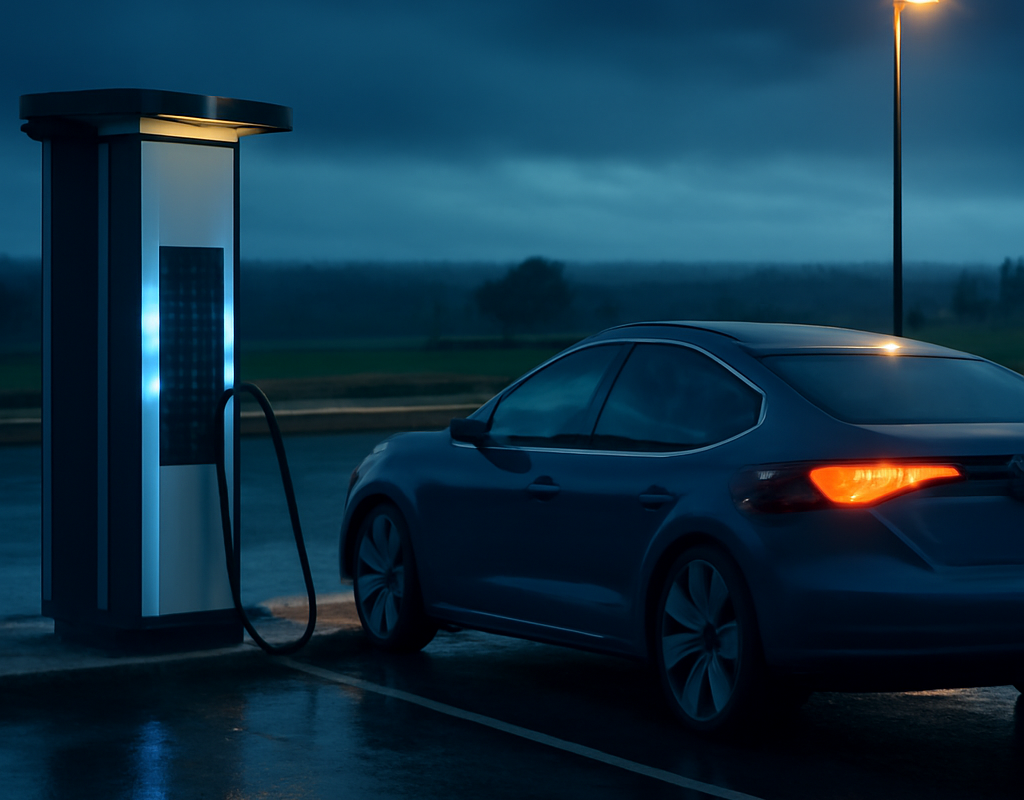
Public EV charging costs in Ireland are now exceeding the cost of filling comparable petrol and diesel cars, creating a growing problem for drivers who cannot charge at home. The issue comes as the Government launches its National EV Infrastructure Strategy 2026–2028, which aims to expand and future-proof the country’s charging network.
Public EV charging costs are rising across Ireland
Electric vehicle drivers who depend on motorway services, roadside chargers and public charging hubs are facing significantly higher costs than motorists who can charge overnight at home. The gap is particularly stark for apartment residents and people living in homes without private off-street parking.
Home charging on a fixed night-time electricity tariff can cost about 12 cent per kilowatt-hour. By comparison, rapid and ultra-rapid public chargers can cost up to six times as much, or more, depending on the operator, location, tariff and whether the driver has a subscription.
That difference means the financial benefits often associated with electric motoring are not available equally to all households. Drivers with a driveway or dedicated parking space can use cheaper overnight electricity, while those without access to a charger may have to rely on the most expensive part of the public network.
How the costs compare with petrol and diesel
A typical electric car with an 80kWh battery can travel approximately 450 kilometres in winter conditions. Charging that vehicle at a contactless public charger can cost almost €70, excluding any additional subscription fee.
For comparison, a family diesel car with a 1.6-litre engine may cost about €110 to refuel and deliver roughly 950 kilometres of driving. The comparison depends on vehicle efficiency, driving conditions, fuel prices and charging tariffs, but it shows why public charging prices are becoming a serious concern for EV owners.
The result is a sharp contrast between the cost of home charging and the cost of long-distance or emergency charging. For some motorists, public electricity can now be more expensive per kilometre than petrol or diesel.
- Home charging can cost about 12 cent per kWh on a suitable night-time tariff.
- Public rapid charging may cost up to six times more.
- An 80kWh EV battery can cost almost €70 to charge publicly.
- Drivers without private parking are most exposed to rising public charging prices.
Who is most affected by higher EV charging prices?
The biggest impact is being felt by drivers who cannot install a home charger. This includes many people living in apartments, terraced homes without driveways and higher-density urban housing.
These motorists may be dependent on public charging for nearly every journey. They can also face additional inconvenience when chargers are occupied, unavailable or located away from their homes. Unlike drivers with private parking, they cannot simply plug in overnight at the lowest available rate.
The issue has implications beyond individual household budgets. If public charging remains significantly more expensive than home charging, the transition to electric vehicles could become less accessible for renters, lower-income households and urban residents.
New National EV Infrastructure Strategy launched
Transport Minister Darragh O’Brien launched the National EV Infrastructure Strategy 2026–2028 as the Government seeks to support the next stage of Ireland’s electric vehicle rollout.
The strategy includes plans to identify local charging needs and expand neighbourhood charging options for people without private off-street parking. The Department of Transport said this would include residents in apartments and higher-density housing.
However, the strategy does not introduce a system for controlling or regulating public charging prices. The Department said that price-setting is a commercial and operational matter for charge point operators.
There are more than 20 commercial charge point operators active in Ireland, with different tariffs and subscription models. The Department said it would continue to monitor pricing trends and their impact on drivers who rely on public charging.
Why home charging remains central to Ireland’s EV plans
The Department of Transport estimates that more than 80 per cent of EV charging will take place at home. That expectation is based on the lower cost and convenience of overnight charging.
Yet the estimate also highlights a potential weakness in the transition strategy. If a significant minority of drivers cannot charge at home, public infrastructure must be affordable, reliable and widely distributed enough to meet their needs.
Expanding the number of chargers alone may not solve the problem. Drivers also need clear pricing, consistent payment systems, dependable availability and charging points located close to where people live and work.
What happens next for EV drivers?
The Government’s infrastructure strategy is expected to guide the development of local and national charging facilities through 2028. A key test will be whether neighbourhood charging can give people without driveways a practical alternative to expensive motorway hubs.
For motorists, the most important steps are to compare operator tariffs, check whether a subscription reduces costs and plan longer journeys around charging prices and availability. Drivers should also confirm whether a quoted price includes connection fees, time charges or separate membership costs.
Pricing is likely to remain a central issue in Ireland’s electric transport transition. The shift to EVs will depend not only on vehicle availability, but also on whether charging is affordable for people across different housing types and income groups.
Frequently asked questions
Is public EV charging more expensive than petrol or diesel in Ireland?
For some vehicles and charging locations, yes. The source figures indicate that charging an 80kWh EV at a public contactless charger can cost almost €70, while a comparable diesel car may offer a longer range for about €110 in fuel.
Why is home charging cheaper?
Home charging can use lower-cost overnight electricity tariffs and avoids many of the commercial operating costs associated with rapid public charging hubs.
Who pays the most for EV charging?
Drivers without access to private off-street parking, including many apartment residents, are most exposed because they cannot routinely charge overnight at home.
Will Ireland regulate public EV charging prices?
There are currently no plans to regulate charging costs in the public EV sector. The Department of Transport said it will monitor pricing and its effect on users.
Conclusion
The latest Breaking News on electric transport is a warning that Ireland’s EV transition is becoming a question of affordability as well as infrastructure. Public EV charging costs are now higher than petrol or diesel for some journeys, while drivers without home chargers face the greatest pressure.
The National EV Infrastructure Strategy 2026–2028 promises more neighbourhood charging, but its success will depend on whether those facilities are accessible and competitively priced. Until then, home charging remains the cheapest option—and one unavailable to many of the people who increasingly need public alternatives.