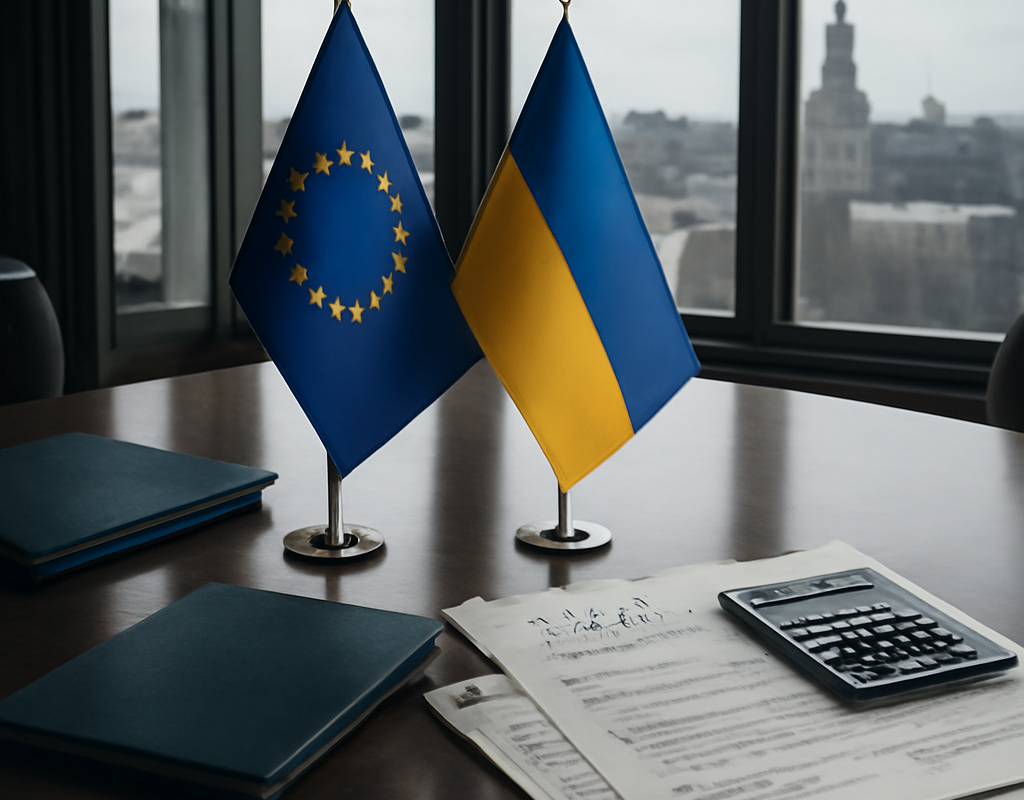
The European Commission has proposed a new €45 billion loan for Ukraine as Russia’s continuing attacks widen Kyiv’s wartime budget gap. The plan would be raised through EU joint borrowing, but it still requires approval from EU leaders and is already exposing divisions over cost, solidarity and repayment.
The proposal is the latest major development in EU news on support for Ukraine. It comes as European governments face pressure from higher energy costs, limited public finances and growing political opposition to further assistance.
Why is the EU proposing another Ukraine loan?
EU leaders agreed last December to a €90 billion loan covering Ukraine’s military and financial needs for 2026 and 2027. That package was prepared on the expectation that Russia’s war might end during 2026.
Instead, the conflict has intensified. Continued Russian airstrikes have damaged Ukraine’s energy infrastructure, disrupted businesses and reduced the government’s ability to collect revenue. Restrictions affecting Black Sea trade have also hurt a vital route for Ukrainian agricultural exports.
According to the Commission’s assessment, these pressures have contributed to a €70 billion shortfall in Ukraine’s 2027 budget. The proposed loan is intended to cover the EU’s share of that gap and give Kyiv greater financial stability while the war continues.
How would the €45 billion package work?
The Commission is applying the same broad burden-sharing formula used for the earlier loan. The EU would provide approximately two-thirds of the identified €70 billion shortfall, while partner countries are expected to contribute the remaining €25 billion.
The potential contributors include the United Kingdom, Norway, Canada, Japan and Australia. Brussels has outlined two possible routes for partners:
- A €5 billion increase backed by highly rated guarantees.
- An extension of an earlier G7 loan supported by profits generated from immobilised Russian assets.
The proposal does not assume a financial contribution from the United States. If approved, the new borrowing would bring the EU’s planned loans for Ukraine in 2026 and 2027 to a combined €135 billion.
How will the EU raise the money?
The Commission would borrow on capital markets by issuing bonds with different maturities. Because the borrowing is undertaken jointly, the Commission raises the funds on behalf of the member states rather than Ukraine borrowing the full amount directly.
This approach mirrors the financing method used for the €90 billion package. However, borrowing conditions have become more expensive. Energy market instability, geopolitical uncertainty, concerns about public debt and wider financial pressures have all contributed to higher costs.
What will the loan cost?
Commission officials estimate that interest payments across the two loans could amount to about €6 billion a year. The existing €90 billion package is expected to cost roughly €3.5 billion annually, compared with an earlier estimate of €3 billion. Interest on the proposed €45 billion loan could add between €2 billion and €2.5 billion each year.
EU member states, rather than Ukraine, would subsidise these interest payments. One option is to use part of a €100 billion special Ukraine envelope included in the EU’s next seven-year budget. That would reduce the available allocation by €42 billion and leave less flexible support for Kyiv.
A second option would create a separate financial instrument for the interest costs, preserving the full €100 billion envelope. The choice is politically sensitive because decisions on both the loan and the wider EU budget require unanimity.
Which countries oppose participation?
Slovakia, the Czech Republic and Hungary have already been excluded from the earlier €90 billion arrangement and have signalled that they want to remain outside the new scheme. Bulgaria has also indicated that it does not want to participate.
Slovak Prime Minister Robert Fico has opposed what he describes as war loans and weapons support. Germany’s Chancellor Friedrich Merz, by contrast, argues that backing Ukraine is part of Europe’s shared security responsibility. He has threatened to veto the next EU budget if all 27 member states do not support the loan.
The Commission has proposed allowing the four countries to join the €20 billion budgetary element while remaining outside the €25 billion military component. However, the source report says their opposition is primarily political, making a compromise uncertain.
Will Ukraine have to repay the money?
Under the proposed arrangement, Ukraine would be expected to repay the €45 billion loan, as well as the earlier €90 billion, only when Russia agrees to pay war reparations under a future peace settlement.
Until then, the loans would be rolled over indefinitely. Russia has repeatedly rejected the idea of paying reparations, raising the possibility that the EU could eventually carry much of the financial responsibility.
Brussels has reserved the option of using approximately €210 billion in immobilised Russian assets to repay assistance provided to Ukraine. Doing so, however, could reduce the funds available for Ukraine’s post-war reconstruction. EU officials have also acknowledged that a future political decision could waive the debt.
What happens next?
The €45 billion proposal must first be agreed by EU leaders. The debate will involve more than the immediate need to finance Ukraine: it will also test the EU’s ability to share costs, maintain unanimity and protect room for other priorities in its long-term budget.
For Ukraine, the package would provide a stronger financial position during an extended war. For the EU, it creates a long-term liability whose final cost depends heavily on the eventual terms of peace and the future treatment of Russian assets.
The key takeaway from this latest EU news is that the proposed loan is not simply a new cash pledge. It is a complex joint-debt plan that could shape EU budget decisions, relations among member states and Ukraine’s finances for years to come.