

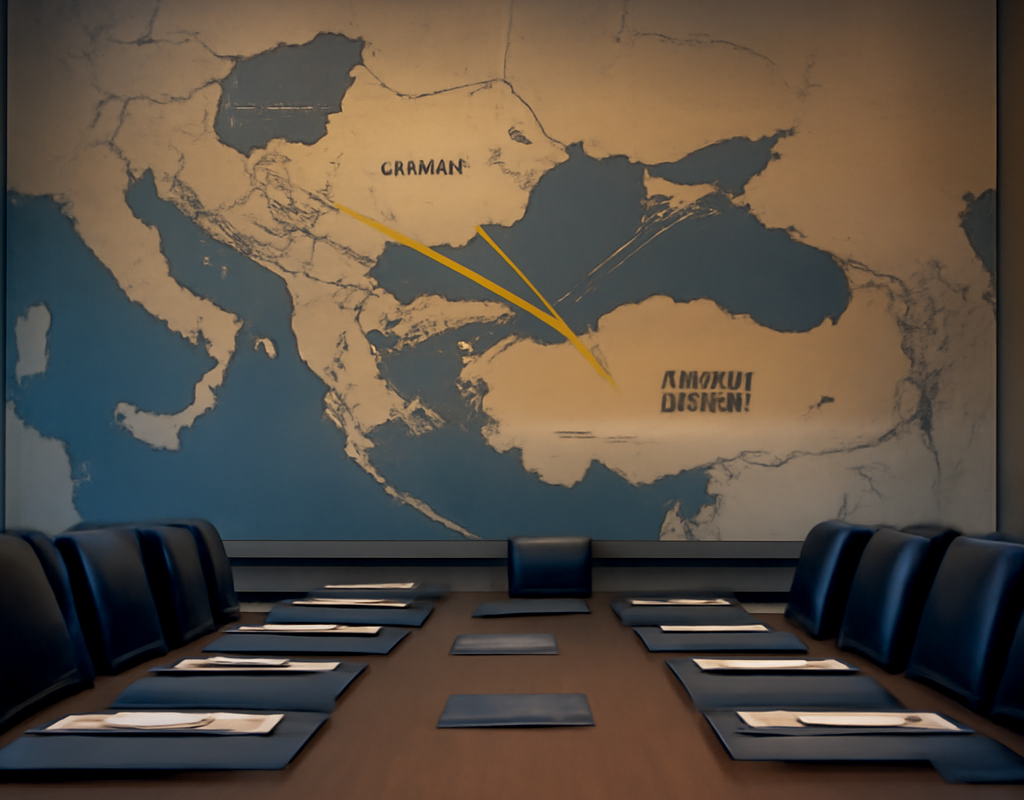
The European Commission is placing greater emphasis on foreign-policy alignment and democratic standards as it considers how candidate countries move closer to the European Union. Serbia, Georgia and Türkiye face particular pressure because of low alignment, stalled reforms or signs of democratic backsliding.
The shift matters because Brussels is preparing a gradual integration model that could give candidate countries earlier access to parts of the EU single market and selected programmes. However, the proposed benefits would remain conditional, merit-based and reversible rather than an alternative route to full membership.
Foreign-policy alignment becomes more important in EU enlargement
EU enlargement has traditionally focused on adopting the acquis, strengthening the rule of law and meeting economic and institutional requirements. The European Commission’s latest assessments show that foreign and security policy are becoming increasingly important parts of that process.
EU officials say candidate countries are expected to contribute to the Union’s security environment, particularly as Russia’s war against Ukraine has been accompanied by wider concerns about hybrid attacks, cybersecurity and threats to critical infrastructure.
Areas of closer cooperation may include:
- Defence and security policy
- Border management
- Cybersecurity
- Protection of critical infrastructure
- Alignment with EU sanctions, including measures targeting Russia
This does not mean that alignment alone determines whether a country can join the EU. Accession remains a multi-stage process requiring progress across the negotiating chapters, including democracy, judicial independence, fundamental rights and economic readiness.
Serbia remains a major outlier
Serbia has made substantial technical progress in parts of the internal market, but the Commission’s assessment presents a less positive picture in the “fundamentals” of accession. This area covers the rule of law, the judiciary and fundamental rights.
According to the assessment cited in the source material, Serbia’s foreign-policy alignment with the EU stands at 63%. Its relations with Russia and China, together with its refusal to align with EU sanctions on Russia, Belarus and Iran, remain significant points of disagreement.
Brussels also continues to view the normalisation of relations between Serbia and Kosovo as a central issue. Any new Serbian government would face pressure to translate political commitments on institutional reform and accession into concrete action.
The political situation in Belgrade could nevertheless create an opportunity for renewed engagement. The source reports that a student-led political movement defeated Aleksandar Vučić’s Serbian Progressive Party after 14 years in power, campaigning on anti-corruption measures and institutional reform. The practical effect on Serbia’s EU path will depend on how any new administration approaches rule-of-law reforms, foreign-policy alignment and relations with Kosovo.
Georgia’s accession path has stalled
Georgia is described by EU officials as a particularly serious case of democratic backsliding. The country has made no progress on the nine steps linked to its candidate status, according to the Commission assessment cited in the report.
Georgia’s government announced in 2024 that it would not pursue accession talks until 2028. The European Union has also suspended visa-free travel for holders of Georgian diplomatic, service and official passports, adding to tensions between Tbilisi and Brussels.
EU officials say the country’s European aspirations remain recognised, but argue that progress requires a renewed commitment to:
- Democratic principles
- The rule of law
- Fundamental rights
- Constructive relations with EU institutions
Prime Minister Irakli Kobakhidze has criticised what he described as double standards and political pressure from the Commission. The disagreement illustrates the wider challenge facing Georgia: public support for closer European ties exists alongside a government approach that Brussels says is moving away from the standards required for accession.
Türkiye combines strategic importance with political concerns
Türkiye is the only candidate country assessed as having “very low” alignment with the EU’s foreign and security policy. The Commission also identifies democratic backsliding as a major obstacle to improved relations and the possible unfreezing of accession talks.
At the same time, cooperation continues in areas where Ankara and Brussels have shared interests, including trade, migration, regional security and transport connectivity. Türkiye is strategically important to the Middle Corridor, a route intended to connect Europe with Central Asia while reducing reliance on routes through Russia and the Suez Canal.
EU officials say Türkiye has made some progress in preventing the circumvention of EU sanctions against Russia, but that further action is needed. The division of Cyprus remains another fundamental barrier to closer political relations and progress in the accession process.
What gradual integration could offer candidate countries
The European Commission is preparing a new approach in which candidate countries could gain limited, earlier access to selected EU benefits as they meet specific conditions. The purpose would be to make the accession process more tangible without treating partial integration as full EU membership.
Possible benefits mentioned in the report include:
- Gradual access to parts of the EU internal market
- Participation in programmes such as Erasmus+
- Removal of roaming charges in relevant arrangements
- Inclusion in the Single Euro Payments Area, or SEPA
The Commission plans to begin a dedicated dialogue with candidate countries early next year to develop tailor-made measures. The details have not yet been finalised, and participation would depend on progress against agreed requirements.
Crucially, the model would be conditional and reversible. A country could not assume that access to a programme or market benefit would continue if it failed to maintain the necessary reforms or strategic alignment.
What this means for the enlargement process
The approach signals that EU enlargement is becoming more closely connected to the Union’s external security priorities. Countries seeking membership are expected not only to adopt EU laws but also to demonstrate that they can act as dependable partners on sanctions, regional security and democratic governance.
For Serbia, Georgia and Türkiye, the message is particularly direct. Technical progress in trade or market regulation cannot fully offset concerns about democratic standards and foreign-policy choices. For the EU, gradual integration could provide incentives for reform while protecting the credibility of the accession process.
Ireland is not directly involved in the individual accession disputes, but the policy has wider implications for the EU as a whole. Any future enlargement would affect the Union’s foreign policy, budget, decision-making and security environment, including the position of all member states.
What happens next?
The European Commission is expected to open discussions with candidate countries on gradual integration early next year. Those talks should clarify which benefits could be offered, what conditions would apply and how progress would be assessed.
Meanwhile, Serbia, Georgia and Türkiye will remain under scrutiny in the Commission’s enlargement reporting. Their future progress will depend on reforms at home, relations with EU institutions and their willingness to align with the Union’s foreign and security policy.
The central takeaway from the latest EU enlargement debate is that closer economic access will not be automatic. Brussels is increasingly linking each step towards integration to democratic resilience, rule-of-law progress and a candidate country’s broader strategic alignment with the European Union.