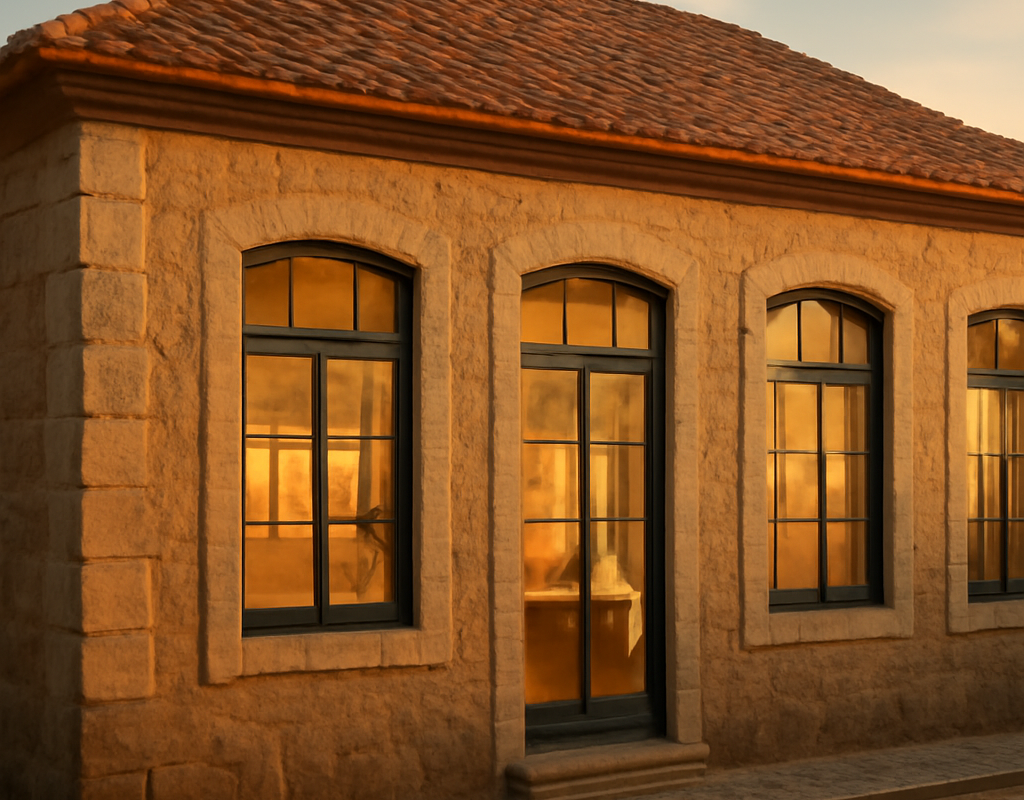
A former school in Vimieiro, the Portuguese village where António de Oliveira Salazar was born, has reopened as a centre examining dictatorship, censorship and resistance. The Estado Novo Interpretive Centre – Regime and Resistance aims to study Portugal’s authoritarian past without becoming a shrine to its former ruler.
The centre, in the municipality of Santa Comba Dão, officially reopened on 23 October after roughly two decades of delays, political debate and controversy over how Salazar’s legacy should be presented. Its opening is a significant development in European news because it places the history of Portugal’s Estado Novo regime at the centre of a public discussion about memory, democracy and historical interpretation.
Estado Novo Interpretive Centre focuses on regime and resistance
The new venue occupies the former Salazar School-Canteen, a primary school built between 1937 and 1940. Rather than removing the building’s connection to Salazar, those behind the project have chosen to preserve its historical context and explain it.
The centre is being developed under the scientific coordination of Associação Ephemera, founded by historian José Pacheco Pereira. The organisation collects and shares material relating to contemporary history, including:
- Archives and manuscripts
- Books, periodicals and pamphlets
- Photographs and historical objects
- Documents connected with political and cultural life
The facility is expected to host exhibitions, debates, conferences and research activities. It will also include a thematic library and reading room, creating a space for both public education and academic study.
Why the location matters
Salazar was the central figure of Portugal’s Estado Novo dictatorship, which shaped the country’s political and social life for decades. The regime was associated with censorship and restrictions on cultural and political expression before it was overthrown by the Carnation Revolution on 25 April 1974.
Because the centre is located in Salazar’s birthplace and retains features linked to the period, its organisers have faced an important interpretive challenge: how to acknowledge the site’s association with the dictator without presenting it as a place of celebration.
The project’s stated purpose is to provide evidence and context about the regime, the experience of living under it and the resistance movements that opposed it.
Opening exhibition examines censorship under Estado Novo
The first exhibition is titled Only What Is Known To Exist Exists: Censorship under the Estado Novo. Drawing on material from the Associação Ephemera collection, it examines how the dictatorship controlled information and cultural expression.
The exhibition explores censorship affecting areas including:
- The press
- Literature
- Music
- Public debate and cultural activity
By focusing on the mechanisms used to control information, the exhibition moves beyond a biography of Salazar. It instead examines how authoritarian power operated in everyday life and how censorship affected what people could read, hear and discuss.
That approach gives the centre relevance beyond Santa Comba Dão. It connects local history with wider European affairs, particularly current debates over democratic resilience, political memory and the protection of free expression.
Officials reject the idea of a dictator museum
At the formal opening, Portugal’s Secretary of State for Culture, Alberto Santos, said that studying dictatorship is a responsibility of democracy, according to remarks reported by Lusa.
He argued that the location increases the responsibility to understand the Estado Novo, including how the regime survived for so long, what it meant to live under its authority and what lessons it left for the future.
Santa Comba Dão deputy mayor Luís Nunes also emphasised that the centre is not intended to become a museum dedicated to Salazar. Its focus, he said in comments reported by Lusa, is the study of both the regime and the resistance against it.
This distinction is central to the centre’s identity. The site does not attempt to erase Salazar’s connection to the building, but neither does it present that connection as an invitation to political nostalgia. Instead, it uses the association as a starting point for examining the wider system of power.
A project shaped by years of debate
The centre’s opening concludes a process that crossed several municipal administrations and prompted disagreement over how Salazar should be remembered in his home town.
Its scientific committee includes Marçal Grilo, Irene Pimentel, José Manuel Sobral, José Pedro Castanheira, Luís Nunes, Maria Inácia Rezola, Luísa Tiago de Oliveira and Rui Feijó. Pacheco Pereira said at the inauguration that many committee members had played a role in defending freedom and democracy before and after 25 April.
The centre therefore arrives not simply as a new cultural attraction, but as an institution intended to support research and informed public discussion. Its exhibitions and programme may help visitors understand both the structures of authoritarian rule and the people who resisted them.
Why the centre matters for European historical memory
Across Europe, museums and memorial sites continue to debate how to present dictatorships, political violence and contested national histories. The Santa Comba Dão centre adopts an approach based on documentation, historical analysis and the preservation of difficult context.
Its most important test will be whether it can maintain that balance in future exhibitions, public events and research work. The opening exhibition provides an initial framework by showing how censorship shaped public life, while the planned debates and conferences may broaden the discussion to resistance, political repression and the transition to democracy.
For readers following Europe news, the centre offers a reminder that historical interpretation remains part of contemporary democratic life. Understanding how censorship and authoritarian systems function can help societies recognise the risks posed when public institutions, media freedom and political opposition are weakened.
Conclusion
The Estado Novo Interpretive Centre in Santa Comba Dão seeks to turn a site associated with Salazar into a place for studying dictatorship, censorship and resistance. Its long-term value will depend on maintaining an evidence-based approach that neither glorifies nor conceals the past. For anyone following European news and the continuing debate over democratic memory, its opening is an important development in Portugal’s cultural and civic landscape.