The latest EU news bulletin examines a major Ukrainian attack on the Crimean Bridge, the emerging French presidential election contest and political uncertainty in the Netherlands. The programme also looks at Norway’s role in possible Ukraine-Russia peace talks and the continuing humanitarian crisis in Gaza.
Crimean Bridge attack dominates Europe news
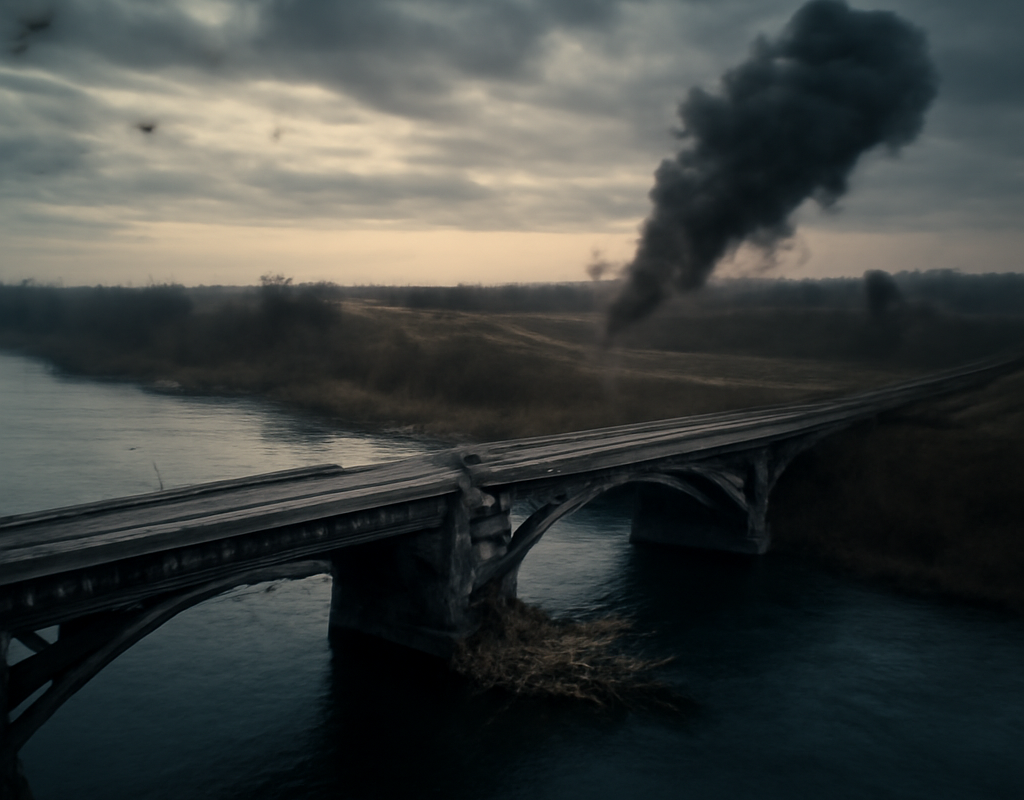
Ukrainian forces used drones and missiles to target both the road and railway sections of the Crimean Bridge, one of Russia’s most heavily defended infrastructure sites. The attack reportedly caused part of the bridge to collapse, placing the strategic crossing at the centre of the latest European security developments.
The bridge links Russia with occupied Crimea and has long been regarded as an important supply route and symbol of Moscow’s control over the peninsula. Damage to its road and rail infrastructure could affect military logistics, transport and the wider conduct of the war in Ukraine.
Coverage on Europe Today includes analysis from Ukraine correspondent Sasha Vakulina on the consequences of the strike. Roman Kyslyi, Ukraine’s Chief AI Officer, also discusses how drones and artificial intelligence are being used in efforts to identify and target critical infrastructure.
Technology’s growing role in the war
The discussion highlights the changing nature of the conflict, where unmanned systems and data-driven targeting have become increasingly important. The Crimean Bridge attack has renewed attention on Ukraine’s ability to combine long-range weapons, drone technology and artificial intelligence in military operations.
Norway seeks a place in Ukraine peace talks
The programme also focuses on Norway’s diplomatic position as international efforts continue to explore a possible settlement to the war. Norwegian Foreign Affairs Minister Espen Barth Eide speaks about the importance of Oslo having a seat at the table in Ukraine-Russia peace talks.
Norway is not an EU member, but it remains closely involved in European foreign policy and security discussions. Its role is particularly relevant as European governments consider how any future negotiations could affect regional stability, support for Ukraine and the wider European security order.
France’s presidential election race begins to take shape
Another major subject in the latest European news is France’s presidential election race. The contest is already beginning to form, making French politics an important focus for viewers tracking the direction of Europe’s second-largest economy and one of its most influential EU member states.
Although the source programme does not set out a final list of candidates or provide polling figures, the early political positioning is likely to be closely watched across Europe. The result of France’s next presidential election could influence EU politics, defence cooperation, economic policy and the country’s approach to European affairs.
Dutch government survives four-day political crisis
Europe Today also reviews the consequences of a dramatic four-day crisis that the Dutch government has survived. The episode has prompted questions about the durability of the centre-right coalition and whether the political damage will have longer-term effects.
MEP Raquel Garcia Hermida-Van der Walle discusses whether the crisis could permanently alter the balance within the governing coalition. The developments add to a period of heightened political pressure in Europe, where coalition stability remains a central issue in several national governments.
Gaza humanitarian crisis remains severe
The programme turns beyond Europe to Gaza, where the humanitarian situation remains devastating more than a month into a ceasefire. Willy Nyeko, the United Nations World Food Programme’s Emergency Coordinator in Gaza, discusses the continuing emergency and the challenges facing humanitarian operations.
Including Gaza in the bulletin reflects the close connection between European foreign policy and global humanitarian affairs. European governments remain involved in diplomatic, aid and international policy debates surrounding the conflict, while humanitarian agencies continue to assess the needs of civilians affected by the crisis.
When to watch Europe Today
The weekday programme is presented by Euronews’ Stefan Grobe and is available on television, the Euronews website and digital platforms including YouTube, Facebook, X and Instagram. It airs at 8am, 9am and 10am Brussels time.
The 28-minute format brings together the day’s main events and analysis from correspondents and invited guests. It is also available as a newsletter for audiences seeking regular European news updates.
What this means for Europe
The bulletin brings together several developments with wider regional significance: the strategic impact of the Crimean Bridge attack, the diplomatic importance of Ukraine peace talks, political uncertainty in France and the Netherlands, and the continuing humanitarian emergency in Gaza.
For readers following EU news and wider European affairs, these stories show how security, elections, coalition politics and international crises continue to shape the continent’s agenda.