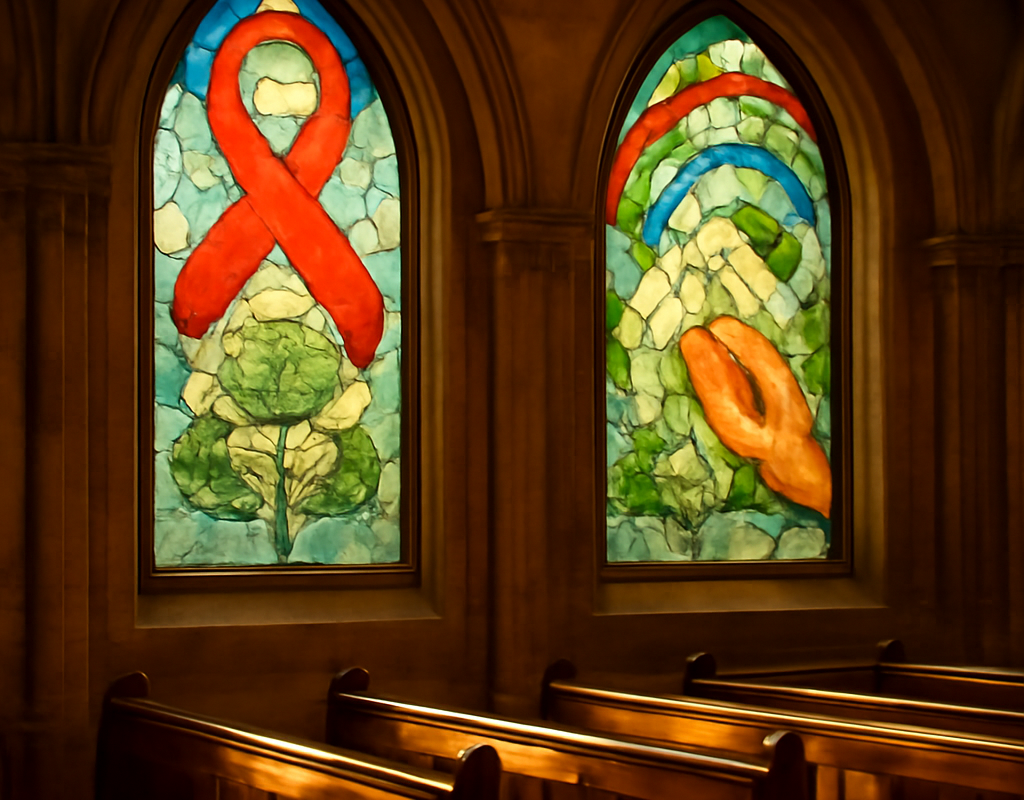
Two new stained-glass windows at St Teresa’s Church on Donore Avenue in Dublin have created a permanent memorial to people who died from Aids, as well as those who cared for them. The installation is the latest Dublin development to combine remembrance, faith and LGBTQ+ solidarity ahead of World Aids Day on December 1st.
Dublin Aids memorial honours lives and carers
The windows were installed before World Aids Day and during the centenary year of St Teresa’s Church. Designed by parishioners and members of the parish team, they were created to offer a space for remembrance that is open to everyone.
People of different ages and cultural backgrounds appear in the designs. The parish said this choice reflects the message that Aids does not discriminate, while also recognising the many communities affected by the epidemic.
One window includes a red Aids ribbon with the words “remembering those who died”. It also features the red rose associated with St Teresa and an image representing the Holy Spirit. A rainbow begins in one window and continues into the other, linking the two memorials visually.
The parish described the rainbow as representing qualities including life, healing, sunlight, nature, art, serenity and spirit. It also reflects values associated with LGBT identity and shared by many people in the religious community.
A place to remember someone by name
Both windows include an alphabet along their lower section. Visitors can use it to spell the name of someone they have lost, giving the memorial a personal and participatory element.
The church previously installed two windows in memory of people who died during the Covid pandemic and to reflect the impact of the pandemic on the local community. The new works add another memorial space within the church.
Oscar Wilde and Dublin’s theatre community remembered
The second window includes a green carnation, a symbol associated with Oscar Wilde. Wilde encouraged friends to wear green carnations to the opening nights of his plays, where the flower became a subject of speculation in contemporary gossip and society coverage.
Its inclusion also acknowledges the effect of Aids on the international arts and theatre community. The green carnation is used as the emblem of the International Dublin Gay Theatre Festival, which was founded locally in Dublin 8.
The parish said the emblem represents a coded community that was significantly affected by Aids. In this context, the flower connects the memorial to Dublin’s LGBTQ+ history, theatre culture and wider artistic community.
Tribute to healthcare workers and supporters
The St James’s Hospital logo appears on the second window as a tribute to doctors, nurses, experts and communities whose work and support helped people affected by the disease.
Hands holding the red ribbon symbolise the assistance provided by people across the world. Ivy appears as a representation of the disease’s wide reach, while an additional black stripe in the rainbow signifies mourning for those who cared for people living with Aids.
These details give the windows several layers of meaning. They remember those who died, acknowledge medical and community support, and recognise the cultural and social networks affected by the epidemic.
Parishioners funded and developed the installation
The project began with discussions among parishioners and members of the parish team about the message the church wanted to share. A parishioner donated the money needed to pay for the windows.
Capital Glass, based on Clanbrassil Street in Dublin, drew up, made and installed the finished pieces. The parish team described the windows as a memorial for everyone and said visitors are free to interpret their themes in their own way.
St Teresa’s Church also holds a prayer service during Pride celebrations each year. The service welcomes members of the LGBTQ+ community, their families, friends, allies, parishioners and anyone who wishes to gather for prayer, reflection and solidarity.
Why the memorial matters ahead of World Aids Day
World Aids Day provides an annual opportunity to remember those who died, support people living with HIV and recognise the work of healthcare professionals and community organisations. The Dublin installation offers a local and lasting way to do that within a church setting.
Its imagery brings together religious symbols, LGBTQ+ identity, theatre history and public health. By including an alphabet for naming someone who has died, the memorial moves beyond general symbolism and makes room for individual memories.
The new windows at St Teresa’s Church are therefore both works of art and a place of reflection. Their central message is clear: remembrance should include the people who died, those who supported them and the communities that continue to carry their memories.
Key details:
- The windows are at St Teresa’s Church on Donore Avenue, Dublin.
- They remember people who died from Aids and those who cared for them.
- The designs include a red ribbon, rainbow, green carnation, ivy and hands holding the ribbon.
- Visitors can spell names using the alphabet along the bottom of both windows.
- The windows were funded by a parishioner and installed by Capital Glass.
For Ireland News readers, the memorial is a reminder that public remembrance can take many forms. At St Teresa’s Church, stained glass now carries personal names, community history and a message of solidarity into the future.