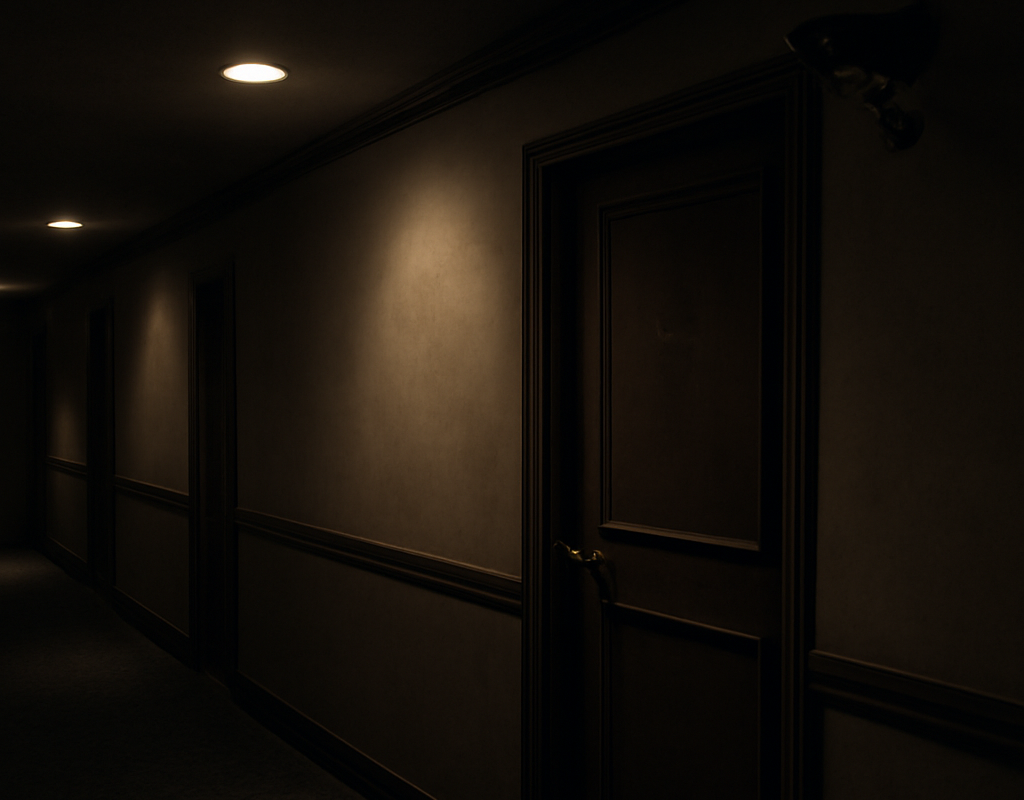
A man who entered a colleague’s Dublin hotel room without her consent and sexually assaulted her has been sentenced to four years in prison. The case was heard at Dublin Circuit Criminal Court on Tuesday, 24 November 2026.
Man sentenced after assault at Dublin hotel
Colm Dillon, aged 37, of New Forest, Newbridge, Ballinasloe, Co Galway, pleaded guilty to sexual assault at the Travel Lodge on Townsend Street, Dublin 2, in May 2025.
The court heard that Dillon had been working with the woman and that hotel CCTV showed him knocking on her room door after she had gone to bed. A member of hotel staff subsequently allowed him into the room after he provided an explanation that Judge Martin Nolan described as persuasive.
Dillon remained in the room for almost two hours. During that time, he sexually assaulted the woman and failed to leave despite her repeated requests, the court was told.
Judge describes assault as particularly aggravating
Judge Nolan characterised the incident as a serious sexual assault. He said the circumstances were aggravated by Dillon gaining entry to the room without the woman’s permission.
The judge noted that a hotel room serves as a person’s home for the night and that the woman was entitled to feel safe there. He also said the court did not know precisely what Dillon had told the hotel employee, but that his account had evidently been convincing enough to secure access.
Although the judge acknowledged there was good mitigation, he considered the unauthorised entry a particularly serious feature of the offence. He imposed a four-year sentence and rejected an application from the defence to suspend any part of it.
Victim impact statement describes lasting effect
The woman waived her right to anonymity and read a victim impact statement to the court. She said it took a long time to get Dillon to leave the room and described him as someone she had worked alongside for years and regarded as a friend and ally.
She said the assault had affected every aspect of her life. In the aftermath, she experienced embarrassment and shame before coming to understand that responsibility for the assault did not rest with her.
The woman had spent 22 years working in construction and said she had not previously felt unsafe in the industry. While she had encountered inappropriate jokes and innuendo, she had learned to stand up for herself and had built her career as a central part of her identity.
That changed after the assault. She said her workplace no longer felt the same because something deeply personal had become part of her working life. She ultimately left the company and found it difficult to explain her departure to prospective employers. She said her new employer had been supportive.
Concerns about safety and self-blame
The woman told the court that she wanted to be able to stay alone in a hotel without placing an extra lock or chair against the door. She also wanted to regain the ability to trust people as she had before.
She said women should be able to travel for work and attend professional events without fearing for their safety or feeling responsible for another person’s actions.
Addressing the events before the assault, she said she had gone dancing, consumed some alcohol, returned to the hotel and gone to sleep. None of those actions, she said, gave anyone the right to assault her.
What the Dublin court heard
- Dillon pleaded guilty to sexual assault in May 2025.
- The incident occurred at the Travel Lodge on Townsend Street in Dublin 2.
- CCTV showed him knocking on the woman’s room door after she had gone to bed.
- Hotel staff allowed him into the room without the woman’s permission.
- He remained there for close to two hours and did not leave when asked repeatedly.
- He had no previous convictions.
- Judge Nolan imposed a four-year sentence without suspending any portion of it.
Importance of consent and hotel-room safety
The sentencing highlighted the importance of consent not only in the alleged assault itself but also in how access to a private space was obtained. Judge Nolan’s comments underlined that a guest’s hotel room is a private place where they should be able to expect security and control over who enters.
The case also showed the wider consequences that sexual violence can have on a person’s employment, confidence, travel and sense of safety. The woman’s statement focused on the effect on her career and on the difficulty of rebuilding ordinary routines after the offence.
Four-year sentence imposed
Dillon’s four-year prison sentence follows his guilty plea and the court’s consideration of the mitigating factors presented on his behalf. However, the judge determined that the circumstances of entering the hotel room without consent made the offence particularly aggravated.
The case is among the day’s significant Irish Courts and Irish Crime News developments, and it reinforces the principle that a person’s privacy and consent remain central in any setting, including accommodation used for work-related travel.
Key takeaway from the case
The court’s decision makes clear that unauthorised access to a person’s hotel room can be a significant aggravating factor in a sexual assault case. For the woman involved, the consequences extended beyond the incident itself, affecting her career, confidence and ability to feel safe while travelling. The four-year sentence reflects the seriousness with which Dublin Circuit Criminal Court viewed both the assault and the violation of her private space.