Standfirst: Two underage migrants were injured during a knife attack in Ceuta as authorities warned of bacterial contamination at Trampolín beach. The incidents come as the Spanish autonomous city struggles to provide accommodation and maintain public services amid increased migration pressure.
Ceuta is facing renewed tension after two migrant children were injured in a fight and health officials identified unsafe levels of bacteria in coastal water near an informal migrant camp.
The developments highlight the overlapping public health, housing and protection challenges facing the Spanish territory on North Africa’s coast. Local authorities are also confronting pressure on accommodation, emergency services and other public resources.
Two migrant children injured in Ceuta knife attack
The two minors were injured on Thursday in the La Marina area during a confrontation involving a knife. Spain’s National Police intervened, while emergency health workers treated the youths for cuts around their ankles.
The incident is the latest outbreak of violence reported as Ceuta manages the consequences of a migration emergency. The available information does not establish the wider circumstances of the fight or indicate whether arrests or charges have followed.
Because the people involved are underage, their protection and access to appropriate support remain central considerations for the authorities. The incident also adds to concerns about safety in areas where vulnerable migrants are living in difficult conditions.
Health warning issued for Trampolín beach
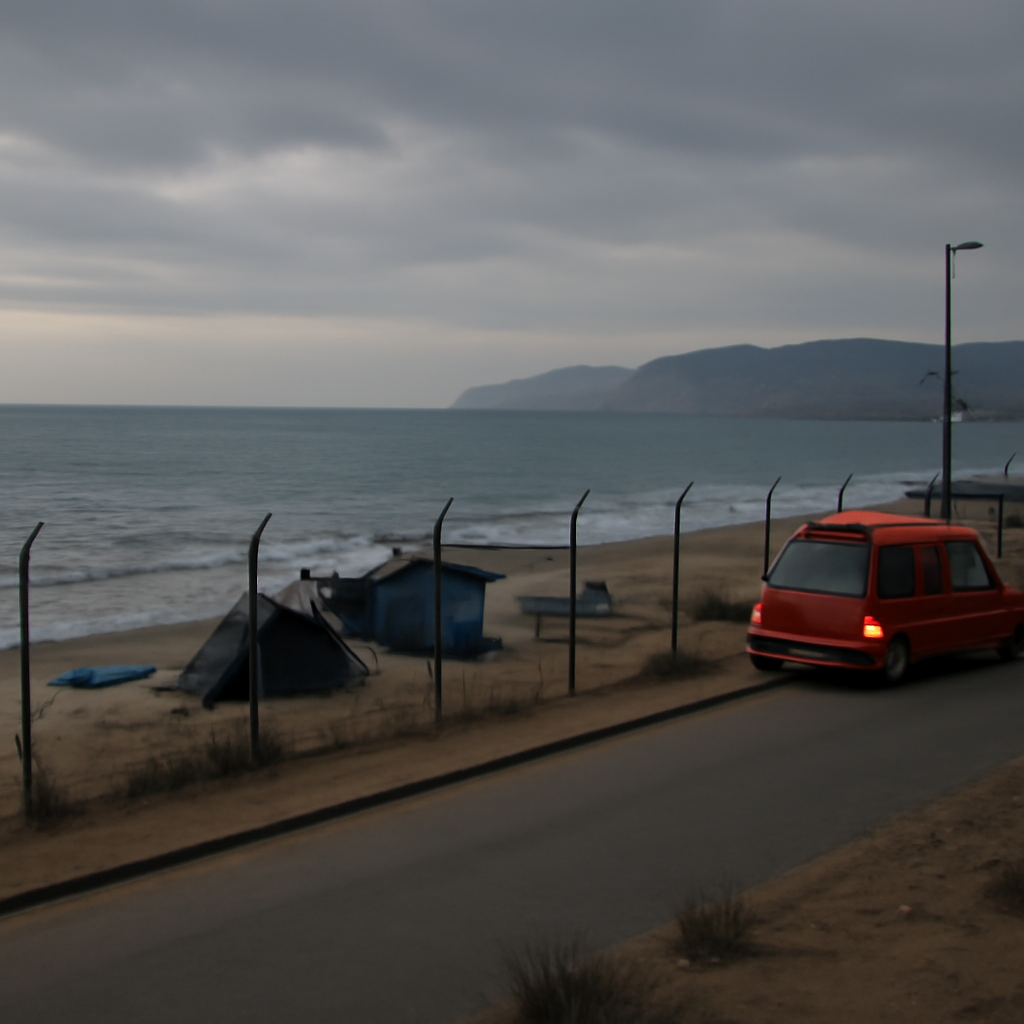
Ceuta’s health department has warned people against contact with water at Trampolín beach, where a migrant encampment remains nearby.
Samples collected on 23, 25 and 28 September showed very high concentrations of intestinal enterococci and Escherichia coli. The levels exceeded the limits established for coastal bathing waters, and the health authorities concluded that contact with the water presented a health risk.
The findings have created an additional challenge for a city already dealing with accommodation and public-service pressures. They also underline the importance of sanitation, waste management and safe living conditions in and around temporary settlements.
Authorities have decided to install fencing at Benítez beach to discourage new encampments from forming in the bathing area. The measure is intended to reduce public-health risks, although it does not resolve the underlying shortage of suitable accommodation.
Accommodation shortage leaves migrants in precarious conditions
Limited housing is forcing some migrants to sleep in garages, cars and empty vans. Rooftop spaces are reportedly being offered for about €12 per night, illustrating the extent of the shortage and the risks faced by people seeking shelter.
Police and Civil Guard officers have also identified homes being used to accommodate large groups. In one property described as a “patera flat”, officers found as many as 30 people, most of them minors.
The situation has prompted criticism from some residents who say people are making money from migrants’ urgent need for somewhere to sleep. Any investigation into accommodation arrangements must distinguish clearly between confirmed findings by authorities and allegations that have not been established.
The conditions described raise broader questions about child protection, overcrowding, housing safety and the responsibilities of local and national authorities during periods of increased arrivals.
Pressure grows on Ceuta’s public services
The local UGT-Ceuta union has called for sufficient resources to protect workers and preserve the quality of public services. It has urged the Spanish Government to adopt a coordinated plan addressing the pressure on the city and supporting a return to normal service provision.
Ceuta’s location and political status give migration developments there a wider European dimension. As a Spanish autonomous city bordering Morocco, it is part of the EU’s external-border environment, although the immediate response to accommodation, policing and healthcare pressures involves Spanish and local authorities.
The situation also requires careful coordination between migration management and the protection of children. Minors need access to safe accommodation and appropriate care, while public-health measures must protect both people living near the encampments and the wider community.
Ombudsman visits Ceuta
Spain’s Ombudsman, Ángel Gabilondo, is visiting Ceuta to assess the humanitarian situation directly. He is scheduled to meet the president of the autonomous city, Juan Jesús Vivas, and visit Ceuta University Hospital.
The visit provides an opportunity to examine the conditions facing migrants, the treatment of minors, the impact on residents and the capacity of local services. It may also help clarify what additional support is required from Spain’s central government.
What happens next?
The immediate priorities for Ceuta include monitoring the contaminated beach water, maintaining the restriction on unsafe bathing areas and ensuring that people living in informal camps have access to essential services.
Authorities will also need to address the accommodation shortage, particularly for unaccompanied minors and other vulnerable people. Further information may emerge from the Ombudsman’s assessment, police inquiries and health monitoring.
- Health officials are expected to continue assessing water quality at Trampolín beach.
- Fencing at Benítez beach is intended to prevent further encampments in the bathing area.
- Local and national authorities face calls for a coordinated plan to support public services.
- The protection and accommodation of migrant children remain key concerns.
Conclusion
Ceuta’s latest incidents show how migration pressure can affect safety, housing and public health at the same time. The injuries to two migrant children and the contamination warning at Trampolín beach are separate developments, but both point to the urgent need for safe accommodation, effective sanitation and coordinated support for the city’s services.