

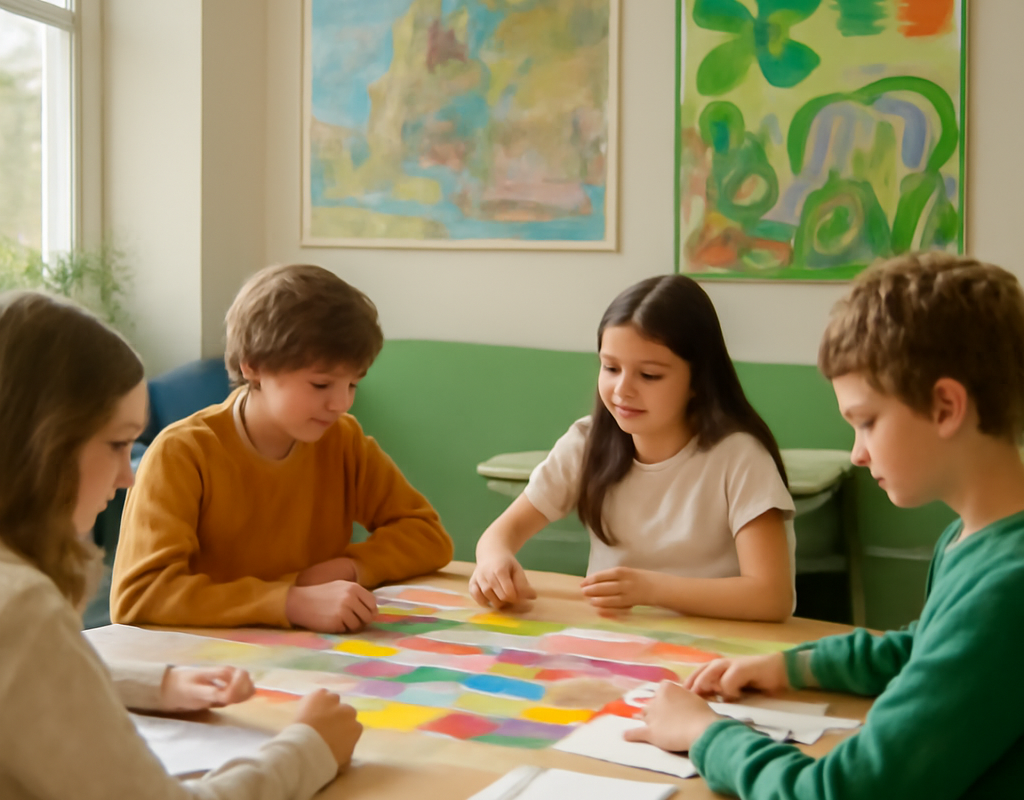
Irish language teaching is taking a different path in European Schools, where small classes, multilingual communities and a stronger focus on everyday communication are helping students build a closer relationship with Gaeilge. Teachers in Italy and Belgium say the international environment can make Irish feel less like a compulsory subject and more like a living part of identity and culture.
How Irish is taught in European Schools
European Schools are jointly overseen by the governments of European Union member states. They provide education from nursery through secondary level, mainly for children of staff working in European institutions.
Qualified Irish teachers can apply through the Department of Education for secondment to the European Schools system for up to nine years. Language learning is central to the model, with pupils studying a first language from nursery, a second language from the beginning of primary school and a third language from the start of secondary education.
Irish is offered as an “Other National Language”, alongside subjects including Catalan, Maltese, Swedish in Finland and Finnish in Sweden. Pupils of Irish origin are eligible to study it, including children growing up in multilingual families across Europe.
- Irish is taught in European Schools from primary through secondary level.
- Classes are often very small, giving pupils more opportunities to speak.
- The curriculum focuses on language proficiency as well as Irish culture and identity.
- Teachers say multilingual surroundings can encourage more positive attitudes towards Gaeilge.
Small classes create more opportunities to speak Irish
At La Scuola Europea di Varese in northern Italy, teacher Mairéad Young has taught through English and Irish for seven years. She describes a school where pupils encounter many languages throughout the day, sometimes stopping to ask about Irish writing displayed on classroom materials and noticeboards.
Young currently teaches Irish to one final-year student. While the small number can present challenges, it also allows the teacher to understand the learner as an individual and adapt lessons accordingly. Conversation, encouragement and personal support become a natural part of the classroom experience.
The Irish syllabus is designed around developing proficiency and is aligned with the Common European Framework of Reference for Languages, known as the CEFR. This places emphasis on what students can understand and communicate, rather than relying solely on preparation for a high-pressure examination.
A different approach from the Leaving Certificate
Young believes the Leaving Certificate Irish curriculum can place too much pressure on students and teachers. She argues that pupils should have greater access to authentic literature, contemporary expression and modern Gaelic culture, while course content should be matched more clearly to proficiency levels and available classroom time.
She has also questioned whether the required Irish-language proficiency for some primary teachers in Ireland is high enough to support confident teaching. One proposal she supports is the use of specialised Irish teachers who could move between classrooms, teaching Gaeilge and other subjects through Irish.
Multilingual schools can strengthen Irish identity
Emma McGrath, a primary teacher at the European School Brussels I, says the international setting can make pupils more open to Irish. Children commonly speak several languages and see different cultures represented in their school community, which can help them view Gaeilge as another meaningful part of who they are.
Irish is taught alongside cultural activities. Schools celebrate St Patrick’s Day with dancing and green clothing, while events such as Halloween also provide opportunities to connect language learning with traditions and shared experiences.
McGrath teaches a primary class through English before taking Irish-language groups during their second-language lessons. These groups can contain only three or four children, allowing each pupil frequent opportunities to answer questions, play language games and practise speaking.
Lessons shaped around pupils’ lives
The smaller classes also make it easier to build lessons around students’ personal experiences. In one primary lesson, children brought family photographs and used them to practise vocabulary and sentence structures describing relatives, hair colour and eye colour.
That approach allows teachers to respond immediately to a child’s needs. It can be particularly useful when students begin with different levels of Irish: some may have attended Gaelscoileanna in Ireland, while others start learning Gaeilge at the European School. Some pupils are also children of Irish-language translators working in European institutions.
Parents have generally been supportive and help their children continue learning at home. In Brussels, Irish children in the anglophone section study Irish, while some pupils in the French section also choose to learn it.
Explore further education and Irish-language coverage at DailyDigest.
What this means for Irish-language education
The experience of European Schools highlights several issues relevant to education policy in Ireland. Small groups are not always possible in mainstream schools, but the model shows how regular speaking practice, culturally relevant material and clearly defined proficiency goals can support language development.
It also suggests that Irish may benefit when it is presented within a wider multilingual environment. Students who already see language learning as a normal part of school life may be more willing to experiment with Gaeilge and less likely to view it only through the lens of examinations.
The European Schools cannot provide a direct template for every Irish primary or secondary classroom. Their pupils often have distinctive family backgrounds, access to multiple languages and links to European institutions. However, the teaching experience offers useful evidence about the value of small-group interaction and lessons connected to students’ real lives.
Frequently asked questions
Who can study Irish in a European School?
Pupils of Irish origin are eligible to study Irish. In some schools, children in different language sections may also take the subject.
How long can Irish teachers work in the European Schools system?
Fully qualified Irish teachers can apply for a Department of Education secondment lasting up to nine years.
What is the main focus of the Irish syllabus?
The syllabus focuses on developing language proficiency and is aligned with the CEFR. Teaching also includes Irish culture, identity and modern expression.
Why do teachers believe students respond positively?
Students are surrounded by many languages and cultures, while small groups give them frequent chances to speak and receive individual support.
Conclusion
The Irish-language experience in European Schools offers a clear lesson for Irish education: students are more likely to connect with Gaeilge when they can use it, personalise it and see it as part of a living culture. This Breaking News education story shows how small classes, multilingual surroundings and proficiency-based teaching are helping young people build a more confident relationship with Irish at home and abroad.