

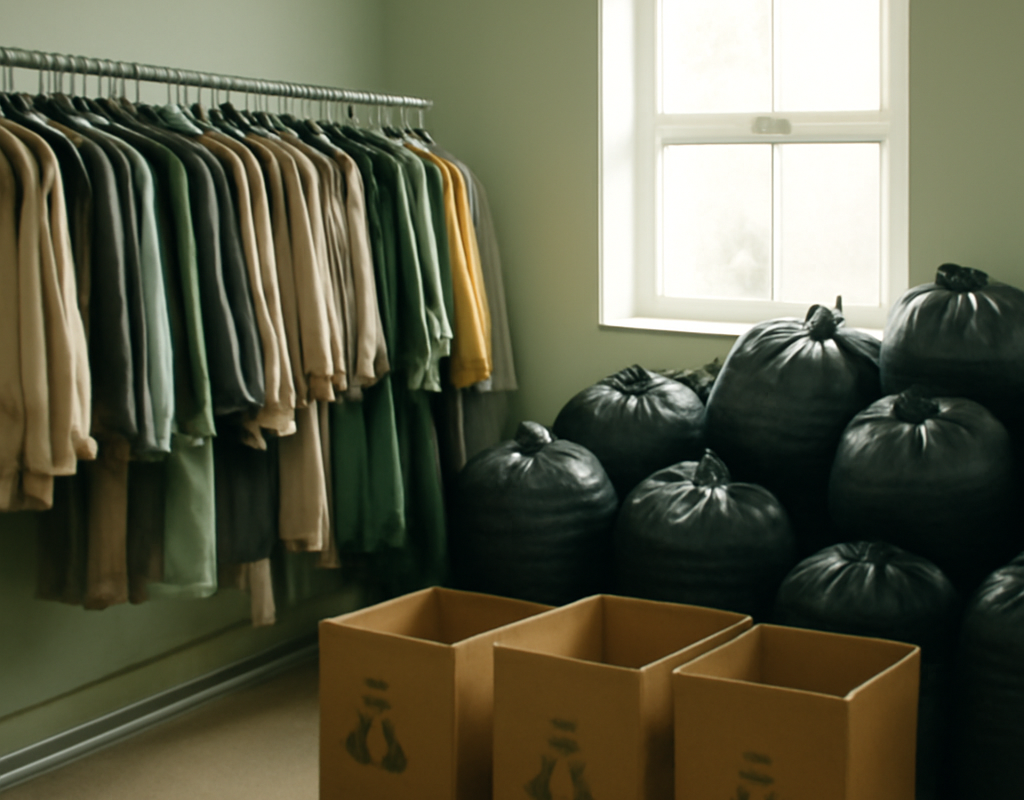
Irish charities processed around 1 million bin bags of clothing that was not suitable for sale during 2025, highlighting the scale of Ireland’s growing textile-waste problem. The figures come as a Government-commissioned report warns that Ireland produces almost twice the European average of unwanted clothing and textile waste per person.
What happened in Ireland’s latest textile-waste figures?
Members of Charity Retail Ireland recorded more than 10 million customer transactions in 2025. Their charity shops helped keep large quantities of donated clothing in circulation, but a significant amount of material could not be resold because it was damaged, contaminated or otherwise unsuitable for retail.
In total, charities dealt with approximately 1 million bin bags of clothing that was not fit for sale. The figure illustrates the pressure placed on charity retailers, which must sort, store and manage donations before deciding whether items can be sold, reused, recycled or disposed of.
The charity retail process also prevented more than 106,000 tonnes of carbon emissions, according to the information released with the figures. Reusing clothing can reduce demand for new garments and limit the environmental impact associated with manufacturing, transport and disposal.
Why Ireland’s clothing waste is a growing concern
The Natex 2.0 report found that Ireland generated 31kg of unwanted clothing and textile waste per person. That compares with a European average of 16kg per head, placing Ireland well above the wider European level.
The report was commissioned by the Department of Climate, Energy and the Environment. Its findings add to concerns about fast fashion, short clothing lifecycles and the amount of material entering the waste system despite being potentially reusable.
Textile waste can create several environmental challenges:
- Clothing sent to landfill takes up valuable capacity and may release emissions as it breaks down.
- Garments that are difficult to recycle can require energy-intensive treatment.
- Producing replacement clothing uses water, raw materials and energy.
- Charity shops face rising sorting and disposal costs when donations are poor quality.
How charity shops manage clothing donations
Charity retailers do not automatically place every donated item on the shop floor. Staff and volunteers must assess the condition, cleanliness and suitability of each garment. Items that meet quality standards may be priced and sold, while others can be directed to alternative reuse or recycling routes.
Clothing that is wet, heavily stained, mouldy or badly damaged is generally unsuitable for resale. Donating these items can create additional work and expense for charities, particularly when they must pay for transport, storage or waste processing.
People donating clothes can help by checking garments before taking them to a charity shop. Clean, dry and wearable items are more likely to support fundraising and benefit another customer.
What the figures mean for consumers
The figures are relevant to households across the country, not only charity retailers. Consumers can reduce textile waste by buying fewer items, choosing durable clothing and repairing garments instead of replacing them immediately.
Before donating, households should consider whether an item is genuinely suitable for another person to wear. If clothing is too damaged for resale, the appropriate route may be a textile-recycling service rather than a charity shop, depending on local arrangements.
Practical ways to reduce clothing waste
- Buy clothing based on need rather than short-term trends.
- Wash and dry garments properly before donating them.
- Repair small tears, missing buttons and loose seams.
- Pass on wearable items through charity shops or reuse networks.
- Check local guidance for recycling textiles that cannot be sold.
What happens next?
The Government-commissioned findings are likely to increase attention on how Ireland prevents, collects and processes unwanted textiles. Any future response will need to address both consumer behaviour and the systems available for reuse, repair and recycling.
For charities, the priority remains ensuring that donations can generate as much support as possible for their causes. For households, the clearest immediate step is to donate responsibly and avoid treating charity shops as a general waste-disposal service.
Frequently asked questions
How much clothing waste does Ireland generate?
The Natex 2.0 report found that Ireland generated 31kg of unwanted clothing and textile waste per person, compared with a European average of 16kg.
How many bags of clothing did charities process?
Charity retailers processed approximately 1 million bin bags of clothing that was not suitable for sale during 2025.
Why can’t all donated clothing be sold?
Some donations are damaged, dirty, wet or otherwise unsuitable for customers. Charity retailers must sort every item before deciding whether it can be sold, reused, recycled or disposed of.
How can people donate clothing responsibly?
Donate clean, dry and wearable garments. Items that are badly damaged or contaminated should be handled through suitable textile-recycling or waste services where available.
The takeaway for Ireland today
The latest figures show that charity shops play an important role in keeping clothing in use, but they cannot absorb every unwanted garment. Ireland’s textile-waste rate is significantly above the European average, making better purchasing, repair, reuse and recycling choices increasingly important. The central message from this Breaking News report is simple: donate wearable clothing responsibly and reduce waste before it reaches the charity-shop system.