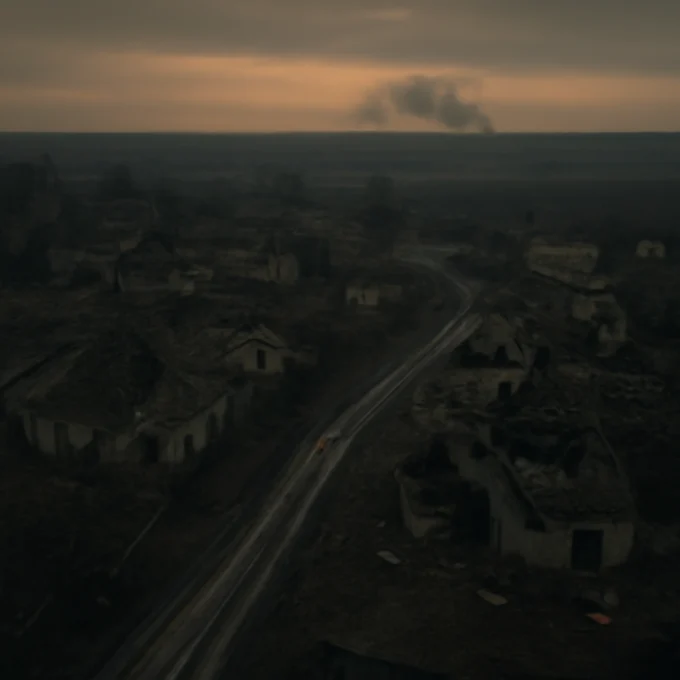
A BBC investigation has examined the deaths of Anastasiya Gribanova’s father and grandparents in Dachne, a village in Ukraine’s Donetsk region, during intense fighting in January 2025. The reporting could not establish who was responsible, but documents the uncertainty surrounding the deaths and the lasting divisions within her family.
What happened to Gribanova’s family?
Gribanova, a BBC World Service journalist covering the Russia-Ukraine war, learned in February 2025 that her father, Serezha, and her grandparents had died. Her father had remained in Dachne to care for his elderly parents as the front line moved through the area.
According to a local resident who spoke to the BBC, Serezha was injured by a drone on 26 January. The man said he returned several hours later and found him dead. With help from other villagers, he reportedly buried Serezha in a greenhouse.
It remains impossible to determine which side operated the drone. The investigation noted that Russian drones were frequently targeting Dachne at the time, but that fact alone does not establish responsibility for Serezha’s death.
Uncertainty over the deaths of her grandparents
Accounts about Gribanova’s grandparents are even less conclusive. Their home was destroyed, and neighbours said the couple had moved to another house nearby. One woman told the BBC that Ukrainian soldiers had entered her property during the fighting and later visited the area where Gribanova’s grandparents were staying.
Several residents believed Ukrainian troops had killed the elderly couple. However, none of those interviewed had directly witnessed the deaths. Their accounts were based on what they saw afterwards, conversations with neighbours and their perceptions of the tense conditions in the village.
A later examination of the bodies found that Gribanova’s grandmother had suffered an explosive injury to the skull. The forensic expert could not identify its precise cause. No obvious injuries were recorded on her grandfather’s body.
Satellite imagery reviewed during the investigation showed no significant visible damage to the building where the bodies were reportedly found. Military mapping also suggested that Ukrainian forces still controlled the street during the period when the deaths were believed to have occurred, although the front line was changing rapidly.
What the Ukrainian and Russian sides said
The BBC presented its findings to Ukraine’s military. It said there was no verified evidence showing how the couple died or implicating Ukrainian personnel. The military added that allegations of wrongdoing should be investigated by law-enforcement authorities.
Russia’s defence ministry and its embassy in London were also approached for comment, but no response was received.
The Donetsk regional prosecutor’s office has recorded alleged Russian war crimes in nearby villages during December 2024 and January 2025, including the deaths of civilians in Kostyantynopilske. However, investigators have not registered an equivalent case in Dachne covering Gribanova’s relatives. The three deaths documented in the village did not include her father or grandparents.
A family divided by the war
The investigation is also a personal account of how the conflict reshaped Gribanova’s family. Her mother, who was born in Siberia, supported Moscow’s position after Russia’s full-scale invasion began in February 2022. She blamed Ukraine for the deaths, leading to a breakdown in communication between mother and daughter.
Gribanova had also stopped speaking to her sister Sasha, who was living in Moscow when the invasion began. Their relationship began to change after Sasha contacted her around the anniversary of their father’s death. Both were grieving, despite their different views of the war.
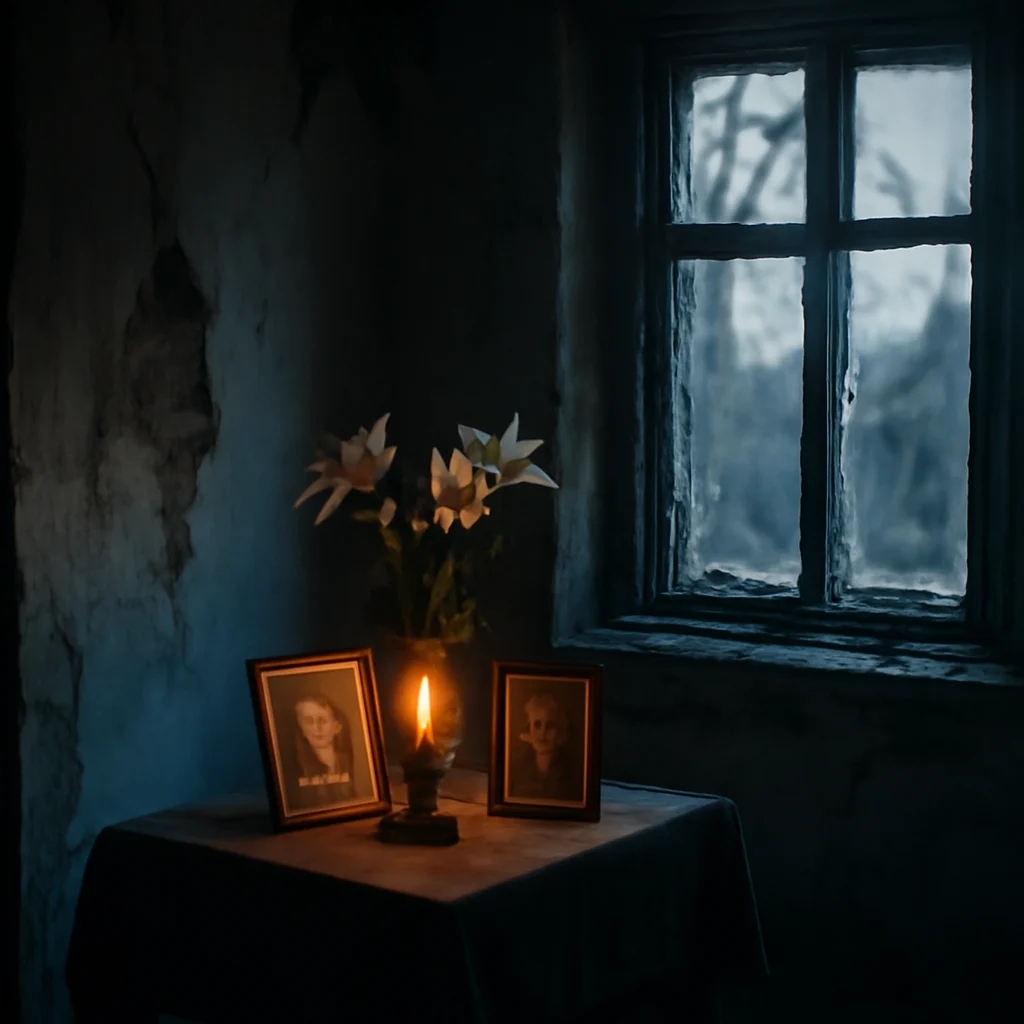
The sisters later reunited in Belgrade and looked through photographs of their father. The meeting offered a measure of reconciliation, even though the fate of their relatives remains unresolved and their bodies are still in occupied territory.
Why the investigation matters
The case highlights the difficulty of establishing accountability in communities caught between advancing forces. Witnesses may have limited information, fear reprisals or interpret events through their own political loyalties. In Dachne, the occupation, rapidly shifting front line and absence of a full independent forensic investigation have left key questions unanswered.
For Gribanova, the search was not only an attempt to understand how her family died. It was also a way to confront the emotional consequences of a war that divided relatives, destroyed homes and made a dignified burial impossible.
The unanswered question
The BBC investigation does not identify who killed Gribanova’s grandparents, and it cannot conclusively establish who was responsible for her father’s death. Its findings instead show the limits of available evidence in an occupied and heavily contested area.
The central takeaway is clear: amid competing claims and incomplete records, the deaths of civilians such as Gribanova’s family can remain unresolved long after the fighting has moved on. For those left behind, the search for truth and the possibility of mourning are inseparable.