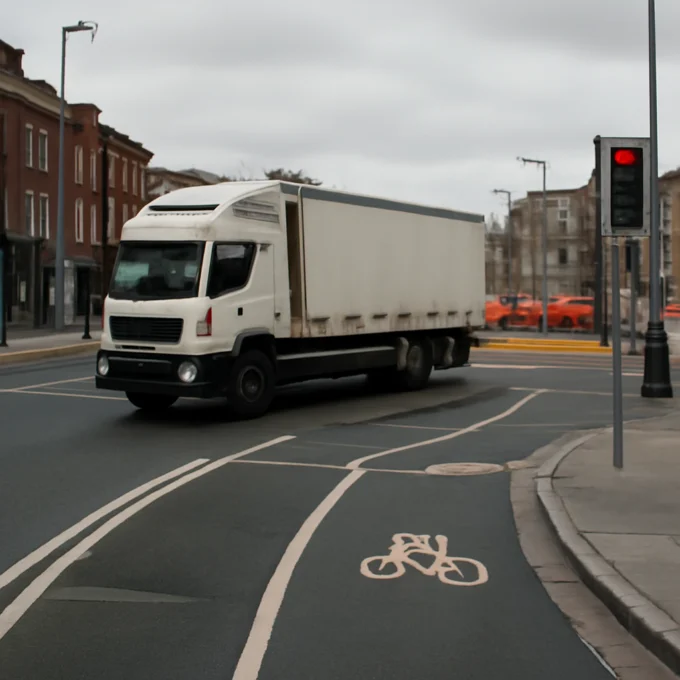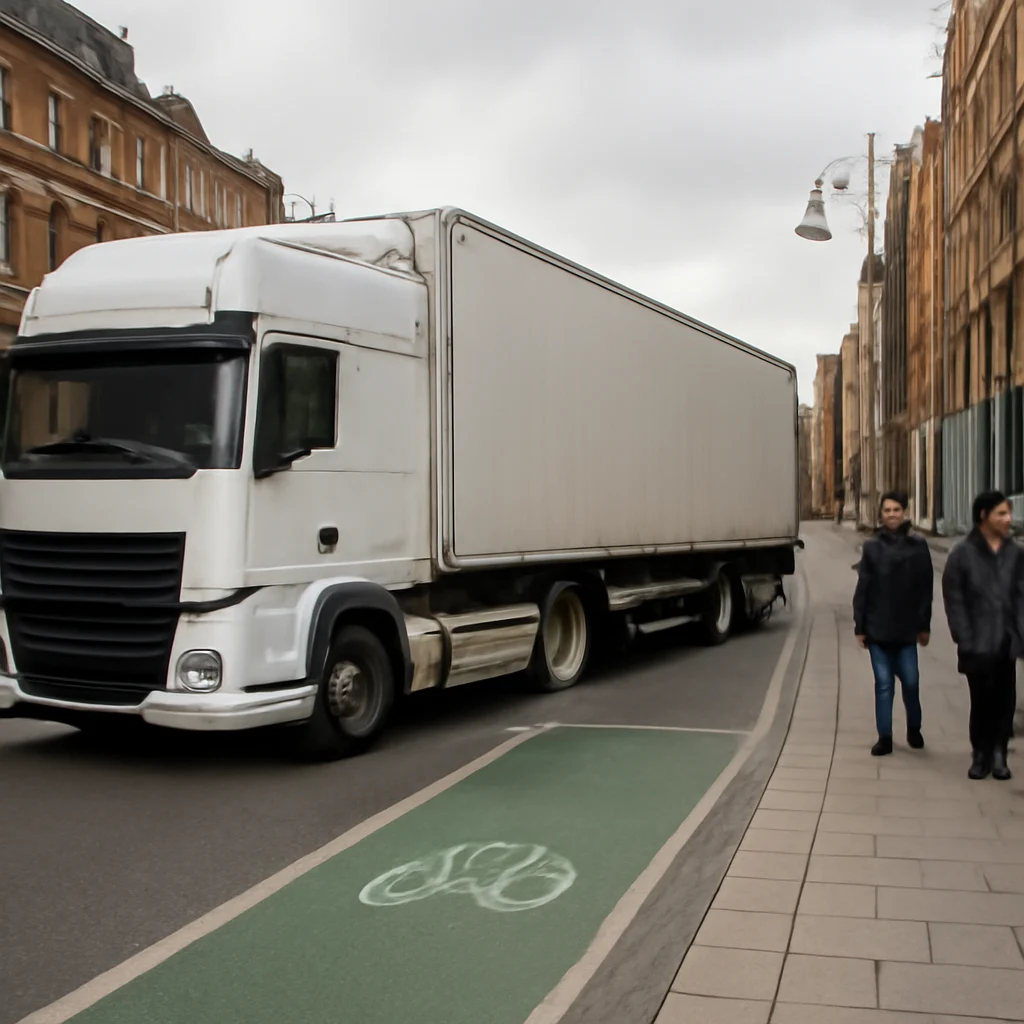
New road safety rules will prevent certain large lorries from entering Dublin city from next year unless they are equipped with blind-spot cameras and anti-crush technology. The measure is intended to reduce the risk of fatal and serious collisions involving cyclists and pedestrians.
What the Dublin lorry ban will cover
The restrictions announced by Dublin City Council will apply to all five-axle articulated lorries. They will also cover construction vehicles being used in connection with the MetroLink rail project.
Under the new rules, vehicles in these categories will need specified safety equipment before they can operate in Dublin city. The technology is designed to give drivers a clearer view around large vehicles and to reduce the danger created when lorries turn or reverse in built-up areas.
Why blind spots are a road safety concern
Large articulated vehicles have areas around the cab and trailer that may not be visible to the driver through conventional mirrors. Cyclists, pedestrians and other vulnerable road users can be particularly difficult to see when a lorry is manoeuvring at junctions, turning across cycle lanes or reversing at a construction site.
Blind-spot cameras can provide drivers with additional visual information, while anti-crush systems are intended to reduce the likelihood of a person being trapped beneath or alongside a vehicle during a manoeuvre. The council’s stated aim is to protect people from death and serious injury.
How existing vehicle safety requirements fit in
The source report notes that, since July 2024, articulated five-axle vehicles registered in the European Union have been required to have a number of safety features. The Dublin restrictions will create an additional local requirement for qualifying vehicles operating in the city.
That distinction matters for operators. A lorry may comply with general vehicle standards but still need to meet the specific equipment requirements set for access to Dublin city. Operators will need to establish how the rules apply to their vehicles before the restriction begins.
Impact on construction and MetroLink vehicles
The measure will also affect construction vehicles used as part of the MetroLink rail project. Large-scale construction work brings regular movements of heavy vehicles through urban streets, often close to pedestrians, cyclists, businesses and public transport users.
Including project-related construction vehicles means the safety requirements will apply not only to conventional freight operations but also to heavy vehicles supporting major infrastructure work. The equipment requirement is intended to address the risks associated with turning, reversing and manoeuvring in busy areas.
What lorry operators should check
- Whether the vehicle is a five-axle articulated lorry covered by the Dublin rule.
- Whether it has compliant blind-spot camera equipment.
- Whether the required anti-crush technology is installed and operational.
- Whether construction vehicles connected to MetroLink are included in the restriction.
- When the local ban will take effect and what enforcement arrangements will apply.
Why the change matters for Dublin road users
Dublin’s streets bring heavy goods vehicles into close contact with people walking and cycling. Even low-speed manoeuvres can have severe consequences when a driver cannot see a vulnerable road user beside the vehicle. The council’s approach focuses on preventing those visibility-related risks through vehicle technology.
The rules are part of a wider road safety debate in Ireland about how urban authorities can reduce serious collisions involving heavy vehicles. Technology cannot replace careful driving, safe street design or awareness among all road users, but additional visibility systems may give drivers more information at critical moments.
What has been announced so far
The available report confirms the planned restriction, the vehicle categories involved and the safety technologies required. It does not set out the precise start date next year, the penalty for non-compliance, or the full technical specification for the cameras and anti-crush systems.
Those details will be important for hauliers, construction firms and project contractors preparing vehicles for work in Dublin. Further guidance from Dublin City Council or other relevant authorities will be needed to clarify how the ban will be implemented.
The key takeaway
The planned Dublin lorry ban will require covered five-axle articulated vehicles, along with certain MetroLink construction vehicles, to have blind-spot cameras and anti-crush technology. For cyclists and pedestrians, the measure is designed to reduce the danger posed by large vehicles turning or reversing. For operators, checking vehicle compliance ahead of the start date will be essential.