

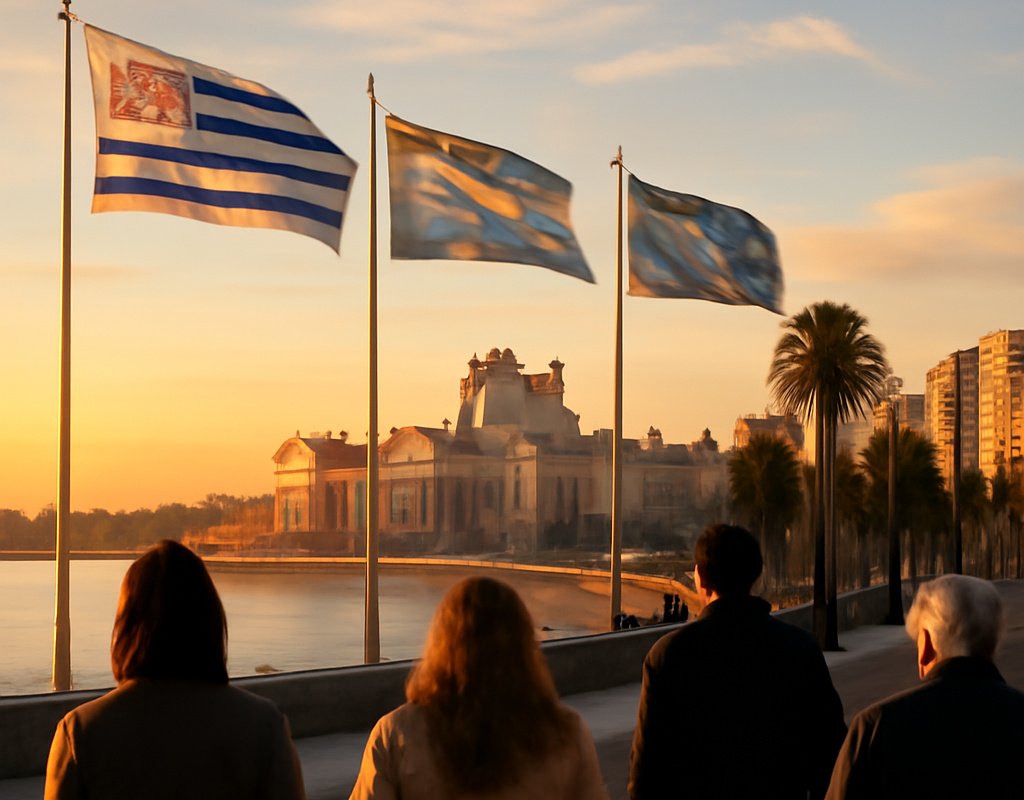
Uruguay is not an EU member state, but developments in the South American country can still matter to European readers when they touch diplomacy, democracy, human rights and international cooperation. Recent coverage from Uruguay has highlighted a message of peace from Pope Leo XIV, public mourning for former president José Mujica and the country’s continuing role in debates on social policy and global challenges.
This article places those developments in context and explains why they belong in wider European affairs coverage, while distinguishing Uruguay’s national decisions from policies made by the European Union.
Why Uruguay matters in wider international affairs
Uruguay is a small country by population, but it has often attracted international attention for its democratic institutions, political stability and distinctive public-policy choices. Its experience is relevant to European discussions about social reform, civic participation and the role of smaller states in international diplomacy.
Uruguay’s links with Europe are also supported by longstanding economic, cultural and diplomatic ties. The country is part of the Southern Common Market, known as Mercosur, while the EU has maintained relations with the South American bloc through trade and political dialogue. Any future development in those relationships could affect exporters, businesses and policymakers on both sides of the Atlantic.
Pope Leo XIV delivers a message of peace in Uruguay
One recent item in the Uruguay news archive reports Pope Leo XIV saying that “peace is possible” during a visit or public engagement connected with Uruguay. The statement reflects the continuing importance of peace diplomacy in a period marked by armed conflicts and international tension.
For European audiences, such messages have particular resonance because EU foreign policy is closely connected to conflict prevention, humanitarian assistance and support for international law. However, a papal appeal is not an EU decision, and it does not create a legal obligation for European governments or institutions.
The significance lies instead in the wider diplomatic environment:
- Peace appeals can shape public debate and international attention.
- Religious and civic leaders may influence humanitarian conversations.
- Smaller states can provide platforms for dialogue without being major military powers.
- European governments may consider such messages alongside formal diplomatic and security policy.
José Mujica’s death prompts national mourning
Thousands of people gathered in Montevideo in May 2025 to pay their respects to José Mujica, Uruguay’s former president, who had died the previous day. The public response underlined the lasting influence of a political figure who became internationally recognised for his personal style, modest public image and role in Uruguay’s democratic life.
Mujica served as president from 2010 to 2015 and remained an important figure in Uruguay’s political conversation after leaving office. His legacy has often been discussed internationally because of his emphasis on social issues, political participation and a less formal approach to public leadership.
For readers following European politics, the response to Mujica’s death also illustrates how former national leaders can retain public influence after their time in office. In European countries, the public role of former presidents and prime ministers varies, but the broader question is familiar: how should a society assess a leader’s record after they leave government?
Uruguay’s distinctive policy record
Uruguay has previously drawn international attention for policies that differ from those adopted in many European states. It created a state-regulated cannabis market, becoming one of the first countries to establish a national framework covering production, distribution and access. The policy has remained a subject of international research and debate.
The country has also been recognised for strong tobacco-control measures. In a major investment dispute, an international arbitration tribunal rejected a claim brought against Uruguay by Philip Morris International in 2016. The case was widely viewed as an important test of the balance between public-health regulation and investor protections.
These examples do not represent European Union rules. They are national measures adopted through Uruguay’s own political and legal systems. Nevertheless, they can inform European debates about consumer protection, public health, corporate regulation and the limits of government policymaking.
Floods and climate-related risks
Earlier reporting from Uruguay described thousands of residents being evacuated during flooding in several departments. Authorities said the situation remained under control in the affected areas at the time.
Flooding is a concern shared by countries across Europe, where extreme rainfall, river flooding and coastal risks have increased pressure on emergency services and infrastructure planners. The EU has its own civil-protection mechanisms, including cooperation between member states, but those arrangements do not automatically extend to Uruguay.
Uruguay’s experience nonetheless reflects a global issue with direct European relevance: how governments prepare communities for extreme weather, organise evacuations and protect essential infrastructure.
What Uruguay’s story means for European readers
The main lesson is that international developments should be assessed carefully. Not every story from another continent is EU news, and Uruguay’s national decisions should not be presented as European Union policy. Yet the country’s politics and public debates can still contribute to wider European affairs when they concern shared challenges.
Key areas of relevance include:
- Diplomacy: peace messages and international dialogue remain central to European foreign policy.
- Democracy: public mourning for former leaders offers insight into political culture and civic identity.
- Public health: Uruguay’s tobacco and cannabis policies provide contrasting examples for regulators.
- Climate resilience: flood emergencies raise questions familiar to European civil-protection authorities.
- Trade: EU–Mercosur relations could affect businesses, agriculture and supply chains.
Conclusion
Uruguay’s recent news offers more than a series of isolated national stories. Pope Leo XIV’s peace message, the public farewell to José Mujica and the country’s record on public policy each provide a window into debates that also matter in Europe.
The key takeaway is that Uruguay is not subject to EU laws or European Union institutions, but its experience can still inform discussions about diplomacy, democracy, public health, climate resilience and international cooperation. For anyone following EU news and wider European affairs, that distinction is essential: global context matters, but national responsibility must remain clear.