

Standfirst: Pope Leo XIV used a Mass in Paysandú, Uruguay, to urge people to build peace through dialogue, community and shared responsibility. More than 40,000 people attended the celebration during the pontiff’s sixth apostolic journey.
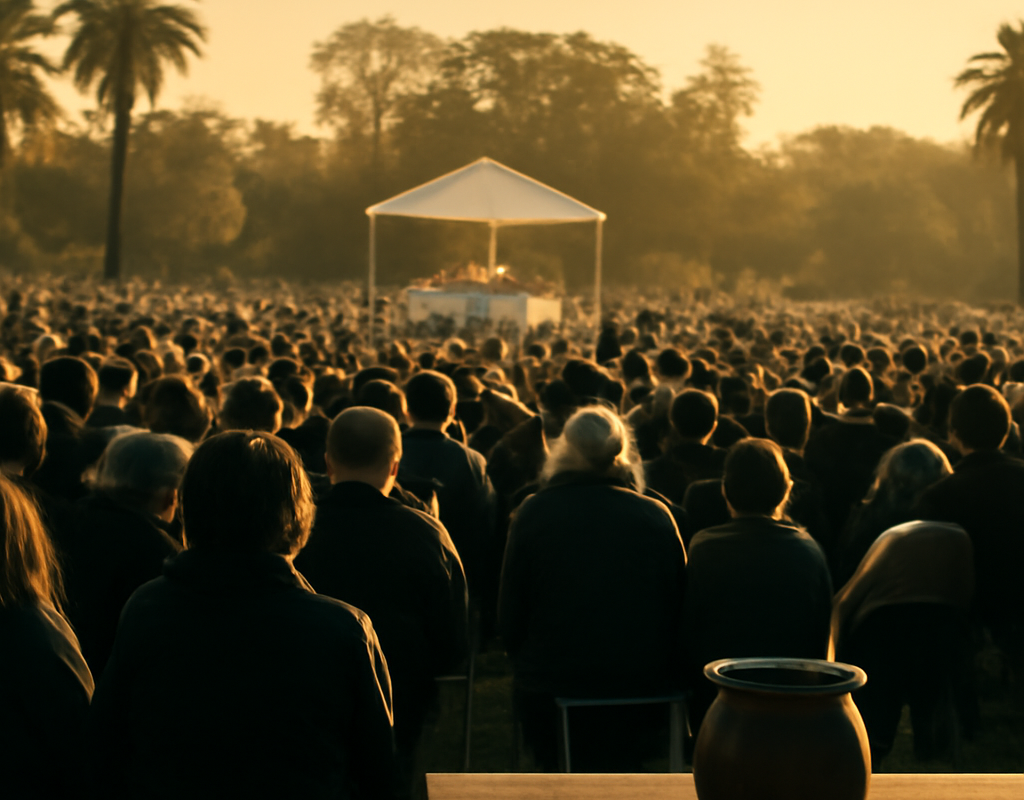
Pope Leo XIV has called for peace, unity and stronger community ties during a major public Mass in Uruguay, where he addressed more than 40,000 faithful in the city of Paysandú.
The service formed part of the Pope’s sixth apostolic journey and came less than a month after he underwent surgery for lung adenocarcinoma at Rome’s Gemelli Hospital. During his homily at Parque París Londres, Leo XIV centred his message on the idea that peace requires active participation and dialogue.
Pope Leo XIV delivers message of peace in Paysandú
Arriving in the popemobile after landing at the Brigadier General Aviator Tydeo Larre Borges International Airport, the Pope travelled through crowds gathered to welcome him. He later celebrated Mass beside an image of Blessed Jacinto Vera, an important figure in Uruguay’s Catholic history.
“Peace is possible and we are called to build it,” the pontiff said during the liturgy. His remarks focused on how faith can be expressed through relationships, cooperation and solidarity rather than isolation.
The Pope used three familiar symbols from Uruguayan life to illustrate his message:
- The General Artigas bridge: a symbol of creating connections, maintaining dialogue and strengthening relationships.
- Local palm groves: an image of people growing and standing together as a community.
- Mate: a traditional drink associated with hospitality, friendship and shared moments between relatives and neighbours.
By drawing on these national symbols, Leo XIV connected his religious message to everyday Uruguayan culture. The emphasis was on practical solidarity and the importance of creating spaces where people can meet and listen to one another.
Apostolic journey combines worship and public engagement
The Mass was one part of a busy programme in Uruguay that included religious, social and educational engagements. After the celebration in Paysandú, the Pope visited the Basilica of Our Lady of the Rosary, where a commemorative plaque was unveiled and he greeted people gathered outside.
He then travelled to Montevideo for meetings with groups working in education, social support and community care. The programme included a visit to the Casavalle community at the Parish of Our Lady of Guadalupe and an engagement with the academic and education sector at the Catholic University of Uruguay.
These meetings placed particular attention on institutions that support communities through education, pastoral work and social services. They also gave the Pope an opportunity to speak directly with people involved in caring for vulnerable groups and supporting young people.
Prayer vigil planned at Centenario Stadium
The day’s programme was scheduled to conclude at Montevideo’s Centenario Stadium, where Leo XIV was due to preside over a prayer vigil with thousands of young people and other faithful from across Uruguay.
The stadium gathering was intended to provide another large public encounter during the visit, following the open-air Mass in Paysandú. The use of the popemobile was expected to allow the Pope to greet people as he travelled through the crowds.
Next stop: Florida and Uruguay’s national shrine
On Sunday, the Pope is expected to travel to Florida, around 90 kilometres from Montevideo. The city is associated with Uruguay’s Declaration of Independence in 1825 and is regarded as an important location in the country’s national history.
Florida is also a major Catholic destination because it is home to the National Shrine of the Virgen de los Treinta y Tres. Leo XIV is expected to celebrate Sunday Mass in the square in front of the shrine.
The visit combines national and religious significance. While the Paysandú service focused on peace and community, the Florida programme is expected to bring together Uruguay’s historical identity and its Catholic tradition.
Why the visit matters
Papal journeys often combine religious ceremonies with meetings that highlight social concerns, education and community life. In Uruguay, Leo XIV’s itinerary has placed particular emphasis on public gatherings and direct contact with local institutions.
His message in Paysandú also presented peace as a shared responsibility. Rather than treating peace as only a diplomatic or political objective, the Pope described it as something built through everyday relationships, conversation and mutual support.
For the Catholic community in Uruguay, the visit provides a significant national gathering. It also gives the Pope a platform to address a wider Latin American audience through themes that extend beyond the liturgy, including social inclusion, education and cooperation.
Key points from the Uruguay visit
- More than 40,000 people attended the Mass in Paysandú.
- Leo XIV called on people to help build peace through dialogue and unity.
- His homily drew on the General Artigas bridge, palm groves and mate.
- The programme included meetings with social and educational communities in Montevideo.
- A prayer vigil was scheduled at Centenario Stadium.
- The Pope is expected to celebrate Sunday Mass at the National Shrine of the Virgen de los Treinta y Tres in Florida.
Conclusion
Pope Leo XIV’s visit to Uruguay has combined a large public pilgrimage with a message focused on peace, dialogue and community. His central takeaway in Paysandú was clear: peace is possible, but it must be built through shared effort, strong relationships and a willingness to meet others with openness.